 Olmo Calvo
Interview
Olmo Calvo
Interview
03/31/2020
Rony Brauman
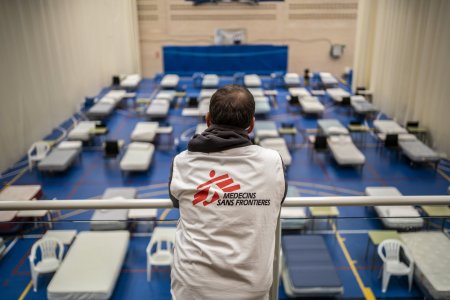
Rony Brauman évoque pour La Croix le temps singulier du confinement causé par la propagation du Covid-19. Il encourage les débats argumentés sur les mesures prises par les pouvoirs publics, et dénonce la prise de conscience si tardive des conditions de travail des soignants : "Les éloges qui sont adressés aujourd’hui au personnel hospitalier contrastent singulièrement avec le dédain voire le mépris dans lequel leurs revendications ont été reçues ces dernières années".
 Agnes Varraine-Leca/MSF
Interview
Agnes Varraine-Leca/MSF
Interview
03/30/2020
Rony Brauman
Dans cet entretien paru dans L'Obs le 27 mars, Rony Brauman approuve les mesures de confinement, mais dénonce la réduction des capacités des hôpitaux et la rhétorique martiale du chef de l’Etat : « Qualifier les soignants de “héros”, c’est gommer les raisons de la crise sanitaire. »
 MSF
Interview
MSF
Interview
03/25/2020
Rony Brauman
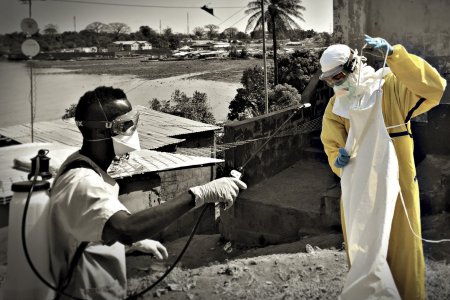
Interviewé par le journal Le Temps le 24 mars, Rony Brauman s'exprime sur la pandémie de Covid-19. Il dénonce notamment le manque de préparation des systèmes de santé pour faire face à une telle crise sanitaire.
 Fabio Basone/MSF
Interview
Fabio Basone/MSF
Interview
03/20/2020
Jean-Hervé Bradol
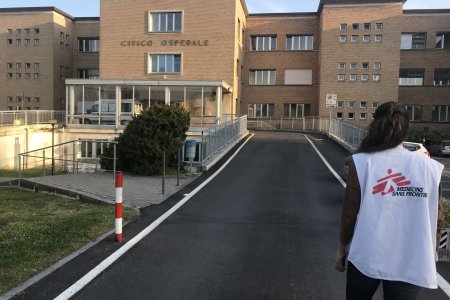
Pour le journal La Croix, Jean-Hervé Bradol évoque les similitudes entre l’épidémie de coronavirus et les précédentes épidémies qu’il a vécues au sein de MSF : "On prévoit un moment de crise où l’offre de soins sera de très loin inférieure à la demande en ce qui concerne les cas graves."
 Lisa Veran/MSF
Interview
Lisa Veran/MSF
Interview
03/18/2020
Emmanuel Baron
Dans cette interview parue dans Libération le 17 mars, Emmanuel Baron, directeur d'Epicentre, le centre d'épidémiologie de MSF, revient sur la gestion de la pandémie de Covid-19.
"Va-t-il falloir une crise sanitaire à large échelle pour comprendre les contraintes auxquelles sont soumises les équipes soignantes ?"
 Aurelie Baumel/MSF
Interview
Aurelie Baumel/MSF
Interview
03/17/2020
Jean-Hervé Bradol
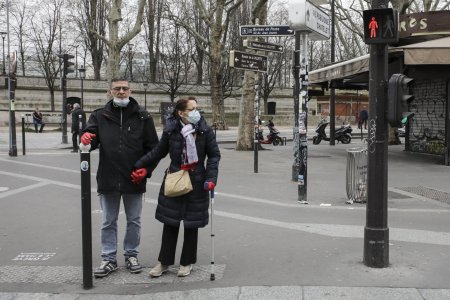
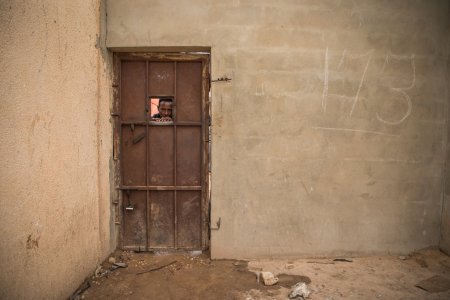
Confronted with a "totally unprecedented biological, social and political event", Jean-Hervé Bradol spoke with Mediapart about the difficulties of basing all prevention on behavioural measures: "It takes time for a society to fully acknowledge the existence of the event, which is unfolding as it tries to understand it.”
 Aurelie Baumel/MSF
Op-ed
Aurelie Baumel/MSF
Op-ed
03/06/2020
Michaël Neuman
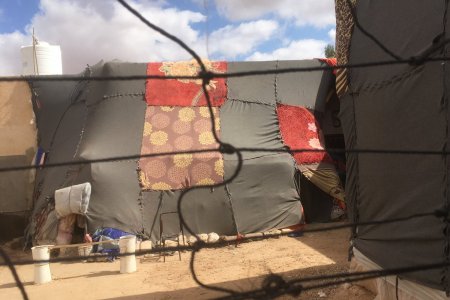
De retour de Libye après dix jours passés auprès des équipes de Médecins Sans Frontières, Michaël Neuman analyse le « système » d’exploitation dont sont victimes les migrants. Ce qui était à l'origine un article de blog s'est converti en tribune, publiée dans le Monde Afrique le 5 mars 2020.
 Michaël Neuman / MSF
Opinion
Michaël Neuman / MSF
Opinion
03/02/2020
Michaël Neuman
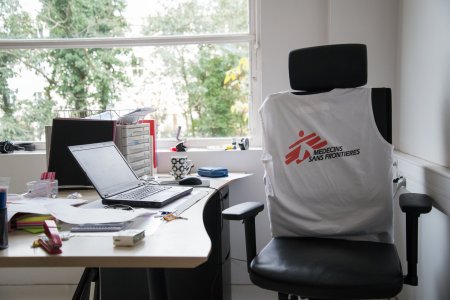
Michaël Neuman spent ten days in Libya with Médecins Sans Frontières teams working in detention centres for migrants. From his stay, he brings back the following impressions that illustrate the gloomy situation of the people who are held there, for months or years, and the even more difficult situation of all those subject to kidnapping and torture.
 MSF/Antoine Kremer
Interview
MSF/Antoine Kremer
Interview
02/28/2020
Marion Péchayre
Elba Rahmouni
In this interview, different issues related to management at MSF are broached with Marion Péchayre, Director of Studies at the CRASH, such as the fragmentation of different components of our work, professionalisation drifting towards an attitude of control as embodied by the multiplication of management tools and the omnipresence of requests for validation, and the devaluation of the role of the individual against the promotion of a pseudo-scientific presentation of facts and projects.
 MSF/Lauranne Grégoire
Review
MSF/Lauranne Grégoire
Review
12/23/2019
Rony Brauman
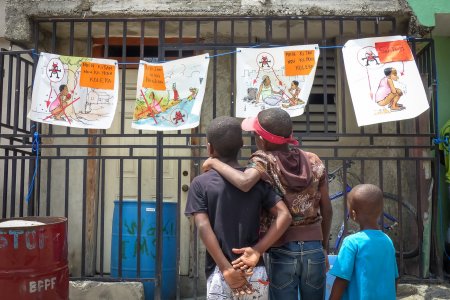
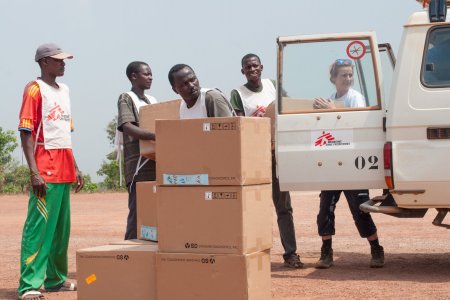
The cholera outbreak in Haiti in October 2010 was among the deadliest in modern history, with 800,000 people infected and 10,000 fatalities. And these are just the official figures. The actual death toll was far higher, as evidenced by numerous retrospective mortality surveys, and can only be expressed as an order of magnitude: to wit, several tens of thousands.
This book recounts eight years of struggle on two fronts that the author shows to be closely linked: the field, with the implementation of measures of prevention and case management; the scientific debate, in the form of a shattering of the dominant environmental theory concerning the origin of the epidemic.
 Giorgio Contessi/MSF
Review
Giorgio Contessi/MSF
Review
12/16/2019
Judith Soussan
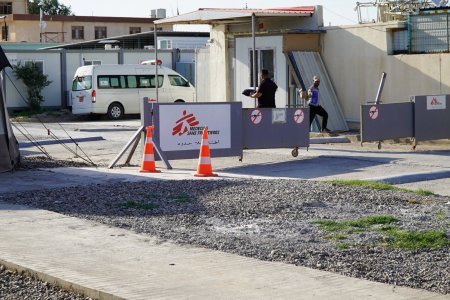
We’d like to share with you today some recommended reading around the issue of management, work, and ways of working. This choice will probably surprise some regular CRASH readers; isn’t this a far cry from the usual subjects of our critical analysis? Far from being chosen at random, the selection that follows in reality grew out of several years of reading.
 Maya Abu Ata/MSF
Analysis
Maya Abu Ata/MSF
Analysis
11/27/2019
Philippe Biberson
François Jean
First Published December 1, 1999 - Nonprofit and Voluntary Sector Quarterly (NVSQ) - Volume 28 Issue 1.
This article begins with a look at the role played by Médecins Sans Frontières (MSF) since its inception in 1971, and then looks at the challenges facing MSF today. It focuses on the confusion of humanitarian and political roles and on the goals MSF has laid out for itself to address this confusion. Humanitarian aid has become the favored response of governments to political crises, and governments have increasingly turned to NGOs to carry out their policies. In turn, NGOs have become increasingly dependent on governments for financial support. These changes have politicized aid delivery and made it difficult for NGOs to maintain their independence. In addition, as the number of NGOs increases and their activities become more specialized, there are pressures toward institutionalization and bureaucratization. To respond to these challenges, MSF has identified several goals, including maintaining organizational independence and flexibility and avoiding bureaucratization.