
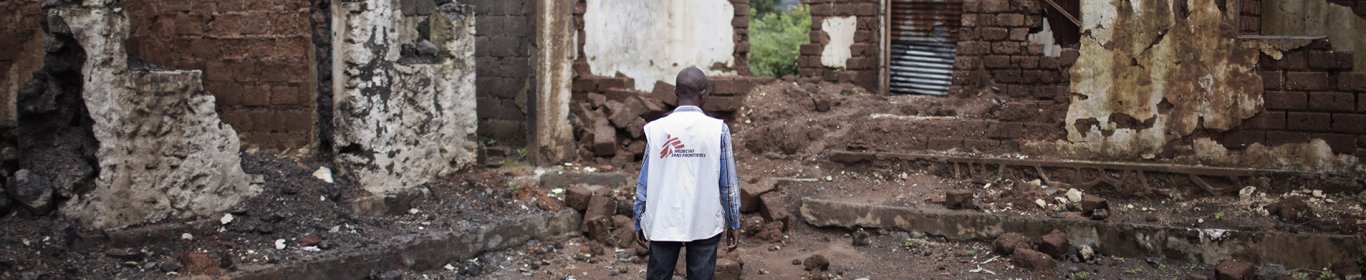
Under the auspices of the Fondation Médecins Sans Frontières, the Centre de Réflexion sur l'Action et les Savoirs Humanitaires (CRASH) is a unique structure in the world of NGOs. Its purpose is to inspire debate and critical reflexion on field practices and public positions, in order to improve the association's actions.
The CRASH team consists of six permanent employees, from the field, with university training. Backed by a scientific committee made up of volunteer research professionals, it works closely with the operational leadership of Médecins Sans Frontières.
CRASH team members conduct and direct studies and analysis of MSF actions. They participate in internal training sessions and assessment missions in the field. They represent the association at meetings, conferences, and other research and discussion forums, particularly those connected with universities, IGOs and NGOs.
To know more, read the article published originally in French Le Crash-MSF, "une structure critique sur nos opérations"

Addressing political, medical and management issues, Crash conducts research on topics arising from MSF concerns that often reflect the concerns of the humanitarian aid world in general. Its research is presented in the form of publications, articles or books as well as discussion forums and conferences.

The CRASH supports feedback, evaluation, and critical review of Médecins Sans Frontières operations. This activity contributes to critical reflection on our work and aims to improve it. It draws on methodologies from social sciences and epidemiology. This cross-cutting approach feeds into all of the team's activities (particularly research, training, and consulting).

The CRASH contributes to the development of the MSc in Humanitarian Practice, a master's degree for humanitarian practitioners run by the University of Manchester and the Liverpool School of Tropical Medicine and co-founded by Médecins Sans Frontières. The team is also involved in several university programs in France. Finally, the CRASH organizes internal training courses focused on the challenges and difficulties encountered by operational managers in implementing MSF programs.

Crash advises MSF leaders as they formulate their positions on operational and public matters. To that end, it acts at the request of the association’s president, directors and operational managers on project-related issues, current events and organisational concerns.

Crash actively distributes its research through a website and social media while also organising or participating in seminars and workshops. In this way, we hope to reach not only aid workers and their colleagues worldwide but also academics, journalists and anyone in the general public interested in these issues.
The permanent team is formed by six directors of studies and a dissemination officer. Every year since 2020, a studies manager joins the Crash for a period of twelve months. This position is designed for mobility between headquarter and field, or between departments.
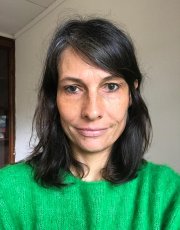
Team coordinator at Crash and Director of Studies
Marion has over twenty years of experience and reflection on humanitarian action. She is currently Director of Studies and Team Coordinator at Crash. Initially working as a practitioner with the NGO Solidarités International in various countries in Africa and Asia, Marion then spent several years in academia at the School of Oriental and African Studies, University of London for a PhD and taught at other institutions (Sciences Po Paris and Manchester University in particular). She was a member of the ALIMA board from 2018 to 2021. Her research has focused on the sorting logic of humanitarian NGOs, the history of ALIMA and “African doctors,” and the managerial logics at MSF in particular. Recently, Marion was head of mission for Médecins Sans Frontières in Malawi from 2020 to 2023 before returning to Crash. She is a graduate of ESCP Business School (2004) and Kings College London with a Master's degree in War Studies, and has a PhD in Development Studies from SOAS University of London.
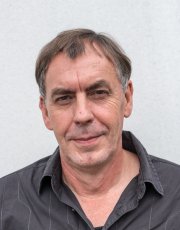
Medical doctor, specialized in tropical medicine, emergency medicine and epidemiology. In 1989 he went on mission with Médecins sans Frontières for the first time, and undertook long-term missions in Uganda, Somalia and Thailand. He returned to the Paris headquarters in 1994 as a programs director. Between 1996 and 1998, he served as the director of communications, and later as director of operations until May 2000 when he was elected president of the French section of Médecins sans Frontières. He was re-elected in May 2003 and in May 2006. From 2000 to 2008, he was a member of the International Council of MSF and a member of the Board of MSF USA. He is the co-editor of "Medical innovations in humanitarian situations" (MSF, 2009) and Humanitarian Aid, Genocide and Mass Killings: Médecins Sans Frontiéres, The Rwandan Experience, 1982–97 (Manchester University Press, 2017).
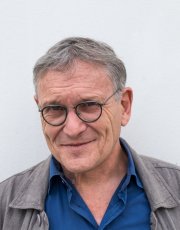
Medical doctor, specialized in tropical medicine and epidemiology. Involved in humanitarian action since 1977, he has been on numerous missions, mainly in contexts of armed conflicts and IDP situations. President of Médecins sans Frontières from 1982 to1994, he has taught at the Humanitarian and Conflict Response Institute (HCRI) at the University of Manchester (UK) and at Sciences Po Paris. He has published several books and articles, including "Guerre humanitaires ? Mensonges et Intox" (Textuel, 2018), "La Médecine Humanitaire" (PUF, 2010), "Penser dans l'urgence" (Editions du Seuil, 2006) and "Utopies Sanitaires" (Editions Le Pommier, 2000).
A graduate of the École normale supérieure de Cachan and the EHESP School of Public Health, and a trained hospital director, Anneliese had her first humanitarian field experience with Médecins du Monde in 2010. Since then, she has alternated between field assignments with Médecins du Monde and Médecins Sans Frontières, and positions in France within the public hospital system, nursing homes, and the French Development Agency (AFD). She joined CRASH in 2025 as a Studies Manager. In this role, she helps organize critical reflection training sessions on MSF operations and leads a research project on staff turnover within the organization.
Xavier Plaisancie is the Director of Studies at the CRASH. He is a medical doctor specialized in tropical medicine and holds a degree in medical anthropology from the École des Hautes Études en Sciences Sociales (EHESS). He began working with Médecins Sans Frontières (MSF) in 2016 on improving access to HIV care for men in Homa Bay, Kenya. In 2019, he served as a palliative care physician in Mali and conducted research on the experiences of women affected by breast and cervical cancer. He later worked in Kinshasa, Democratic Republic of Congo, as a physician in a ward dedicated to patients living with advanced HIV/AIDS. In 2023, he carried out research on palliative care practices within an MSF cancer care project in Malawi. His research interests include humanitarian medicine, palliative care, and person-centered care in crisis settings.
Since April 2018, Elba has been in charge of dissemination at CRASH. Elba holds a Master's degree in History of Classical Philosophy and a Master's degree in editorial consulting and digital knowledge management. During her studies, she worked on moral philosophy issues and was particularly interested in the practical necessity and the moral, legal and political prohibition of lying in Kant's philosophy.
Francesco joined MSF in 2012, following a degree in international economics and a master’s degree in journalism, as well as fifteen years in the private sector and the media. He undertook his first mission in Port-au-Prince, in the aftermath of the earthquake, and continued his work with the organisation through several missions in conflict zones, notably in Nigeria, Syria, the north of Yemen and Mosul, Iraq. In early 2018, he led MSF France’s intervention in the Rohingya refugee camps in Bangladesh, before coordinating the response to the COVID-19 outbreak in Peru. Within MSF, he successively held the roles of finance and human resources coordinator as well as financial controller within an operational unit, before returning to the field as project coordinator and head of mission. In 2018, he joined the communications team at the Paris headquarters. He is currently Head of Studies at the CRASH.
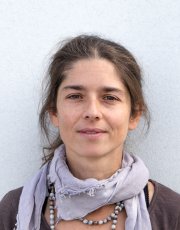
Graduated in International relations (Institut d'Etudes Politiques de Paris), Logistics in humanitarian settings (Bioforce-Développement) and Anthropology (University Paris I), Judith Soussan joined MSF in 1999. After missions in Sri Lanka, Ethiopia, Sudan and the Palestinian territories, she worked in Paris, in particular on protection of civilians. Following a few years break from MSF working as a radio reporter, she has come back to Crash in 2015. She contributed to the book "Saving lives and staying alive. Humanitarian Security in the Age of Risk Management" (chapter "Security Issues and Practices in an MSF Mission in the Land of Jihad" - London: Hurst and Co, 2016).
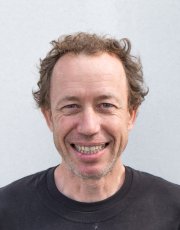
A political scientist by training, Fabrice Weissman joined Médecins sans Frontières in 1995. First as a logistician, then as project coordinator and head of mission, he has worked in many countries in conflict (Sudan, Ethiopia, Eritrea, Kosovo, Sri Lanka, etc.) and more recently in Malawi in response to natural disasters. He is the author of several articles and collective works on humanitarian action, including "In the Shadow of Just Wars. Violence, Politics and Humanitarian Action" (ed., London, Hurst & Co., 2004), "Humanitarian Negotiations Revealed. The MSF Experience" (ed., Oxford University Press, 2011) and "Saving Lives and Staying Alive. Humanitarian Security in the Age of Risk Management" (ed., London, Hurst & Co, 2016). He is also one of the main hosts of the podcast La zone critique.
Social science researchers support the members of the Crash team in their reflections and productions.
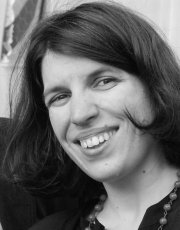
Caroline Izambert is a former history and geography teacher and has a doctorate from the EHESS. Her thesis focused on access to healthcare for foreigners in France. She is currently head of the health promotion and harm reduction department of the city of Paris' public health department. With Jean-Paul Gaudillière and Pierre-André Juven, she published Pandémopolitique. Réinventer la santé commun (La Découverte, 2021).
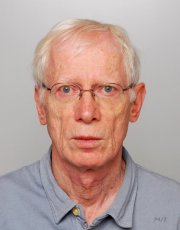
Marc Le Pape has been a researcher at the CNRS and then at the EHESS. He is currently a member of the scientific committee of the CRASH. Formerly with the CNRS, Marc Le Pape is currently a researcher at the l'Ehess (Centre d'études africaines). He has carried out research in Algeria, Côte d'Ivoire and Central Africa. His recent studies have focused on the Great Lakes region in Africa. He has co-directed several publications: Côte d'Ivoire, l'année terrible 1999-2000 (2003), Crises extrêmes (2006) et dans le cadre de MSF : Une guerre contre les civils. Réflexions sur les pratiques humanitaires au Congo-Brazzaville, 1998-2000 (2001) and Génocide et crimes de masse. L'expérience rwandaise de MSF 1982-1997 (2016).
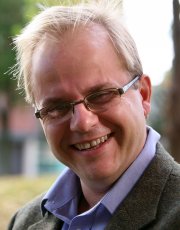
Bertrand is a historian specializing in humanitarian medicine. He is a founding member of the Humanitarian and Conflict Response Institute (HCRI) at the University of Manchester in 2008, he is now its director of research. He is also a member of MSF UK board. His most recent articles and books include “Unpacking the Emergency Health Kit of International Humanitarian Medical Aid 1978-1990: How Humanitarian Standards and Supply Chains became Global” (2025), “Making Hepatitis C history: Medecins sans frontières, hepatitis C and humanitarian Medicine in Cambodia” (2025), “Care, Coercion, and Gender in the Revolutionary War in Nepal, 1996-2006” (2024). He leads the Wellcome Discovery Award program "Developing Humanitarian Medicine: from Alma Ata to Bio-Tech, a history of norms, knowledge production and care (1978-2020)". His publications are available here.
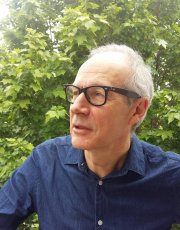
Nicolas Dodier is a sociologist, director of research at the Institut national de la santé et de la recherche médicale (INSERM) and director of studies at the École des hautes études en sciences sociales (EHESS). His previous research were focused on the working world (Les hommes et les machines, 1995), the medical world (L'expertise médicale, 1993; Leçons politiques de l'épidémie de sida, 2003), and the different ways of reparation for collective disasters (with Janine Barbot: Des victimes en procès, 2023). More recently, he has launched a survey on humanitarian medicine.
Crash supports, in different ways, the following projects: a history of medical neutrality by Xavier Crombé, a history of surgical practices at MSF by Nicolas Dodier (EHESS), Catherine Rémy (EHESS) and Dr Jean Rigal and a history of mental health practices by Laure Wolmark.
Xavier Crombé was Director of Studies at MSF-Crash from 2005 to 2008. He is currently working at the Research Unit on Humanitarian Stakes and Practices (UREPH) of MSF in Switzerland to publish a collective essay dealing with issues related to violence in healthcare facilities. He is also teaching humanitarian and migration issues at Sciences Po Paris.
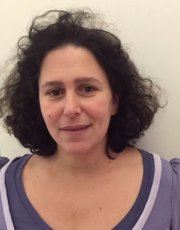
Clinical psychologist with a master's degree in philosophy. Since 2005, she has worked for Doctors without borders in contexts of violence, armed conflict and migration. She was a psychotherapist and national coordinator of the mental health unit and at Comede (Comité pour la santé pour les exilé-e-s) until 2021. Her research and practice focus on the clinic of exile, trauma and gender-based violence. They question both the techniques and systems of psychological care. Among her publications: "Les lieux de l'exil, subjectivités dans l'espace thérapeutique" (Journal des Anthropologues, Dec. 2018), "Transmettre pour exister: la fonction des récits traumatiques", in the collective work Violence et récit (ed. Hermann, dir. Marie-Caroline Saglio-Yatzimirsky. 2020), and "On ne fait pas de santé mentale. Retour sur la première mission " psy " de MSF" (Alternatives humanitaires, March 2023). She is currently leading a Crash-supported research project on the history, practices and controversies in mental health in MSF's French section.
The MSF FoUndation
The Médecins Sans Frontières Foundation was founded on the initiative of MSF. Since 2015, it has decided to anchor its action around two priority axes: to support the MSF association in its innovation process and to reinforce the competences of the organization.
Read more about The MSF Foundation