 Xavier Lassalle/MSF
Review
Xavier Lassalle/MSF
Review
02/05/2019
Myfanwy James
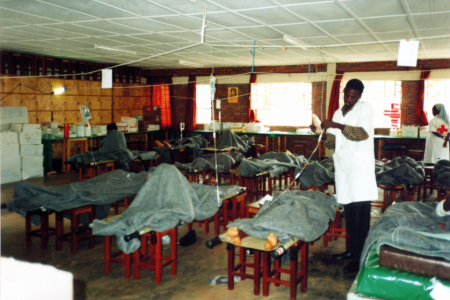
This book describes and analyses the work of Médecins Sans Frontières (MSF) in the Great Lakes Region between 1982 and 1997. It explores the everyday, operational and political dilemmas faced by MSF staff in the field and the debates that followed, as they asked themselves: ‘how should we react and what action should we take’ in the wake of mass violence (p. 4). In effect, the authors ask: (how) could MSF prevent itself being manipulated or becoming complicit in the everyday atrocities in the field?
 Laura Kant/MSF
Review
Laura Kant/MSF
Review
12/19/2018
Elba Rahmouni
To mark Editions MFSH’s publication of Les coulisses du monde des catastrophes « naturelles », on 14 November 2018, CERI (Centre de recherches internationales Sciences Po - CNRS) presented a discussion with its author, Sandrine Revet, CERI anthropologist and co-founder of the Association pour la Recherche sur les Catastrophes et les Risques en Anthropologie (ARCRA), and Rony Brauman. CRASH recommends this book to anyone with an interest in natural disasters and international relations.
 Carl Theunis/MSF
Interview
Carl Theunis/MSF
Interview
10/26/2018
Elba Rahmouni
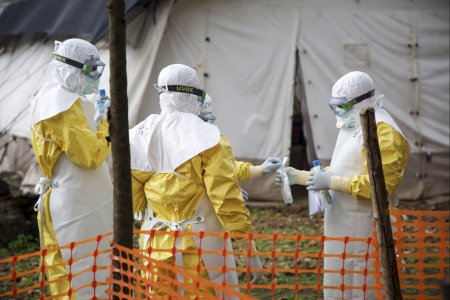
Rebecca Grais, Research Director at Epicentre, MSF’s epidemiology arm, and Pierre Mendiharat, Deputy Director of Operations for MSF-France, offer their insights on the Ebola outbreak in North Kivu Province in the eastern Democratic Republic of the Congo (DRC). This joint interview in four parts (the outbreak, social context, treatments, and vaccination) aims to show how science and practice interact around each outbreak.
 Roger Job
Review
Roger Job
Review
10/07/2018
Bert Ingelaere
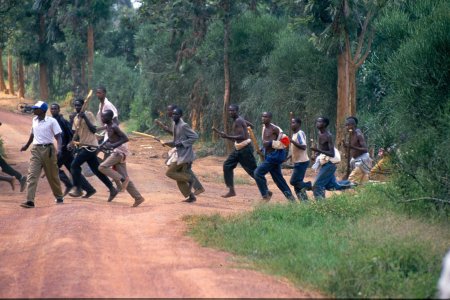
Although much has been written about the 1994 genocide in Rwanda, two recent volumes offer fresh perspectives and add considerable insights. Guichaoua’s From War to Genocide: Criminal Politics in Rwanda 1990–1994 takes the reader deep into the belly of the beast. The book describes and analyzes the real politics of the politics of genocide based on extraordinary detailed evidence with respect to the strategies and tactics of key military and political players. Bradol and Le Pape’s Humanitarian Aid, Genocide and Mass Killings: Médecins Sans Frontières, The Rwandan Experience, 1982–97 offers a unique understanding of the consequences of this murderous political game from the point of view of humanitarian aid workers in general and the NGO Doctors Without Borders (Médecins Sans Frontières – MSF) in particular.
 Kenny Karpov
Interview
Kenny Karpov
Interview
09/13/2018
Olivier Falhun
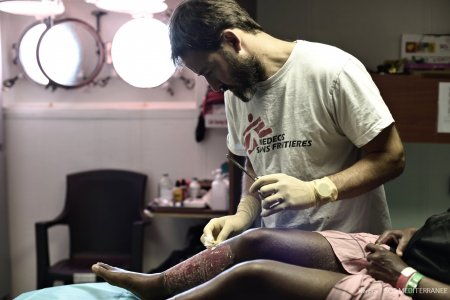
As an MSF nurse, François-Xavier Daoudal returned at the end of June after spending three weeks on board the Aquarius. During his time on the ship, 629 people were rescued. However, immediately after the rescue operation, the Italian and Maltese authorities refused the ship permission to dock, triggering a huge political and media furor. The Aquarius was left stranded at sea for several days before being able to transfer some of the rescued migrants to two Italian navy ships. All passengers were finally disembarked in Spanish port Valencia. What can be drawn from such an experience? Read on to see what F-X had to say during an interview on the political implications, life on board the Aquarius and the issue of people smuggling. He also shared with us what the migrants themselves had to say.
 msf
Interview
msf
Interview
07/09/2018
Rony Brauman
Rony Brauman takes a critical look at "humanitarian wars" and argues for political solutions that could include Islamists. He recently published "Humanitarian Wars? Lies and intox "(Textuel, 2018). This interview was published on July 03, 2018 in l'Opinion.
 Guillaume Binet/
Review
Guillaume Binet/
Review
07/03/2018
Elba Rahmouni
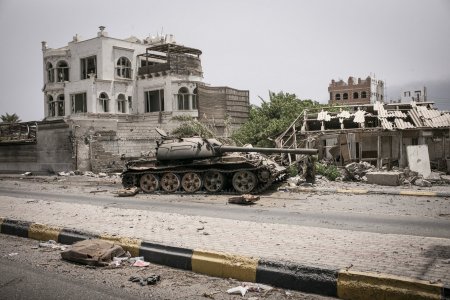
Tomorrow’s war? Bertrand Badie is pessimistic given the extremely high tension in the Middle East. Modern conflicts in the region are defined by their uncertain, composite and heterogeneous nature, as well as by their permanence, as there are no winners and no losers. The situation can be interpreted vertically as a “superposition of logics of conflict” and horizontally as an “aggregate of logics of coalition”. Bertrand Badie explained that a conflict situation is really dangerous when it combines several logics of conflict and several logics of alliance, making it virtually impossible to reach a compromise. Today, we can distinguish fives layers of conflict in the Middle East, a level of superposition never previously attained, according to this specialist in international relations.
 Review
07/02/2018
Marc Le Pape
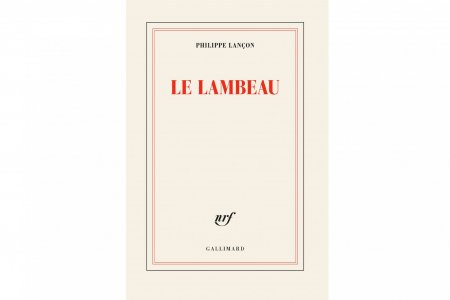
Philippe Lançon works as a journalist for the French satirical magazine, Charlie Hebdo, and Libération newspaper. His book, Le lambeau was published in April. As the author and subject of his narrative, he relates his experience as a hospital patient after surviving the terrorist attack against Charlie Hebdo during its editorial meeting on 7 January 2015. Although a “novice" when it comes to hospitals and operating theatres, he is a seasoned journalist. He is currently writing for Libération’s culture page, but previously reported on armed conflicts (Iraq and Somalia). So he’s no novice when it comes to casualties of war. In 2015, he became a reporter reporting on himself and on hospital surgery.
 Sylvain Cherkaoui/COSMOS
Opinion
Sylvain Cherkaoui/COSMOS
Opinion
06/25/2018
Fabrice Weissman
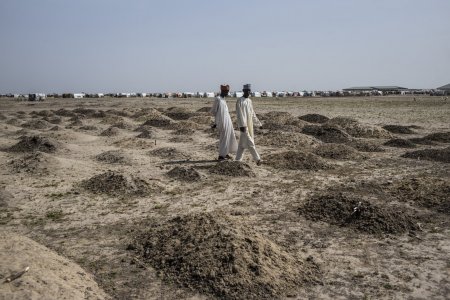
The crude mortality rate (CMR) is one of the most widely used indicators at MSF and the humanitarian sector to evaluate the severity of a health crisis within a given population. It is widely recognized that a CMR equal to or greater than one death per 10,000 persons a day signifies an emergency situation requiring an immediate response. However, the usage of the standard emergency threshold as “1/10,000/day” is very questionable: it goes against the official recommendations endorsed by humanitarian organizations and ignores the worldwide decline in mortality rates over the last 30 years.
 Eddy Van Wessel
Review
Eddy Van Wessel
Review
06/13/2018
Rony Brauman
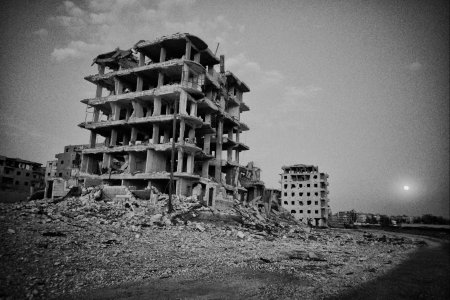
La guerre humanitaire sonne comme un oxymore. Dans Guerres humanitaires ? Mensonges et Intox, cette longue interview avec Régis Meyran, Rony Brauman réfléchit notamment à ce que peut et doit être aujourd’hui la guerre humanitaire, dans la continuité du « droit d’ingérence » tel qu’il fut théorisé par Mario Bettati et Bernard Kouchner avec la fin de la guerre froide, puis de « la responsabilité de protéger » telle qu’elle fut élaborée en 2000 par Kofi Annan, alors secrétaire général de l’ONU.
 John Parkin
Opinion
John Parkin
Opinion
06/06/2018
Claudine Vidal
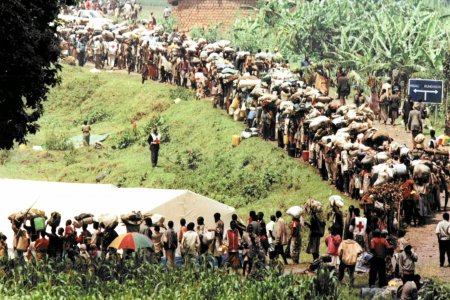
Published in March 2018, Judi Rever’s investigative work, In Praise of Blood, quickly garnered international attention. It is an indictment of both the Rwandan patriotic front (RPF) and its leader, current Rwandan president Paul Kagame, and foreign governments and international institutions – the International Criminal Tribunal for Rwanda (ICTR), in particular – that allowed crimes committed against Hutu civilians to go unpunished.Judi Rever’s book is more than a work of investigation. It reads like a prosecutor’s closing argument: the massacres are described in such a way as to classify them as genocide. And it is precisely this combination of investigation and the pursuit of evidence that would stand up in a court of law that is problematic.
 Mohammad Ghannam/MSF
Review
Mohammad Ghannam/MSF
Review
05/31/2018
Elba Rahmouni
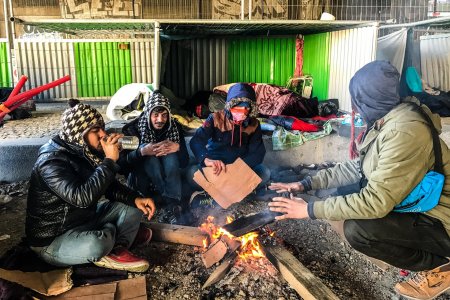
Thanks to the migrant crisis, or the reception crisis as it would be more appropriate to call it, the issue of hospitality is back in the forefront. On 17 May, the Maison des Métallos organised a conference with two social science researchers - Michel Agier and Benjamin Boudou - and an NGO manager Cécile Poletti to discuss existing tensions between private hospitality and public hospitality.