 German Federal Archives
Opinion
German Federal Archives
Opinion
11/26/2019
Benjamin Thomas White
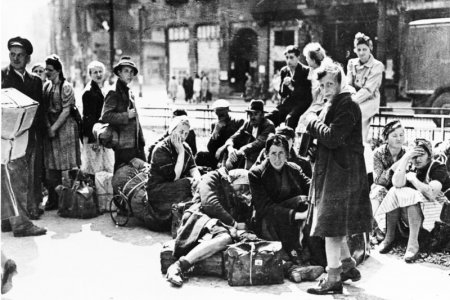
L'affirmation selon laquelle un nombre record de personnes sont déplacées a été un élément essentiel du plaidoyer humanitaire au cours des dernières années, et ce à chaque fois que le HCR, l'agence des Nations Unies pour les réfugiés, met à jour ses statistiques annuelles.
Mais est-ce vrai ?
 Victor J. Blue
Analysis
Victor J. Blue
Analysis
11/22/2019
Xavier Crombé
Joanna Kuper
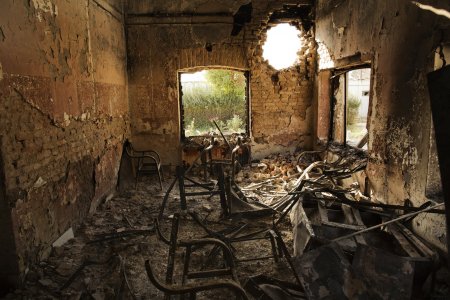
This article seeks to document and analyse violence affecting the provision of healthcare by Médecins Sans Frontières (MSF) and its intended beneficiaries in the early stage of the current civil war in South Sudan. Most NGO accounts and quantitative studies of violent attacks on healthcare tend to limit interpretation of their prime motives to the violation of international norms and deprivation of access to health services. Instead, we provide a detailed narrative, which contextualises violent incidents affecting healthcare, with regard for the dynamics of conflict in South Sudan as well as MSF’s operational decisions, and which combines and contrasts institutional and academic sources with direct testimonies from local MSF personnel and other residents. This approach offers greater insight not only into the circumstances and logics of violence but also into the concrete ways in which healthcare practices adapt in the face of attacks and how these may reveal and put to the test the reciprocal expectations binding international and local health practitioners in crisis situations.
 Robin Meldrum/MSF
Analysis
Robin Meldrum/MSF
Analysis
11/22/2019
Fabrice Weissman
This article discusses the policy of absolute secrecy on abductions adopted by aid organisations. It argues that the information blackout on past and current cases is to a large extent a function of the growing role of private security companies in the aid sector, which promote a ‘pay, don’t say’ policy as a default option, whatever the situation. The article contends that secrecy is as much an impediment to resolving current cases as it is to preventing and managing future ones. It suggests abandoning the policy of strict confidentiality in all circumstances – a policy that is as dangerous as it is easy to apply – in favour of a more nuanced and challenging approach determining how much to publicise ongoing and past cases for each audience, always keeping in mind the interests of current and potential hostages.
 John Wessels
Interview
John Wessels
Interview
09/10/2019
Jean-Hervé Bradol
Elba Rahmouni
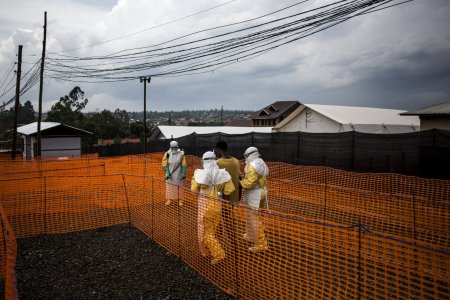
On August 1st 2018, the Democratic Republic of Congo’s health authorities declared the country’s tenth outbreak of Ebola virus disease (EVD), this time in North Kivu province. Just over a year later, this outbreak is still ongoing, with several dozen new cases reported each week. In the space of 12 months, 3000 people contracted the disease and 2000 of them have since died. This latest outbreak can be seen as a failure at two levels: first, it is already the second biggest EVD outbreak ever recorded, and second, two out of three patients have died. What are the reasons for this failure? What operational strategies should we develop in response?
Interview with Jean-Hervé Bradol, Director of studies at CRASH, by Elba Rahmouni.
 Hannah Wallace Bowman title
Interview
Hannah Wallace Bowman title
Interview
09/03/2019
Michaël Neuman
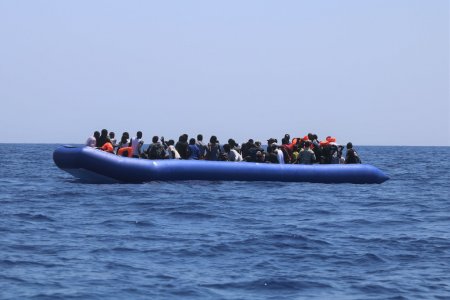
Le 1 dédie son numéro de rentrée à la situation en Méditerranée. A cette occasion, il s'est entretenu avec Michaël Neuman sur les différentes phases du cycle migratoire entamé en 2015. S’il déplore les politiques européennes, il salue ceux qui, à l’échelon local, se mobilisent pour y résister.
 Shaista Aziz/MSF
Interview
Shaista Aziz/MSF
Interview
07/01/2019
Isabelle Defourny
Elba Rahmouni
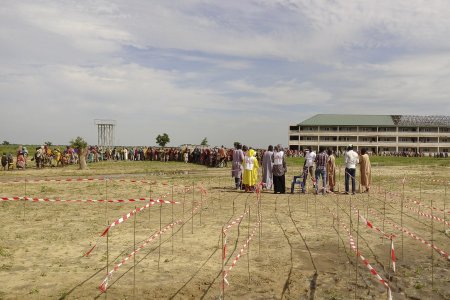
In 2016, the Operations Department commissioned a critical review of the operations carried out between 2015 and 2016 in Borno State by MSF France in the north east of Nigeria. In response, and with the help of Epicentre, Judith Soussan and Fabrice Weissman from CRASH produced a detailed historical account of the analyses made of the situation by the teams, capital and headquarters at the time, as well as the objectives they set themselves, the actions they undertook, the obstacles they encountered and the results they achieved. As part of this project, some of the directors and operations managers who had been involved in these operations took a retrospective look at their own practices: were they late in responding to the catastrophic situation in the IDP camps in rural areas and on the outskirts of Maiduguri, the capital of Borno State, in 2016 and, if so, why? What conclusions can be drawn a posteriori about the operational choices made and the effectiveness of MSF intervention strategies? And, to take things a step further, what does this experience teach us about how MSF functions and how our teams work? Interview with Isabelle Defourny, Operations Director at MSF-OCP. By Elba Rahmouni.
 Robin Meldrum/MSF
Analysis
Robin Meldrum/MSF
Analysis
06/28/2019
Rony Brauman
The rehabilitation of international humanitarian law (IHL) has become a priority for those who think that the horrors of contemporary wars are largely due to the blurring of the distinction between civilians and combatants and for those who think that campaigning for the respect of IHL could result in more civilised wars. Similarly, respect for humanitarian principles is still seen by many as the best tool available to protect the safety of aid workers. In this text, I argue that both assumptions are misled. The distinction between civilians and combatants, a cornerstone of IHL, has been blurred in practice since the late nineteenth century. In addition, humanitarian agencies claiming to be ‘principled’ have been victims of attacks as much as others. History and current practice tell us that neither IHL nor humanitarian principles provide safety or can guide our decisions. Accepting their symbolic value, rather than their unrealised potential to protect and solve operational dilemmas, would free humanitarian agencies from endless speculations.
 Agnes Varraine-Leca/MSF
Analysis
Agnes Varraine-Leca/MSF
Analysis
06/20/2019
V TLR
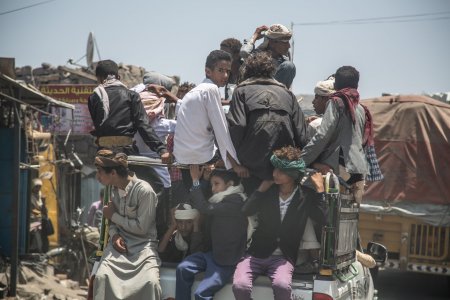
The situation in Yemen is often presented as the world’s worst humanitarian crisis, long ignored by the media, and requiring assistance vital to the survival of almost the entire country. Cholera outbreaks, famine, and destruction are invoked to support that argument. In reality, however, the situation of the country’s 25 to 30 million inhabitants is impossible to know with any accuracy. Nor do we know exactly what is happening in Yemen in terms of aid, although the amount of funding is very large. Noting these diagnoses and its field teams’ perspective on certain points, Médecins Sans Frontières has launched an effort to better understand this field of action using a quantitative and qualitative approach. A review of aid organisation documents and a series of interviews with aid actors in Yemen – in Houthi areas, in particular – has yielded a number of different conclusions.
 Samir Boumediene
Review
Samir Boumediene
Review
05/14/2019
Marc Le Pape
Jérôme Lamy
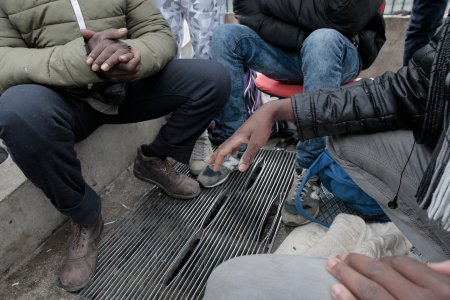
Fiche de lecture du livre La colonisation du savoir. Une histoire des plantes médicinales du « Nouveau Monde » (1492-1750), Vaulx-en-Velin, Éditions des Mondes à faire, 2016, de Samir Boumediene historien, chercheur CNRS à l’ens-lyon.
 Antoine Kremer/MSF
Analysis
Antoine Kremer/MSF
Analysis
05/07/2019
Michaël Neuman
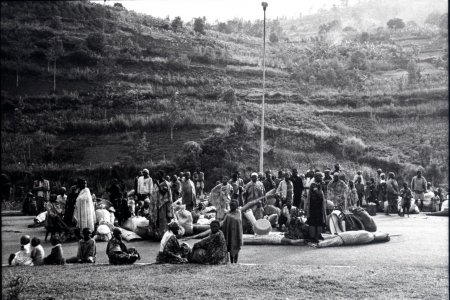
In the summer of 2015, the French section of Médecins Sans Frontières started aid projects for migrant populations in Greece and France. The launch of these operations was the occasion for lively discussions within the association, both in terms of public positioning (how to justify an intervention in a rich country and not get lost in "political" territory?), and in terms of revising our operating methods, knowing that the primary needs of migrants were not primarily medical. Some people then recalled the association's militant practices in the 1990s, which were sometimes considered as abuses. By retracing the history of the French Mission, Michaël Neuman seeks to understand, with regard to the migration issue, the complex articulation between operational constraints, political positioning and militant practices.
 Xavier Lassalle/MSF
Analysis
Xavier Lassalle/MSF
Analysis
04/06/2019
Claudine Vidal
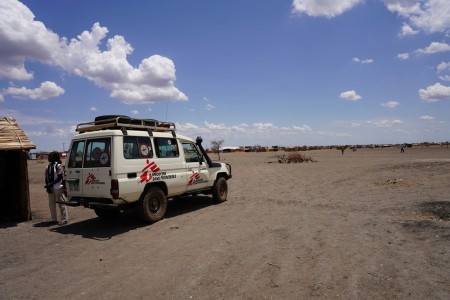
Un ouvrage propose une synthèse sur le génocide des Tutsis en 1994, depuis le début de la guerre jusqu’à la mise en place de la politique mémorielle. Au-delà, il retrace l’histoire du Rwanda sur le temps long du XXe siècle, en insistant sur les constructions coloniales et ethniques.
 Analysis
02/15/2019
Hannah BARNETT
The study The Patient Perspective of Quality of Care: A Review of the Literature, which we present here was carried out by Hannah Barnett a public health student at George Washington University, intern with CRASH from June to August 2018. This work sums up seventy articles from a variety of disciplines including medicine and public health. It is part of a reflection initiated by MSF a few years ago on medical quality and the patient-centered approach.