 Robin Meldrum/MSF
Analysis
Robin Meldrum/MSF
Analysis
06/28/2019
Rony Brauman
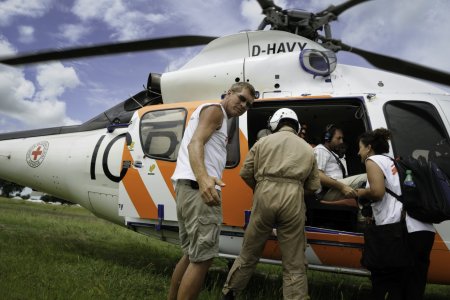
The rehabilitation of international humanitarian law (IHL) has become a priority for those who think that the horrors of contemporary wars are largely due to the blurring of the distinction between civilians and combatants and for those who think that campaigning for the respect of IHL could result in more civilised wars. Similarly, respect for humanitarian principles is still seen by many as the best tool available to protect the safety of aid workers. In this text, I argue that both assumptions are misled. The distinction between civilians and combatants, a cornerstone of IHL, has been blurred in practice since the late nineteenth century. In addition, humanitarian agencies claiming to be ‘principled’ have been victims of attacks as much as others. History and current practice tell us that neither IHL nor humanitarian principles provide safety or can guide our decisions. Accepting their symbolic value, rather than their unrealised potential to protect and solve operational dilemmas, would free humanitarian agencies from endless speculations.
 Agnes Varraine-Leca/MSF
Analysis
Agnes Varraine-Leca/MSF
Analysis
06/20/2019
V TLR
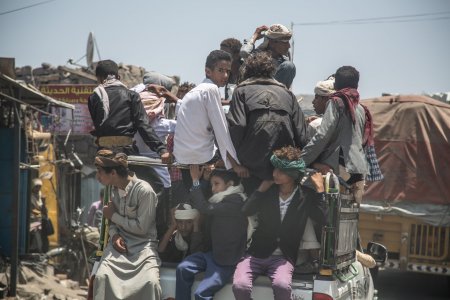
The situation in Yemen is often presented as the world’s worst humanitarian crisis, long ignored by the media, and requiring assistance vital to the survival of almost the entire country. Cholera outbreaks, famine, and destruction are invoked to support that argument. In reality, however, the situation of the country’s 25 to 30 million inhabitants is impossible to know with any accuracy. Nor do we know exactly what is happening in Yemen in terms of aid, although the amount of funding is very large. Noting these diagnoses and its field teams’ perspective on certain points, Médecins Sans Frontières has launched an effort to better understand this field of action using a quantitative and qualitative approach. A review of aid organisation documents and a series of interviews with aid actors in Yemen – in Houthi areas, in particular – has yielded a number of different conclusions.
 Antoine Kremer/MSF
Analysis
Antoine Kremer/MSF
Analysis
05/07/2019
Michaël Neuman
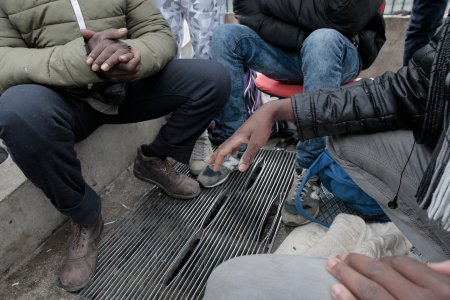
In the summer of 2015, the French section of Médecins Sans Frontières started aid projects for migrant populations in Greece and France. The launch of these operations was the occasion for lively discussions within the association, both in terms of public positioning (how to justify an intervention in a rich country and not get lost in "political" territory?), and in terms of revising our operating methods, knowing that the primary needs of migrants were not primarily medical. Some people then recalled the association's militant practices in the 1990s, which were sometimes considered as abuses. By retracing the history of the French Mission, Michaël Neuman seeks to understand, with regard to the migration issue, the complex articulation between operational constraints, political positioning and militant practices.
 Xavier Lassalle/MSF
Analysis
Xavier Lassalle/MSF
Analysis
04/06/2019
Claudine Vidal
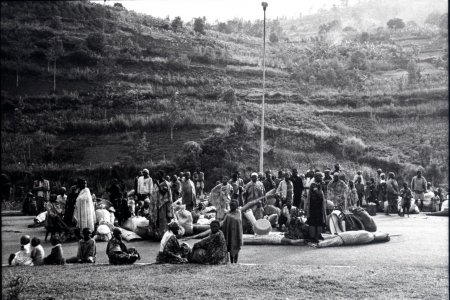
Un ouvrage propose une synthèse sur le génocide des Tutsis en 1994, depuis le début de la guerre jusqu’à la mise en place de la politique mémorielle. Au-delà, il retrace l’histoire du Rwanda sur le temps long du XXe siècle, en insistant sur les constructions coloniales et ethniques.
 Analysis
02/15/2019
Hannah BARNETT
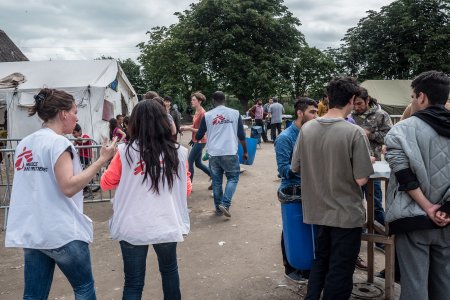
The study The Patient Perspective of Quality of Care: A Review of the Literature, which we present here was carried out by Hannah Barnett a public health student at George Washington University, intern with CRASH from June to August 2018. This work sums up seventy articles from a variety of disciplines including medicine and public health. It is part of a reflection initiated by MSF a few years ago on medical quality and the patient-centered approach.
 Charles Habib
Analysis
Charles Habib
Analysis
07/05/2017
Michaël Neuman
Franck Esnée
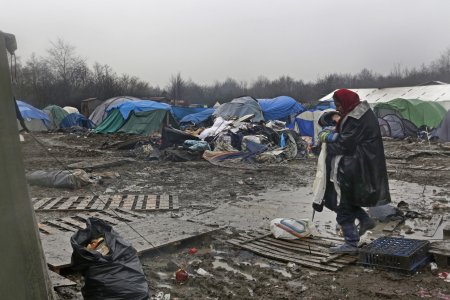
Following the dismantlement of the Basroch camp in Grande-Synthe and the resettlement of refugees in the new La Linière camp, in the spring 2016, Michaël Neuman and Franck Esnée wanted to focus their analysis and story on the “camp” – as an object –, its nature and management. This article was originally published in Alternatives Humanitaires #5, in July 2017.
 MSF
Analysis
MSF
Analysis
02/15/2017
Michaël Neuman
This article has been inspired by an analysis conducted by MSF-Crash of humanitarian security management and why and in what ways it is evolving. We endeavour not only to describe humanitarian imagery, but to analyse its consequences - the risks it generates for aid workers operating in perilous situations.
 Jon Levy
Analysis
Jon Levy
Analysis
11/24/2016
Angélique Muller
Michaël Neuman
This article was originally published in Humanitarian Exchange Magazine #67 in September 2016. In this paper, Angélique Muller and Michaël Neuman attempt to explore the lessons learnt through examining the decisions as well as the difficulties MSF encountered in its provision of assistance to migrants in Grande-Synthe.
Jon Levy
Analysis
11/24/2016
Angélique Muller
Michaël Neuman
Cet article a été publié dans la revue Alternatives Humanitaires. Angélique Muller et Michaël Neuman opèrent un retour d'expérience sur l'action menée par Médecins Sans Frontières dans le cadre d'un projet d'assistance aux migrants dans la ville de Grande-Synthe.
 Benoit Finck
Analysis
Benoit Finck
Analysis
07/25/2016
Rony Brauman
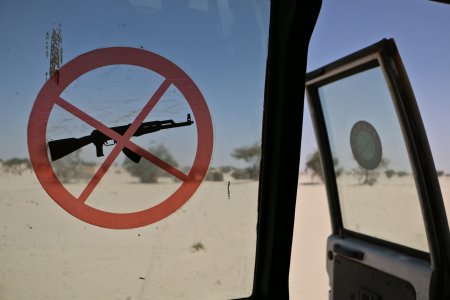
Rony Brauman focuses on the humanitarian environment and practices in war, in order to try to understand and analyze its political and ethical stakes. Starting with the creation of the Red Cross at the end of the XIXth century, he then focused on the contemporary postcolonial period, switching between various scales and reporting on contradictory points of view and issues.
 Sara Creta
Analysis
Sara Creta
Analysis
03/29/2016
Michaël Neuman
This review of Larissa Fast's " 'Aid in Danger'. The Perils and Promise of Humanitarianism" was published in the International Review of the Red Cross (Volume 96 / Issue 894)
 Yann Libessart
Analysis
Yann Libessart
Analysis
02/08/2016
Jean-Hervé Bradol
If MSF has held a preponderant position in the response to the Ebola crisis, it owes it just as much to its intervention capacities as to its capacity for criticism. The following article by Jean-Hervé Bradol embodies perfectly the latter in pointing to the issues that appeared on the occasion of this epidemic.