 Xavier Lassalle
Analysis
Xavier Lassalle
Analysis
04/05/2024
Jean-Hervé Bradol
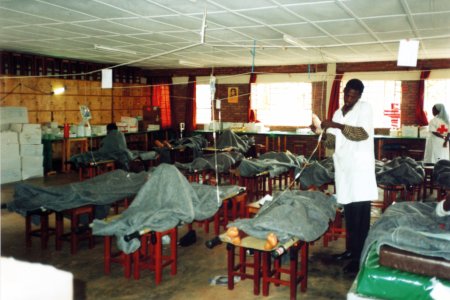
Le 7 avril 1994 débuta au Rwanda l’extermination systématique des Tutsis. Une équipe chirurgicale MSF de cinq personnes arriva à Kigali le 13 avril. Jean-Hervé Bradol était membre de cette équipe. En Juillet-Août 1995, la revue Les Temps Modernes publia le n° 583 composé de quatorze articles traitant du génocide des Tutsis. Jean-Hervé contribua à ce numéro par un texte ayant pour titre Rwanda, avril-mai 1994, limites et ambiguïtés de l’action humanitaire. Crises politiques, massacres et exodes massifs (article achevé le 27 mars 1995). L’auteur participa aux convois d’ambulances dans plusieurs quartiers de Kigali, il fut confronté aux paroles et actes menaçant de tueurs miliciens qui tenaient des barrages dans la ville ; toujours à Kigali, il contribua au travail de l’équipe MSF dans un hôpital de campagne du CICR. Des actions humanitaires furent praticables à l’hôpital ; elles étaient dangereuses voire impossibles dans la ville, parsemée de tueurs et de militaires hostiles.
 Alain Fredaigue
Analysis
Alain Fredaigue
Analysis
03/22/2024
Eleanor Davey
In this article, historian Eleanor Davey examines the concept of failure in the humanitarian sector through the experience of MSF and its reform process, known as La Mancha, which began in the early 2000s. The text highlights the challenges faced by MSF in recognising and resolving internal inequalities within the organisation.
 Candida Lobes
Analysis
Candida Lobes
Analysis
12/19/2023
Fabrice Weissman
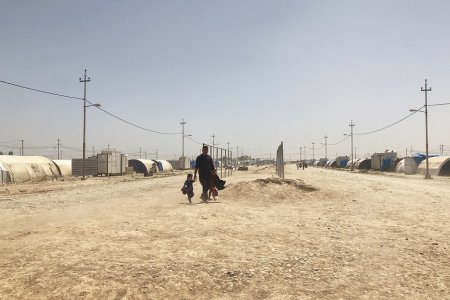
Challenging the idea that humanitarian actors can act free from politics by virtue of their principles, this chapter argues that the politicization of humanitarian aid is in fact the primary condition for its deployment. Humanitarian actors can only act if they maintain a balance between their own interests and those of people in positions of power. This raises a crucial ethical question: At what point do humanitarian organisations consider that deals reached with political powers cross the blurred but very real line beyond which humanitarian assistance does more harm than good?
 MSF/Mohamad Cheblak
Analysis
MSF/Mohamad Cheblak
Analysis
10/05/2023
Michaël Neuman
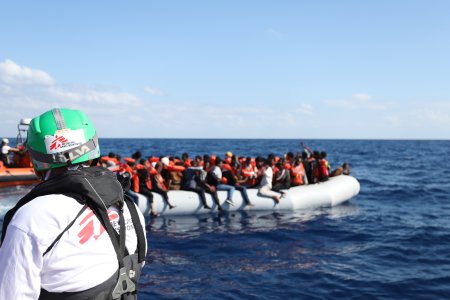
In Groupe URD's new issue of "Humanitaires en mouvement" (n°25), Michaël Neuman describes rescue operations in the Mediterranean and the strategies put in place by MSF to adapt to the constraints imposed by governments.
 Mariana Abdalla/MSF
Analysis
Mariana Abdalla/MSF
Analysis
06/05/2023
Laure Wolmark
This article was published on March 27th, 2023 in the journal Alternatives Humanitaires, in an edition focused on mental health.
 MSF
Analysis
MSF
Analysis
11/04/2022
Natalie Roberts
This article was published on December 22nd, 2021 in the Journal of Humanitarian Affairs (Issue 3, Volume 3).
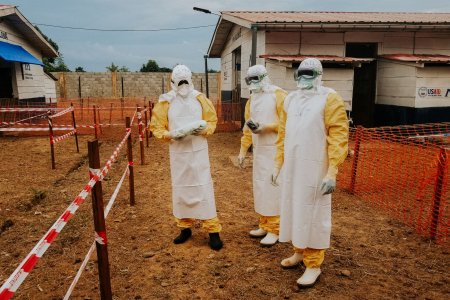
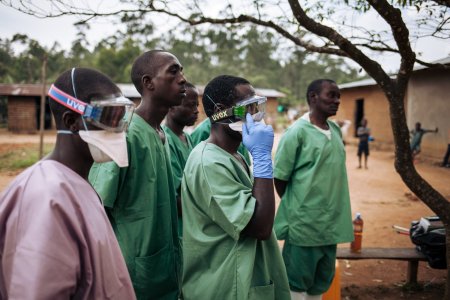
In this article, Natalie Roberts analyses the actions and positioning of MSF during the Ebola outbreak in Nord Kivu (Democratic Republic of Congo, 2018-2020).
 Njiiri Karago/MSF
Analysis
Njiiri Karago/MSF
Analysis
09/16/2022
Rony Brauman
In this article, Rony Brauman identifies the dynamics and events that made bending the HIV/AIDS epidemic curve possible. He explains the climate in which the tug-of-war with parts of the pharmaceutical industry played out from MSF’s perspective, and recalls that fears about international security and political stability also helped push governments to mobilise against the epidemic.
 Analysis
05/16/2022
Bertrand Taithe
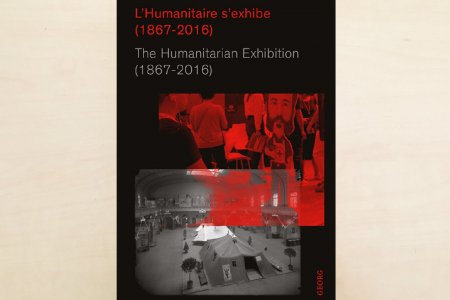
The Swiss editor Georg just published in open access a collection of articles edited by Sébastien Farré, Jean-François Fayet and Bertrand Taithe. This book is devoted to the emergence of humanitarian exhibitions either within wider events or in their own right, as an attempt to focus attention and make sense of the aid humanitarians provided. The book argues that this exhibition process was central to the narration of the humanitarian project. It did not simply represent humanitarian work, it helped shape its essential identity and sense of purpose. Entail the development of new ways of thinking about needs and emergencies.
 Alexis Huguet/MSF
Analysis
Alexis Huguet/MSF
Analysis
04/27/2022
Elba Rahmouni
Olivier Guillard
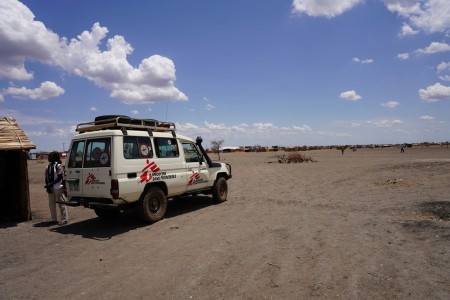
Based on the example of the hospital in Moïssala, Chad, the two authors reflect on the management of pain in children at Médecins Sans Frontières. This article was first published on March 25th 2022 in the journal Alternatives Humanitaires.
 Analysis
11/14/2021
Elba Rahmouni
Pierre Mendiharat
Léon Salumu Luzinga
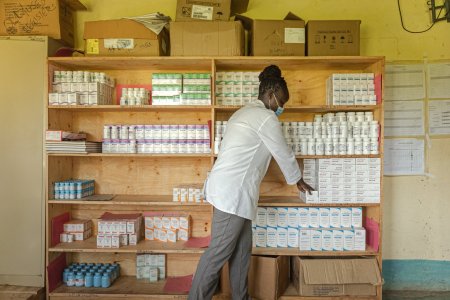
This article was first released in the 18th volume of the Humanitarian Alternatives magazine. Designed to reduce the incidence of HIV/AIDS in a Kenyan district, a Médecins Sans Frontières project successfully exceeded the “90-90-90” target set by UNAIDS. A look back on the results that the authors of this article - Pierre Mendiharat, Deputy director of operations at MSF France and Léon Salumu Luzinga, Program manager at MSF France, interviewed by Elba Rahmouni - believe are encouraging but by no means a guarantee that the epidemic will be over by 2030.
 Alexis Huguet
Analysis
Alexis Huguet
Analysis
03/25/2021
Natalie Roberts
Within four months of the first notification of Ebola cases in August 2018, the Nord Kivu (and Ituri) Ebola epidemic had become the second-largest on record. Notwithstanding a rapid and massive mobilisation of resources, the outbreak continued beyond the most pessimistic predictions and the case fatality rate (the proportion of people with the infection who die from it) remained static at 66%. Despite numerous lesson-learning exercises following the Ebola epidemic in West Africa in 2014–2016, and despite the development of new vaccines and treatments, after 3,444 cases and 2,264 deaths it is difficult to claim that outcomes are better this time around.
 Diala Ghassan/MSF
Analysis
Diala Ghassan/MSF
Analysis
03/15/2021
Hakim Khaldi
This article was first published in Issue 2, Volume 2 of The Journal of Humanitarian Affairs.
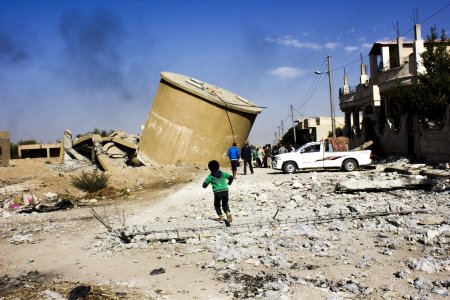
How can a medical humanitarian organisation deliver emergency assistance in Syria when there is nowhere in the country where civilians, the wounded and their families, medical personnel and aid workers are not targeted? Not in the areas controlled by the government, nor in those held by the Kurdish Democratic Union Party (PYD), Islamic State of Iraq and the Levant (ISIL) or the different rebel groups. So what action could be taken, and how? Remotely or on site? At the very least, we had to decipher the diverging political and military agendas, and then adapt, persist or sometimes just give up. In this article, I will present the full range of methods used to acquire knowledge and obtain information as well as the various networks used to carry out this venture. I will also show how Médecins Sans Frontières’ operations became a balancing act, punctuated by episodes of adapting to the various difficulties encountered.