 MSF
Analysis
MSF
Analysis
01/28/2021
Françoise Duroch
Michaël Neuman
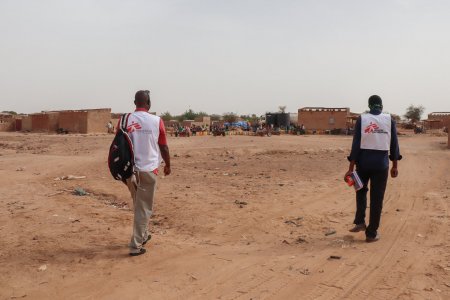
In this article for the Humanitarian Practice Network, head of the Research Unit on Humanitarian Stakes and Practices (UREPH) for MSF Geneva Françoise Duroch and Crash director of studies Michaël Neuman discuss the implications and reasons behind the growing practice of staff profiling for MSF.
In October 2020, MSF organised a workshop in Dakar on staff profiling in operations in the Sahel. Profiling involves the selection of staff based on non-professional criteria, including nationality, skin colour, gender and religion. As such, it raises a number of ethical and practical concerns. As a result of profiling, US nationals have not been deployed in MSF operations in Colombia because of the risk of kidnapping, and Chadians and Rwandans have been excluded in the Central African Republic and eastern Democratic Republic of Congo respectively, because of regional conflicts. The use of profiling has increased in recent years in West Africa, as the threat of kidnapping of Westerners by radical jihadist groups has intensified.
 Anonymous/Museo Che Guevara
Analysis
Anonymous/Museo Che Guevara
Analysis
01/25/2021
Yann Santin
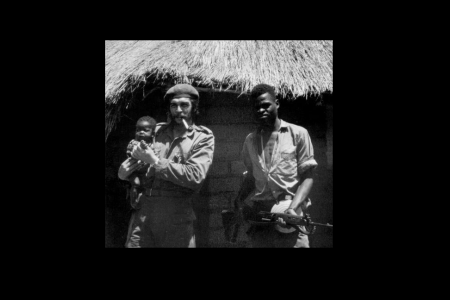
Operational partnerships between two organisations are a practical approach to humanitarian responses. MSF considers such partnerships when the objective it is pursuing in a country is similar to that of an existing national organisation, and when there is potential for synergy between these two entities. I would like to take a bit of a detour by looking at an experience that is in some ways similar: when Che Guevara tried to lead the revolution in Congo - Zaire by supporting the organisation of the guerrilla movement in the east of the country.
 Sandra Calligaro
Analysis
Sandra Calligaro
Analysis
12/07/2020
Fabrice Weissman
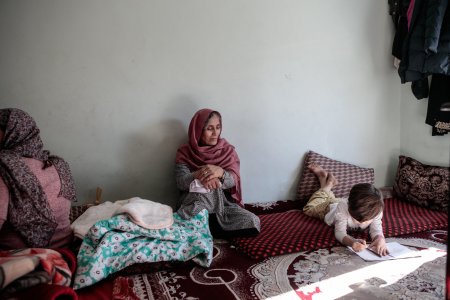
The May 12th massacre at the MSF-supported maternity hospital in Dasht-e-Barchi (Afghanistan) raises, yet again, the question of our limits with regard to risk. What is an acceptable level of danger for humanitarian aid workers? How do we set limits? Why would MSF decide to leave Kabul but remain in Herat, for example, or leave Afghanistan but remain in Niger, Burkina Faso, Mali, or Somalia, where the teams also face extreme danger?
 Clément Mahoudeau/MSF
Analysis
Clément Mahoudeau/MSF
Analysis
12/02/2020
Michaël Neuman
Emmanuel Baron
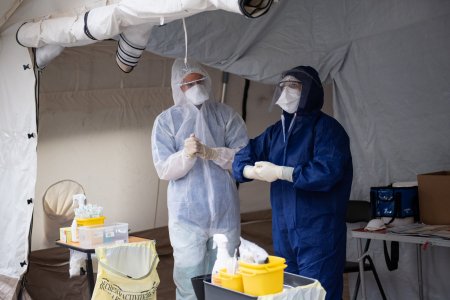
In this paper, the two authors examine certain aspects of the French response to the epidemic in the light of the experience of Médecins Sans Frontières (MSF) in that field, primarily with respect to the relationship between the actors of the response and the beneficiaries.
 ICRC/MATTHYS, Olivier/2011/ V-P-PK-E-01284
Analysis
ICRC/MATTHYS, Olivier/2011/ V-P-PK-E-01284
Analysis
11/18/2020
Joël Glasman
The principle of impartiality, which is often reduced to a principle of mathematical distribution, was originally coined by the International Committee of the Red Cross (ICRC), at that time on a quest for legitimacy. However, reducing impartiality to a resource distribution algorithm strengthens the overarching position held by non-territorial organisations. This is the theory put forward by the author in his latest book.
 MSF
Analysis
MSF
Analysis
09/18/2020
Fabrice Weissman
On the 31st January, a symposium was held at Sciences Po in support of Fariba Adelkhah and Roland Marchal, researchers at Sciences Po's Center for International Research (CERI) who were arrested in Iran on June 5, 2019. Roland Marchal was released on 20th March 2020 in exchange for an Iranian engineer detained in France. On 6th May Fariba Adelkhah was sentenced to 6 years imprisonment for "propaganda against the political system of the Islamic Republic, and collusion to undermine national security". The researcher was offered conditional release on condition that she terminates her research, but she refused.
The symposium brought together diplomats, journalists, humanitarians and researchers, with the aim of "nourishing reflection about prisoners and hostages, from a political, legal and ethical point of view". Fabrice Weissman presented the experience of Médecins Sans Frontières in the face of kidnappings.
 MSF/Rowan Pybus
Analysis
MSF/Rowan Pybus
Analysis
07/22/2020
Marc Le Pape
In France, from March onwards, many sociologists regularly appear in the media. Based on this observation, Marc Le Pape analysed 37 articles written during the containment period, dealing with the Covid-19 pandemic.
 Benoit Finck/MSF
Analysis
Benoit Finck/MSF
Analysis
04/30/2020
Fabrice Weissman
Vincent Foucher
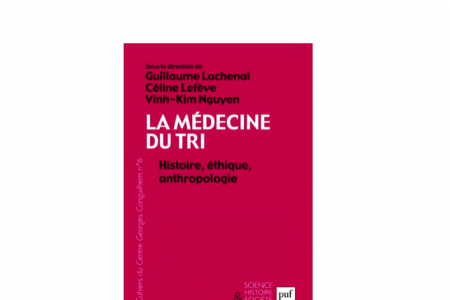
La contre-offensive menée par l’armée nigériane contre Boko Haram à partir de 2015 a entraîné une catastrophe sanitaire parmi les populations civiles déplacées. Cette catastrophe n’a été reconnue que difficilement, après qu’une alliance instable se soit progressivement forgée entre certains acteurs nationaux – politiques et militaires – et certains acteurs humanitaires internationaux pour formuler et s’accorder sur le diagnostic d’une « crise humanitaire » et essayer d’y remédier. Cela a ainsi permis de rendre visibles certaines dimensions du conflit tout en en invisibilisant d’autres, à commencer par la brutalité de la contre-insurrection de l’armée nigériane.
 Puf
Analysis
Puf
Analysis
04/03/2020
Jean-Hervé Bradol
On 12 January 2010, a high-magnitude earthquake caused numerous buildings in the city of Port au Prince in Haiti to collapse. Tens of thousands of people were killed or injured by falling blocks of concrete. The aftershocks from the earthquake, the predictions made by some seismologists and public rumours prompted fears of a repeat of the disaster. Houses, schools, churches, hospitals and business premises – all the places that had housed the capital’s residents and their main activities – had become lethal traps and a permanent threat.
 Maya Abu Ata/MSF
Analysis
Maya Abu Ata/MSF
Analysis
11/27/2019
Philippe Biberson
François Jean
First Published December 1, 1999 - Nonprofit and Voluntary Sector Quarterly (NVSQ) - Volume 28 Issue 1.
This article begins with a look at the role played by Médecins Sans Frontières (MSF) since its inception in 1971, and then looks at the challenges facing MSF today. It focuses on the confusion of humanitarian and political roles and on the goals MSF has laid out for itself to address this confusion. Humanitarian aid has become the favored response of governments to political crises, and governments have increasingly turned to NGOs to carry out their policies. In turn, NGOs have become increasingly dependent on governments for financial support. These changes have politicized aid delivery and made it difficult for NGOs to maintain their independence. In addition, as the number of NGOs increases and their activities become more specialized, there are pressures toward institutionalization and bureaucratization. To respond to these challenges, MSF has identified several goals, including maintaining organizational independence and flexibility and avoiding bureaucratization.
 Robin Meldrum/MSF
Analysis
Robin Meldrum/MSF
Analysis
11/22/2019
Fabrice Weissman
This article discusses the policy of absolute secrecy on abductions adopted by aid organisations. It argues that the information blackout on past and current cases is to a large extent a function of the growing role of private security companies in the aid sector, which promote a ‘pay, don’t say’ policy as a default option, whatever the situation. The article contends that secrecy is as much an impediment to resolving current cases as it is to preventing and managing future ones. It suggests abandoning the policy of strict confidentiality in all circumstances – a policy that is as dangerous as it is easy to apply – in favour of a more nuanced and challenging approach determining how much to publicise ongoing and past cases for each audience, always keeping in mind the interests of current and potential hostages.
 Victor J. Blue
Analysis
Victor J. Blue
Analysis
11/22/2019
Xavier Crombé
Joanna Kuper
This article seeks to document and analyse violence affecting the provision of healthcare by Médecins Sans Frontières (MSF) and its intended beneficiaries in the early stage of the current civil war in South Sudan. Most NGO accounts and quantitative studies of violent attacks on healthcare tend to limit interpretation of their prime motives to the violation of international norms and deprivation of access to health services. Instead, we provide a detailed narrative, which contextualises violent incidents affecting healthcare, with regard for the dynamics of conflict in South Sudan as well as MSF’s operational decisions, and which combines and contrasts institutional and academic sources with direct testimonies from local MSF personnel and other residents. This approach offers greater insight not only into the circumstances and logics of violence but also into the concrete ways in which healthcare practices adapt in the face of attacks and how these may reveal and put to the test the reciprocal expectations binding international and local health practitioners in crisis situations.