 Hadia Mansour
Interview
Hadia Mansour
Interview
02/15/2023
Rony Brauman
Cet entretien avec Rony Brauman, conduit par Ella Micheletti, a été publié le 7 février 2023 dans le journal Marianne.
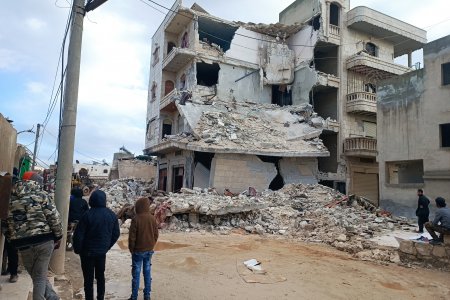
Le séisme de magnitude 7,8 qui a touché la Syrie et la Turquie lundi 6 février a causé la mort de plus de 2 600 personnes. L'ensemble de la communauté internationale a aussitôt proposé son aide aux deux pays. Derrière cette initiative, c'est toute une géopolitique de l'aide humanitaire qui est à l'œuvre. Pays amis, pays ennemis, chacun a un intérêt à aider un État à terre.
 Olivier Guillard
Interview
Olivier Guillard
Interview
12/08/2022
Jean-Sébastien Marx
Olivier Guillard
Elba Rahmouni
“Death is an extremely grave non-emergency; its only treatment is mourning”. That is how doctor Miguel Martinez Almoyna introduces his concept of emergency. The retired 92-year-old anaesthesiologist played an active role in creating France’s SMUR, and later SAMU, emergency medical systems. Still quite active overseas (in Brazil and Mexico), where he has exported the French pre-hospital model, he explains his approach to régulation médicale, whose purpose is to guide patients to the medical services their condition requires while offering a range of responses corresponding to different degrees of severity and urgency.
 Wairimu Gitau/MSF
Interview
Wairimu Gitau/MSF
Interview
11/30/2022
Pierre Mendiharat
Elba Rahmouni
Léon Salumu Luzinga
This article was published on December 22nd, 2021, in the Journal of Humanitarian Affairs (Issue 3, Volume 3).
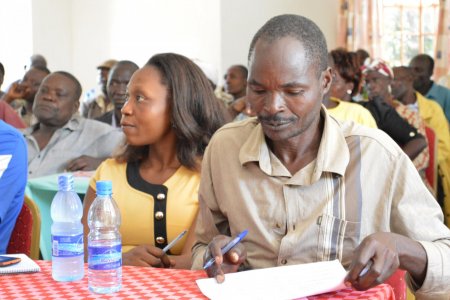
Despite a concerted international effort in recent decades that has yielded significant progress in the fight against HIV/AIDS, the disease continues to kill large numbers of people, especially in certain regions like rural Ndhiwa district in Homa Bay County, Kenya. Although there is still no definitive cure or vaccine, UNAIDS has set an ambitious goal of ending the epidemic by 2030, specifically via its 90-90-90 (treatment cascade) strategy – namely that 90 per cent of those with HIV will know their status; 90 per cent of those who know their status will be on antiretroviral therapy and 90 per cent of those on antiretroviral therapy will have an undetectable viral load. These bold assumptions were put to the test in a five-year pilot project launched in June 2014 by Médecins Sans Frontières (MSF) and Kenya’s Ministry of Health in Ndhiwa district, where an initial NHIPS 1 study by Epicentre (MSF’s epidemiology centre) in 2012 revealed some of the world’s highest HIV incidence and prevalence, and a poor “treatment cascade”. Six years later a new Epicentre study, NHIPS 2, showed that the 90-90-90 target had been more than met. What explains this ‘success’? And given the still-high incidence, is it truly a success? What follows is an interview on the political, scientific, and operational challenges of the Ndhiwa project with MSF Deputy Director of Operations Pierre Mendiharat and physician Léon Salumu, Head of MSF France Kenya programs, conducted by Elba Rahmouni.
 Florence Miettaux
Interview
Florence Miettaux
Interview
11/18/2022
Rony Brauman
Dans cette interview, Rony Brauman donne son point de vue sur certaines critiques fréquemment adressées aux ONG, comme leur responsabilité dans les limites du développement des pays dits « du Sud ». Cet entretien a été conduit par Régis Soubrouillard et publié le 17 novembre 2022 dans l’hebdomadaire Marianne.
 Christopher Nunn/MSF
Interview
Christopher Nunn/MSF
Interview
11/10/2022
Rony Brauman
Cet entretien, conduit par Aline Richard Zivohlava, a été publié le 1er novembre 2022 dans le magazine Le Figaro santé.
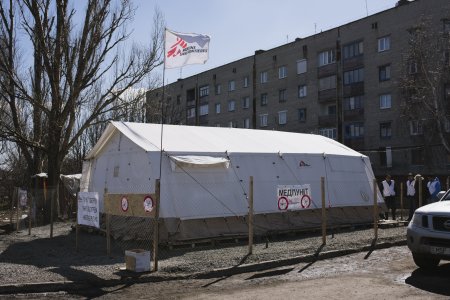
Guerre en Europe, menaces virales, risques terroristes... L'action humanitaire a dû se transformer pour s'adapter au temps présent. Ancien président de Médecins sans frontières, Rony Brauman en est un témoin privilégié. Tout n'est pas noir, souligne-t-il : la qualité des soins est meilleure, les personnels des pays du Sud montent en puissance et la médecine humanitaire a étendu son champ d'action.
 MSF
Interview
MSF
Interview
07/21/2022
Rony Brauman
Dans cet entretien mené par Michaël Oustinoff en janvier et mars 2022, Rony Brauman décrit comment la perception et les conditions de déploiement de l’action humanitaire ont évolué au fil du temps, dépendantes du contexte géopolitique dans lequel elle s’inscrit. Le fil rouge de cette discussion est l’instrumentalisation de l’aide humanitaire, évoquée à travers plusieurs exemples tels que la famine en Ethiopie, l’intervention en Libye ou la guerre en Ukraine.
 MSF
Interview
MSF
Interview
05/20/2022
Rony Brauman
Dans cette interview menée par Adrien Renaud, Rony Brauman revient sur ses années d’études, de militantisme, et ses premières missions au sein de MSF. L’entretien a été publié le 8 mai 2022 sur le site What’s Up Doc.
 Abayomi Akande
Interview
Abayomi Akande
Interview
05/05/2022
Jean-Hervé Bradol
Elba Rahmouni
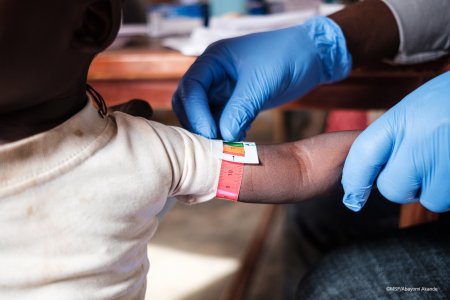
All the warning lights are flashing red this year: drought, the high prices of grains and fertilisers exacerbated by the war in Ukraine, reduced imports and speculation, numerous armed conflicts, a record number of refugees to be fed, disengagement of institutional donors,… With the exception of locusts, all the determinants of severe food scarcity are there, from Afghanistan to the Sahel, including Yemen, the Horn of Africa, and the Indian subcontinent. To the point of threatening all of the progress that was made in treating undernutrition after the 2005 crisis in Niger, which was the starting point for global advances in managing malnutrition in places where it is commonplace. It is time for a general mobilisation to limit the scale of the coming catastrophe. Interview with Jean-Hervé Bradol by Elba Rahmouni.
 Crash/MSF
Interview
Crash/MSF
Interview
01/14/2022
Rony Brauman
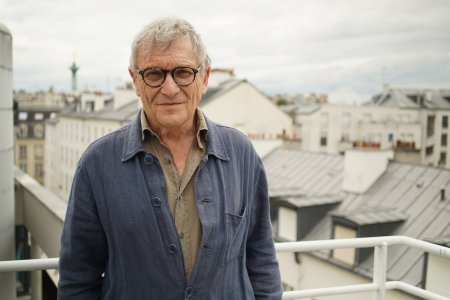
Rony Brauman revient sur le bilan des cinquante ans de l’ONG et affiche son scepticisme à l’égard de la justice internationale.
 Interview
12/10/2021
Rony Brauman
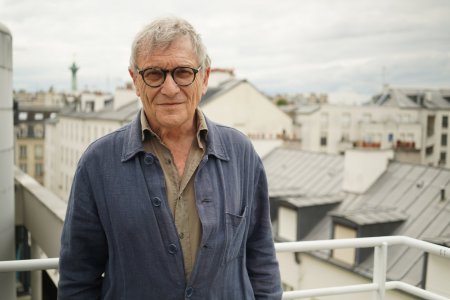
Pour le cinquantième anniversaire de l’ONG fondée en 1971, « l’Obs » s’est associé avec MSF et l’agence Magnum pour publier « Regards témoins », un beau livre qui raconte cinq décennies de crises et d’actions humanitaires, en textes et en images. Le photojournaliste Raymond Depardon a accompagné MSF depuis cinquante ans, et c’est avec enthousiasme qu’il a accepté, pour introduire « Regards témoins », de revenir sur ce singulier compagnonnage dans un dialogue avec Rony Brauman.
 Interview
10/18/2021
Claudine Vidal
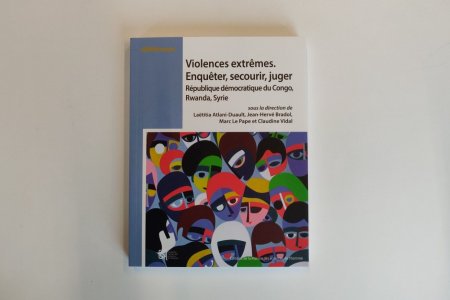
Comment enquêter sur les violences extrêmes ? Comment secourir leurs victimes et juger leurs responsables ? Ces trois questions traversent un ouvrage collectif intitulé « Violences extrêmes. Enquêter, secourir, Juger », qui vient d’être publié par la Maison des sciences de l’homme. Le livre revient sur ce qui s’est notamment passé au Rwanda. Pour en parler, Laurent Correau est en ligne avec l'universitaire Claudine Vidal, l’une des coordonnatrices de ce travail.
Crash/MSF
Interview
09/11/2021
Rony Brauman
Dans cette interview accordée au média Jeune Afrique, Rony Brauman, l'ancien président de MSF et actuel membre du Crash, revient sur les limites des interventions militaires impérialistes occidentales en Afghanistan et au Sahel. Il y partage son point de vue de docteur humanitaire ayant travaillé sur ces terrains en conflits.