 Stefan Pejovic/MSF
In the media
Stefan Pejovic/MSF
In the media
05/03/2026
Rony Brauman
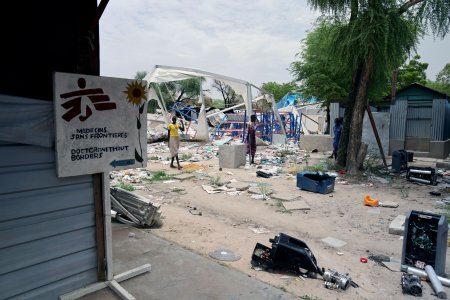
Quel est l’avenir de la protection médicale en temps de guerre ? Dans cet entretien, Pascal Boniface reçoit Rony Brauman, sur sa chaîne YouTube "Comprendre le monde", pour discuter de la protection des hôpitaux, des soignants et des patients en zones de conflit.
 Pierre Fromentin/MSF
A to Z
Pierre Fromentin/MSF
A to Z
09/01/2025
Rony Brauman
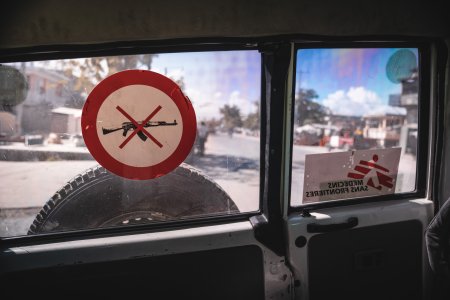
Caught between humanitarian commitment to vulnerable populations and security concerns, the issue of the use of armed escorts by humanitarian organisations raises some fraught questions. Médecins Sans Frontières has adopted this practice, controversial as it is, in a number of contexts throughout its history. Can we resort to this type of protection without compromising our neutrality? Are MSF's image and the very safety of its teams threatened by being so close to armed actors?
 Frederic Seguin/MSF
Opinion
Frederic Seguin/MSF
Opinion
05/16/2025
Fabrice Weissman
Since 2009, Médecins Sans Frontières has been recording events affecting the physical security of its staff deployed in the field in an online database called SINDY. Over the past two years, there has been a sharp increase in the number of severe security incidents recorded by MSF. Whereas in 2021, only 5 severe events were recorded, and one death reported, 37 severe events were recorded in 2024, resulting in the death of 10 people. How can this trend be explained?
 Ali Jadallah/Anadolu via AFP
In the media
Ali Jadallah/Anadolu via AFP
In the media
10/17/2023
Rony Brauman
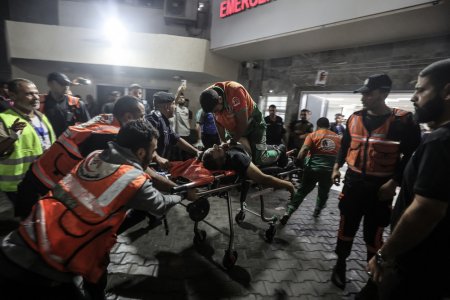
Dans un entretien, publié le 17 octobre 2023 dans L’Humanité, Rony Brauman revient sur la situation humanitaire catastrophique que subit la population palestinienne à Gaza. Il évoque les conséquences des terribles attaques du 7 octobre et condamne sans appel les crimes commis à l’encontre des civils.
 Anna Surinyach/MSF
In the media
Anna Surinyach/MSF
In the media
12/19/2022
Michaël Neuman
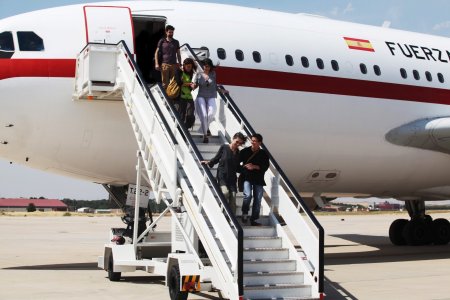
Cette émission des « Termes du débat » a été diffusée sur France culture le 2 décembre 2022. Michaël Neuman et Gilles Ferragu, maître de conférences en histoire contemporaine, y décrivent la manière dont les organisations humanitaires et les Etats font face aux prises d’otage.
 Mohammad Ghannam/MSF
In the media
Mohammad Ghannam/MSF
In the media
06/01/2021
Michaël Neuman
Le jeudi 27 mai 2021, Michaël Neuman participait à l'émission de France Culture "Cultures Monde" consacrée au sujet "ONG : l'humanitaire en milieu hostile", aux côtés de Virginie Guiraudon, directrice de recherche CNRS au Centre d’études européennes et de politique comparée de Sciences Po.
 MSF
Analysis
MSF
Analysis
01/28/2021
Françoise Duroch
Michaël Neuman
In this article for the Humanitarian Practice Network, head of the Research Unit on Humanitarian Stakes and Practices (UREPH) for MSF Geneva Françoise Duroch and Crash director of studies Michaël Neuman discuss the implications and reasons behind the growing practice of staff profiling for MSF.
In October 2020, MSF organised a workshop in Dakar on staff profiling in operations in the Sahel. Profiling involves the selection of staff based on non-professional criteria, including nationality, skin colour, gender and religion. As such, it raises a number of ethical and practical concerns. As a result of profiling, US nationals have not been deployed in MSF operations in Colombia because of the risk of kidnapping, and Chadians and Rwandans have been excluded in the Central African Republic and eastern Democratic Republic of Congo respectively, because of regional conflicts. The use of profiling has increased in recent years in West Africa, as the threat of kidnapping of Westerners by radical jihadist groups has intensified.
 Sandra Calligaro
Analysis
Sandra Calligaro
Analysis
12/07/2020
Fabrice Weissman
The May 12th massacre at the MSF-supported maternity hospital in Dasht-e-Barchi (Afghanistan) raises, yet again, the question of our limits with regard to risk. What is an acceptable level of danger for humanitarian aid workers? How do we set limits? Why would MSF decide to leave Kabul but remain in Herat, for example, or leave Afghanistan but remain in Niger, Burkina Faso, Mali, or Somalia, where the teams also face extreme danger?
 MSF
Analysis
MSF
Analysis
09/18/2020
Fabrice Weissman
On the 31st January, a symposium was held at Sciences Po in support of Fariba Adelkhah and Roland Marchal, researchers at Sciences Po's Center for International Research (CERI) who were arrested in Iran on June 5, 2019. Roland Marchal was released on 20th March 2020 in exchange for an Iranian engineer detained in France. On 6th May Fariba Adelkhah was sentenced to 6 years imprisonment for "propaganda against the political system of the Islamic Republic, and collusion to undermine national security". The researcher was offered conditional release on condition that she terminates her research, but she refused.
The symposium brought together diplomats, journalists, humanitarians and researchers, with the aim of "nourishing reflection about prisoners and hostages, from a political, legal and ethical point of view". Fabrice Weissman presented the experience of Médecins Sans Frontières in the face of kidnappings.
 Mack Alix Mushitsi
Interview
Mack Alix Mushitsi
Interview
09/06/2020
Rony Brauman
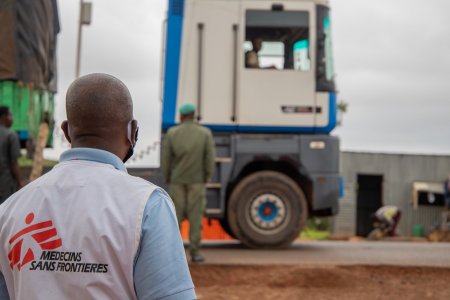
Dans cette interview parue dans Le Parisien le 6 septembre, Rony Brauman souligne les risques encourus dans certains pays un mois après l’attentat du Niger qui a coûté la vie à 8 personnes, dont 6 jeunes humanitaires français.
 Juan Carlos Tomasi/MSF
In the media
Juan Carlos Tomasi/MSF
In the media
03/04/2020
Fabrice Weissman
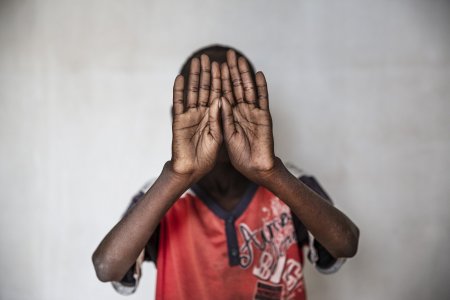
Dans l'émission « Matières à penser » de France Culture, Fabrice Weissman revient sur les dilemmes rencontrés par les organisations humanitaires confrontées à l’enlèvement d’un de leurs employés.
 Robin Meldrum/MSF
Analysis
Robin Meldrum/MSF
Analysis
11/22/2019
Fabrice Weissman
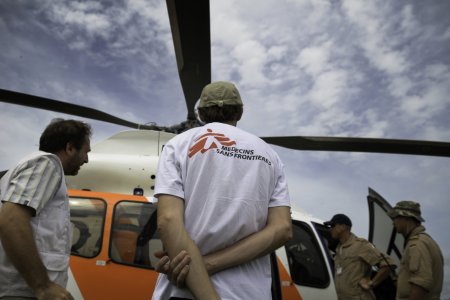
This article discusses the policy of absolute secrecy on abductions adopted by aid organisations. It argues that the information blackout on past and current cases is to a large extent a function of the growing role of private security companies in the aid sector, which promote a ‘pay, don’t say’ policy as a default option, whatever the situation. The article contends that secrecy is as much an impediment to resolving current cases as it is to preventing and managing future ones. It suggests abandoning the policy of strict confidentiality in all circumstances – a policy that is as dangerous as it is easy to apply – in favour of a more nuanced and challenging approach determining how much to publicise ongoing and past cases for each audience, always keeping in mind the interests of current and potential hostages.