
OFF THE CUFF is a participative blog run by the Crash. Its purpose is to expose the diversity of experiences and opinions that exist among humanitarian aid practitioners. Online comments as well as direct contributions are more than welcome.
Views expressed on this blog are those of their authors and do not necessarily reflect the official positions of Médecins Sans Frontières
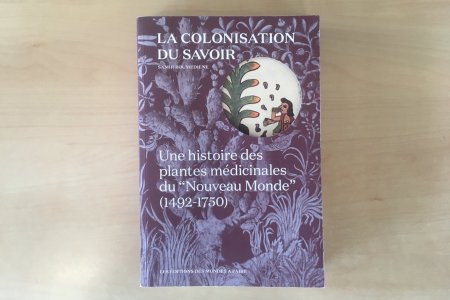
A propos de pharmacopées indiennes et de quinquina
Fiche de lecture du livre La colonisation du savoir. Une histoire des plantes médicinales du « Nouveau Monde » (1492-1750), Vaulx-en-Velin, Éditions des Mondes à faire, 2016, de Samir Boumediene historien, chercheur CNRS à l’ens-lyon.
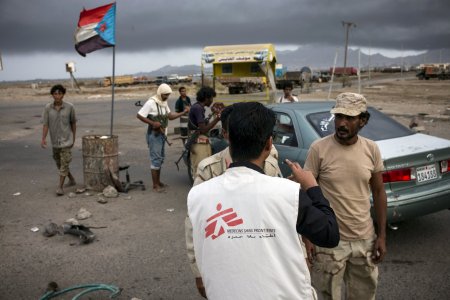
Agir par principe ? Fabrice Weissman aux 10 heures de l’éthique 2018
Le 15 octobre 2018, Fabrice Weissman est intervenu dans Les 10 heures de l'éthique 2018, journée organisée par l’Espace Ethique. Dans sa présentation, il dresse une critique du discours dominant des organismes d’aide sur les principes humanitaires auquel il propose de substituer un questionnement éthique sur les politiques d’assistance.
Behind the scenes in the “natural" disaster community: a discussion with Sandrine Revet and Rony Brauman
To mark Editions MFSH’s publication of Les coulisses du monde des catastrophes « naturelles », on 14 November 2018, CERI (Centre de recherches internationales Sciences Po - CNRS) presented a discussion with its author, Sandrine Revet, CERI anthropologist and co-founder of the Association pour la Recherche sur les Catastrophes et les Risques en Anthropologie (ARCRA), and Rony Brauman. CRASH recommends this book to anyone with an interest in natural disasters and international relations.
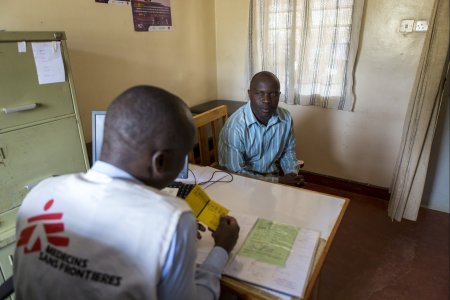
Les représentations du VIH et leur impact sur le recours aux soins. Enquête au sein de la population masculine de Homa Bay au Kenya
Xavier Plaisancie est médecin. Dans cette vidéo réalisée par la revue Alternatives Humanitaires, il présente sa thèse intitulée : « Les représentations du VIH et leur impact sur le recours aux soins. Enquête au sein de la population masculine de Homa Bay au Kenya. », un travail de recherche pour lequel il a été accompagné par Jean-Hervé Bradol et Marc Le Pape du CRASH.
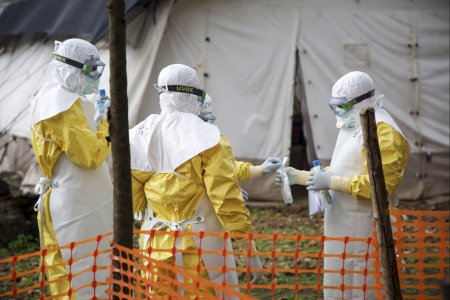
Ebola in the DRC: between operational trial and error and scientific uncertainty
Rebecca Grais, Research Director at Epicentre, MSF’s epidemiology arm, and Pierre Mendiharat, Deputy Director of Operations for MSF-France, offer their insights on the Ebola outbreak in North Kivu Province in the eastern Democratic Republic of the Congo (DRC). This joint interview in four parts (the outbreak, social context, treatments, and vaccination) aims to show how science and practice interact around each outbreak.
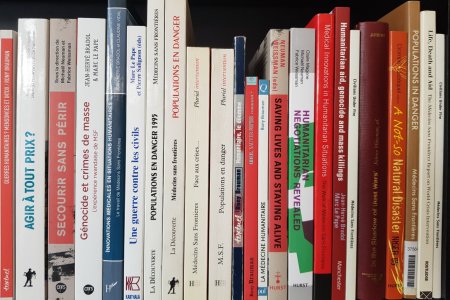
The books of the CRASH are now available in EPUB format
At the time of digital humanities and as part of a project to make available to the public all books written by members of the CRASH since the 1990s, the following books are now downloadable in EPUB format on our website.
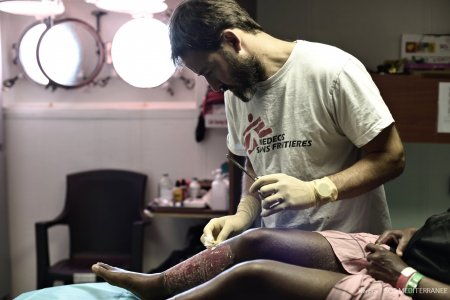
Mediterranean: the Aquarius Aquarium
As an MSF nurse, François-Xavier Daoudal returned at the end of June after spending three weeks on board the Aquarius. During his time on the ship, 629 people were rescued. However, immediately after the rescue operation, the Italian and Maltese authorities refused the ship permission to dock, triggering a huge political and media furor. The Aquarius was left stranded at sea for several days before being able to transfer some of the rescued migrants to two Italian navy ships. All passengers were finally disembarked in Spanish port Valencia. What can be drawn from such an experience? Read on to see what F-X had to say during an interview on the political implications, life on board the Aquarius and the issue of people smuggling. He also shared with us what the migrants themselves had to say.
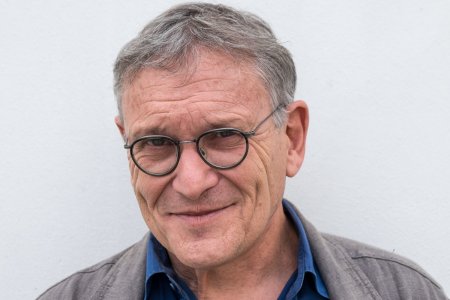
Rony Brauman: « French military interventions create “safe billets” in Africa »
Rony Brauman takes a critical look at "humanitarian wars" and argues for political solutions that could include Islamists. He recently published "Humanitarian Wars? Lies and intox "(Textuel, 2018). This interview was published on July 03, 2018 in l'Opinion.
Tomorrow’s war ? With Bertrand Badie
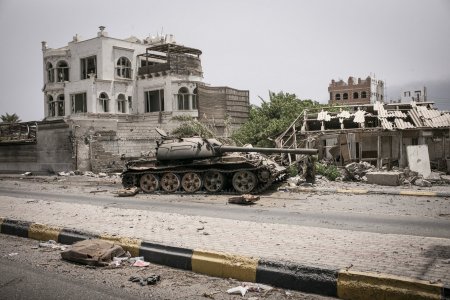
Tomorrow’s war? Bertrand Badie is pessimistic given the extremely high tension in the Middle East. Modern conflicts in the region are defined by their uncertain, composite and heterogeneous nature, as well as by their permanence, as there are no winners and no losers. The situation can be interpreted vertically as a “superposition of logics of conflict” and horizontally as an “aggregate of logics of coalition”. Bertrand Badie explained that a conflict situation is really dangerous when it combines several logics of conflict and several logics of alliance, making it virtually impossible to reach a compromise. Today, we can distinguish fives layers of conflict in the Middle East, a level of superposition never previously attained, according to this specialist in international relations.

The story of patient Philippe Lançon, after the terrorist attack against Charlie Hebdo
Philippe Lançon works as a journalist for the French satirical magazine, Charlie Hebdo, and Libération newspaper. His book, Le lambeau was published in April. As the author and subject of his narrative, he relates his experience as a hospital patient after surviving the terrorist attack against Charlie Hebdo during its editorial meeting on 7 January 2015. Although a “novice" when it comes to hospitals and operating theatres, he is a seasoned journalist. He is currently writing for Libération’s culture page, but previously reported on armed conflicts (Iraq and Somalia). So he’s no novice when it comes to casualties of war. In 2015, he became a reporter reporting on himself and on hospital surgery.
Mortality emergency threshold: A case for revision
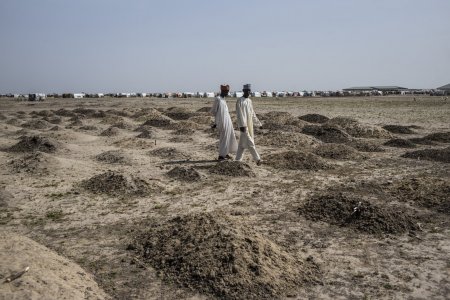
The crude mortality rate (CMR) is one of the most widely used indicators at MSF and the humanitarian sector to evaluate the severity of a health crisis within a given population. It is widely recognized that a CMR equal to or greater than one death per 10,000 persons a day signifies an emergency situation requiring an immediate response. However, the usage of the standard emergency threshold as “1/10,000/day” is very questionable: it goes against the official recommendations endorsed by humanitarian organizations and ignores the worldwide decline in mortality rates over the last 30 years.
Hospitality
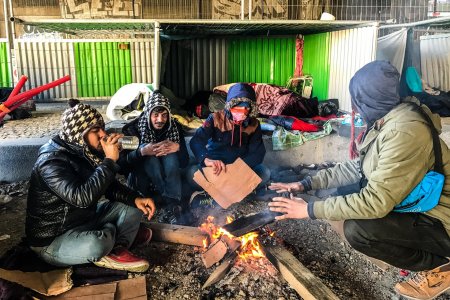
Thanks to the migrant crisis, or the reception crisis as it would be more appropriate to call it, the issue of hospitality is back in the forefront. On 17 May, the Maison des Métallos organised a conference with two social science researchers - Michel Agier and Benjamin Boudou - and an NGO manager Cécile Poletti to discuss existing tensions between private hospitality and public hospitality.