
OFF THE CUFF is a participative blog run by the Crash. Its purpose is to expose the diversity of experiences and opinions that exist among humanitarian aid practitioners. Online comments as well as direct contributions are more than welcome.
Views expressed on this blog are those of their authors and do not necessarily reflect the official positions of Médecins Sans Frontières
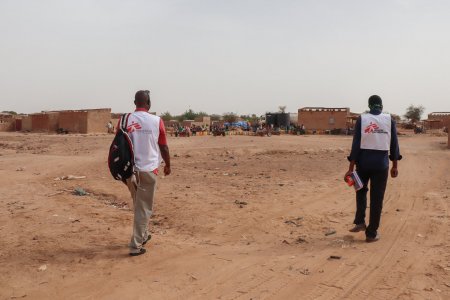
Should we discriminate in order to act? Profiling: a necessary but debated practice
In this article for the Humanitarian Practice Network, head of the Research Unit on Humanitarian Stakes and Practices (UREPH) for MSF Geneva Françoise Duroch and Crash director of studies Michaël Neuman discuss the implications and reasons behind the growing practice of staff profiling for MSF.
In October 2020, MSF organised a workshop in Dakar on staff profiling in operations in the Sahel. Profiling involves the selection of staff based on non-professional criteria, including nationality, skin colour, gender and religion. As such, it raises a number of ethical and practical concerns. As a result of profiling, US nationals have not been deployed in MSF operations in Colombia because of the risk of kidnapping, and Chadians and Rwandans have been excluded in the Central African Republic and eastern Democratic Republic of Congo respectively, because of regional conflicts. The use of profiling has increased in recent years in West Africa, as the threat of kidnapping of Westerners by radical jihadist groups has intensified.
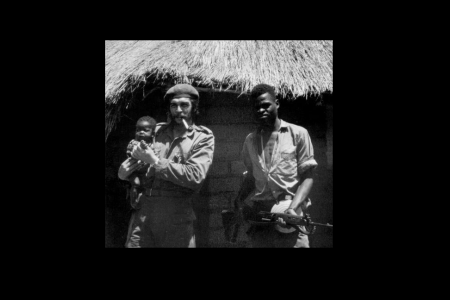
A “partnership” experience, A guided reading of Che Guevara's diary in Congo
Operational partnerships between two organisations are a practical approach to humanitarian responses. MSF considers such partnerships when the objective it is pursuing in a country is similar to that of an existing national organisation, and when there is potential for synergy between these two entities. I would like to take a bit of a detour by looking at an experience that is in some ways similar: when Che Guevara tried to lead the revolution in Congo - Zaire by supporting the organisation of the guerrilla movement in the east of the country.
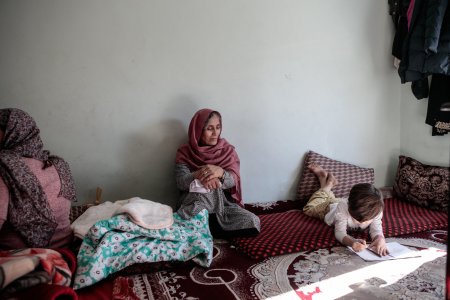
Afghanistan : Should MSF accept the risk of targeted killings?
The May 12th massacre at the MSF-supported maternity hospital in Dasht-e-Barchi (Afghanistan) raises, yet again, the question of our limits with regard to risk. What is an acceptable level of danger for humanitarian aid workers? How do we set limits? Why would MSF decide to leave Kabul but remain in Herat, for example, or leave Afghanistan but remain in Niger, Burkina Faso, Mali, or Somalia, where the teams also face extreme danger?
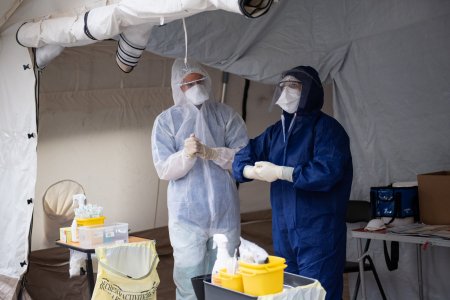
Communicating and convincing: a humanitarian perspective on the French response to the coronavirus epidemic
In this paper, the two authors examine certain aspects of the French response to the epidemic in the light of the experience of Médecins Sans Frontières (MSF) in that field, primarily with respect to the relationship between the actors of the response and the beneficiaries.
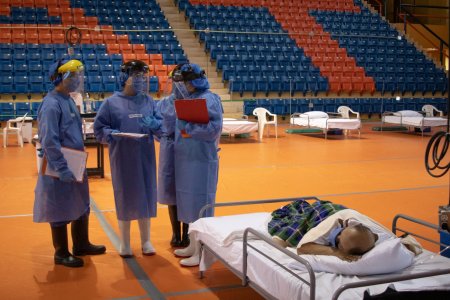
Covid-19 Reading List - Part 4
After a few months of respite the coronavirus epidemic has resumed its spread. With the second wave becoming a reality in many European countries, the Crash team decided to share some recent reading on the biomedical, political and social aspects of the pandemic in an attempt to shed some light on this tragic Season 2. As in previous editions, some articles are in English and some in French, and they are taken from both mainstream and specialist sources.

Are Covid-19 vaccines really a common good for humanity?
The benefit of the vaccine is only real in the context of a rational and comprehensive biomedical, social, political and economic response, adapted to the local assessment of the health crisis and its impacts.

Covid-19: reactions of sociologists in lockdown
In France, from March onwards, many sociologists regularly appear in the media. Based on this observation, Marc Le Pape analysed 37 articles written during the containment period, dealing with the Covid-19 pandemic.
Management at MSF - Part 2
In our first interview, Marion Péchayre discussed a variety of management-related problems at Médecins Sans Frontières: working in silos, the ever-growing number of management tools for monitoring, the endless validation requests, the vanishing role of the individual in favour of pseudoscientific presentations of events and projects, etc. This interview, conducted by Elba Rahmouni, focuses on solutions to these problems and hypotheses on how to improve our ways of working. Rather than offering set recipes, Marion Péchayre advocates an approach based on “practical wisdom” (a concept from the sociology of professions) and deliberative management that every individual and team can apply in their own way.
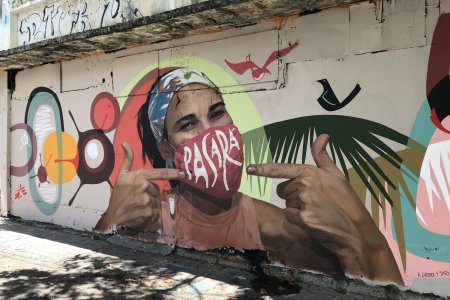
Conseils de lecture sur la Covid-19 - Partie 3
Alors qu’une première vague de l’épidémie de Covid-19 est en fin de course en Europe et qu’elle poursuit une trajectoire ascendante dans de nombreuses régions du monde, nous proposons une troisième liste de lecture. Elle constitue un bilan d’étape de l’état des connaissances (origine, circulation, transmission et manifestations du virus), des conséquences sociales de l’épidémie, et de l’état du débat scientifique. Comme les deux premières, cette sélection rassemble des articles en français et en anglais, issus de la presse généraliste ou scientifique, ainsi que des contributions issues des sciences sociales.

An epidemiologist’s analysis of the Covid-19 crisis - Part 2
Crisis situation, response strategies, hydroxychloroquine, interventional epidemiology and the state of scientific research in Africa: Elba Rahmouni interviews Emmanuel Baron, Director of Epicentre, Médecins Sans Frontières

An epidemiologist’s analysis of the Covid-19 crisis - Part 1
Crisis situation, response strategies, hydroxychloroquine, interventional epidemiology and the state of scientific research in Africa: Elba Rahmouni interviews Emmanuel Baron, Director of Epicentre, Médecins Sans Frontières
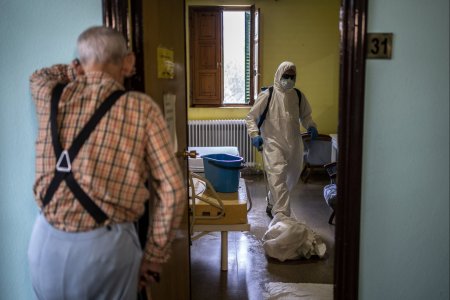
I do not clap at 8 o’clock
The biggest oversight in the response to this epidemic has been the EHPADs. For the staff, the directive was clear: continue to work and provide an alternative to hospitalisation. No matter the conditions. For the residents, it was to die alone without treatment to alleviate their suffering.