
OFF THE CUFF is a participative blog run by the Crash. Its purpose is to expose the diversity of experiences and opinions that exist among humanitarian aid practitioners. Online comments as well as direct contributions are more than welcome.
Views expressed on this blog are those of their authors and do not necessarily reflect the official positions of Médecins Sans Frontières
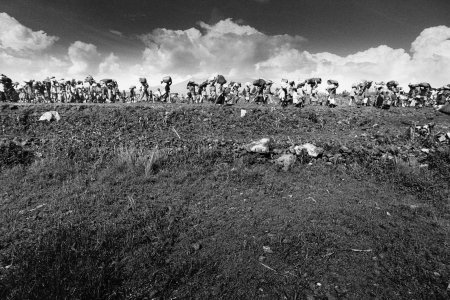
Those who remember. DRC, Empire of Silence
The film Empire of Silence, directed by Thierry Michel, examines the massacres committed in the Democratic Republic of the Congo from 1996 to the present. In this blog, Marc Le Pape introduces the film’s structure, some of the principal witnesses to the mass executions and some of the military and political actors responsible for them, and Congolese reactions to their impunity.
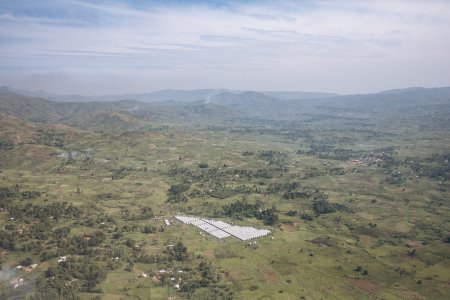
Hommage to Bert Ingelaere
Today we learnt of the passing of Bert Ingelaere. Our thoughts go out to his friends, colleagues, and family.
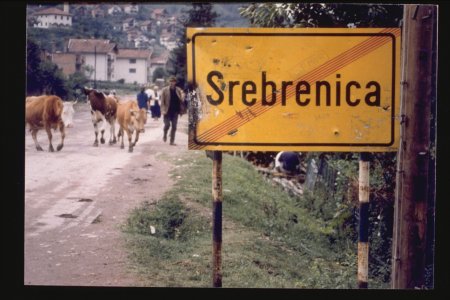
MSF releases the “Speaking out: Srebrenica podcast”
MSF releases in English, French and in Arabic the “MSF Speaking Out: Srebrenica” podcast based on the original MSF Speaking Out Case Study (SOCS) “MSF in Srebrenica, 1993 – 2003”.
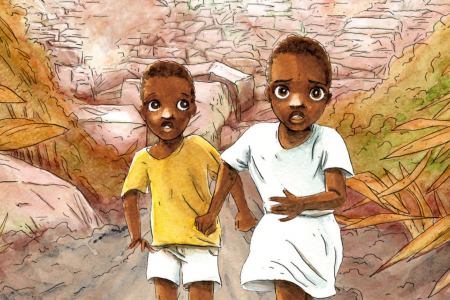
Le Grand Voyage d'Alice
The comic book "Le Grand Voyage d'Alice" was drawn by Gaspard Talmasse and published by La boîte à bulles on November 17th. The preface of this comic book was written by Dr. Jean-Hervé Bradol, former president of MSF and director of studies at the Reflection center of MSF (MSF-Crash). The book won the MSF prize at the Carnet de voyages Festival in Clermont-Ferrand, held from November 19th to the 21st.
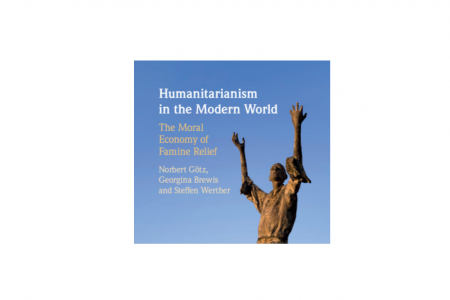
Humanitarianism in the Modern World. The moral economy of famine relief
“Humanitarianism in the Modern World. The moral economy of famine relief” published by Cambridge University Press, is an open access book written by a team of three people, whose aim is to provide a history of contemporary humanitarianism through the prism of famines. Norbert Götz, Georgina Brewis and Steffen Werther are treading on fertile ground, as the number of publications on the history of humanitarianism has multiplied in recent years. However, the contribution they present here is rich and original.
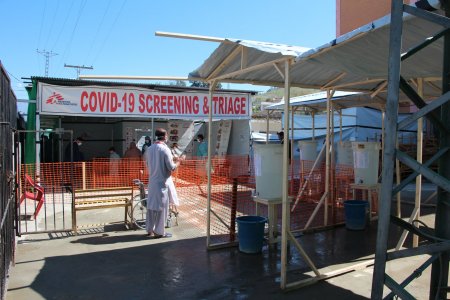
A lire : Le triage et ses modes d’existence
A l’aune des débats en France autour de la saturation des services de réanimation et des mesures de confinement lors de la pandémie de la Covid-19, Jean-Paul Gaudillière, Caroline Izambert (comité scientifique du CRASH) et Pierre-André Juven explorent la notion de triage dans un article intitulé « Le triage et ses modes d’existence : ce que la priorisation des soins révèle », récemment publié sur AOC. Ce court article passionnant permet de comprendre que si le triage clinique n’est en aucun cas une exception, c’est dans son articulation au triage systémique, à la fois politique et économique, qu’apparaît toute la profondeur et la difficulté de cette pratique. Cet article constitue également une très bonne introduction à l’ouvrage des mêmes auteurs Pandémopolitique. Réinventer la santé en commun, paru cette année aux éditions de La Découverte.

Médecins Sans Frontières and Humanitarian Negotiations for Access in the Democratic Republic of the Congo
Myfanwy James is a research fellow at the London School of Hygiene and Tropical Medicine & DPhil (PhD) graduate from the University of Oxford. In this video, she presents her thesis entitled: “Instruments of Identity: Médecins Sans Frontières and Humanitarian Negotiations for Access in the Democratic Republic of the Congo (RDC)”.
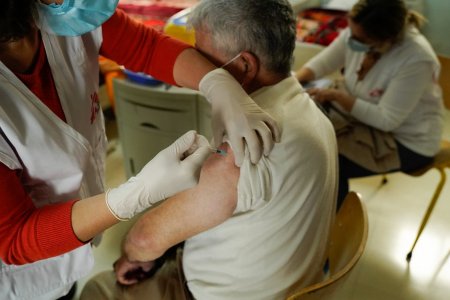
Covid-19 Reading List : the vaccines special edition
We can all agree that the emergence of Covid-19 vaccine is “an absolutely astonishing development”, but vaccines are unlikely to completely halt the spread of the virus, let alone eradicate it. Yet even without achieving herd immunity, the ability to vaccinate vulnerable people seems to be reducing hospitalizations and deaths from Covid-19.
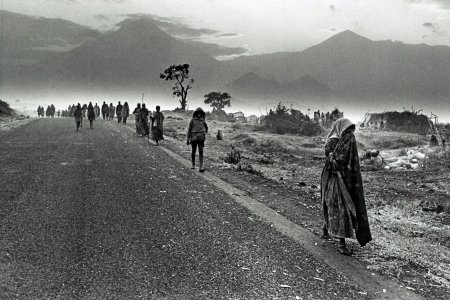
The “disappeared” of Congo-Zaire, 1996-1997. The question of the massacres of Rwandan Hutu refugees in the Democratic Republic of Congo
There is a new book out by Patrick de Saint-Exupéry entitled La traversée. Une odyssée au cœur de l’Afrique [The crossing. An odyssey in the heart of Africa]. What odyssey? Crossing the Congo (Zaire, later the Democratic Republic of Congo) from Rwanda. The author describes his encounters, the beers he had here and there, the bumpy rides on the back of a motorcycle (to Kisangani), a trip down the Congo River, flying over the dense forest on his way to Mbandaka.
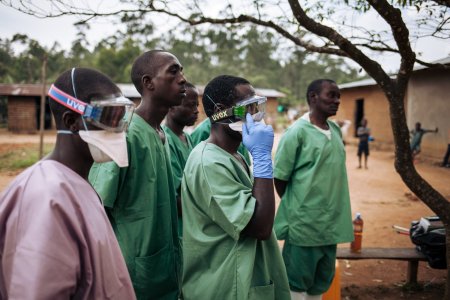
Ebola and innovation: examining the approach to the Nord Kivu epidemic
Within four months of the first notification of Ebola cases in August 2018, the Nord Kivu (and Ituri) Ebola epidemic had become the second-largest on record. Notwithstanding a rapid and massive mobilisation of resources, the outbreak continued beyond the most pessimistic predictions and the case fatality rate (the proportion of people with the infection who die from it) remained static at 66%. Despite numerous lesson-learning exercises following the Ebola epidemic in West Africa in 2014–2016, and despite the development of new vaccines and treatments, after 3,444 cases and 2,264 deaths it is difficult to claim that outcomes are better this time around.
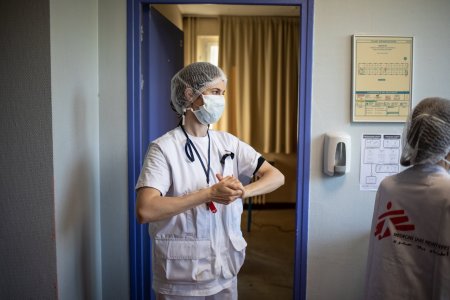
Nursing homes and their ghosts: MSF's experience in France during the Covid-19 health crisis
This article was published in Mouvements magazine on March 24, 2021. In the early spring of 2020, the humanitarian organization Médecins Sans Frontières (MSF) launched a mission in nursing homes in the Ile-de-France region, which had been hit hard by the Covid-19 pandemic. After considering the implementation of night-time palliative care, the organization finally decided to provide daytime support to the nursing homes in difficulty. Once the crisis was over in the summer, the MSF teams started offering mental health support to nursing home staff. A look back at this experience on September 28, 2020 with four members of the mission, Olivia Gayraud (project coordinator), Jean-Hervé Bradol (M.D. and CRASH1 member), Marie Thomas (psychologist) and Michaël Neuman (CRASH coordinator).
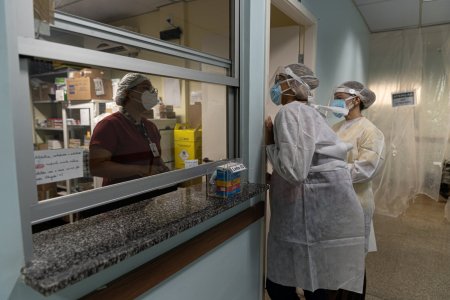
What to think, do and say about the Covid-19 vaccination?
Blog written by Jean-Hervé Bradol, director of studies at the Crash.
Today, in order to obtain supplies of vaccines against Covid-19, there is neither a major difficulty related to price, nor a major obstacle related to intellectual property rules, nor a deficit in bio-medical research. However, these three topics are generally at the heart of MSF's communication in the area of access to medical care for those in most need. Our discourse must therefore evolve.
With the emergence of worrying variants of the virus present in the early stages of the pandemic and, as a consequence, the need to vaccinate on a global scale as quickly as possible, the world is facing a double challenge: biological engineering and ultra-industrial production – “ultra” echoing the need to produce on a global scale in a short period of time.