
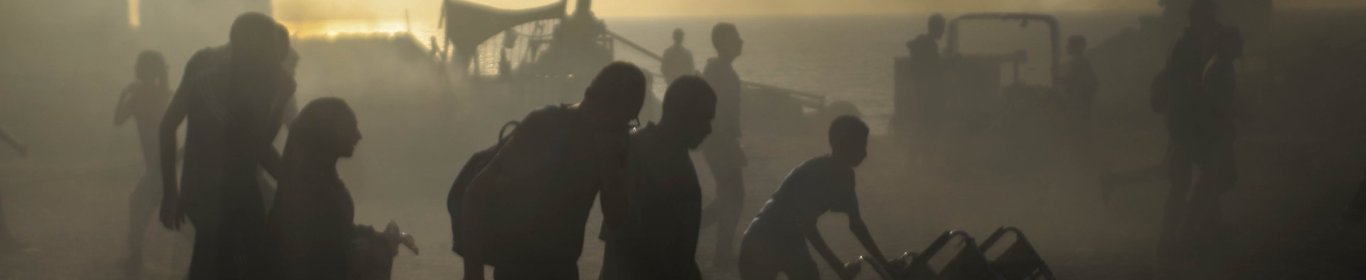
Gaza, Ukraine. How AI and drones are transforming the violence of war
Amélie Ferey & Laure de Roucy-Rochegonde
Dr. Amélie Férey est chercheuse au sein du Centre des études de sécurité de l'Ifri et responsable du Laboratoire de recherche sur la défense (LRD). Ses publications traitent des thèmes suivants : l'éthique et le droit de la guerre, le conflit israélo-palestinien, la légitimation de la force armée.
Son doctorat, soutenu en février 2018 à Sciences Po, a donné lieu à la publication d’un livre intitulé Assassinats ciblés. Critique du libéralisme armé, aux éditions CNRS dans la collection « Guerre et Stratégie » de l’Association pour les études sur la guerre et la stratégie (AÉGES). Ses recherches ont bénéficié du soutien financier de la Fondation nationale pour la science politique (FNSP), de l’Institut de recherche stratégique de l’École militaire (IRSEM) et du Centre national de la recherche scientifique (CNRS). Elle a été chercheuse postdoctorale au Centre de recherches internationales de Sciences Po (CERI) et à l’IRSEM. Elle est enseignante à Sciences Po Paris et à Polytechnique.
Dr. Laure de Roucy-Rochegonde est directrice du Centre géopolitique des technologies de l'Ifri depuis février 2024. Elle était précédemment chercheuse au Centre des études de sécurité de l’Ifri depuis mars 2020, où elle a travaillé sur les applications militaires de l’intelligence artificielle, la conflictualité normative et la maîtrise des armements. Docteure en Science politique, elle est également chercheuse associée au Centre de recherches internationales (CERI, Sciences Po/CNRS). En octobre 2024 est paru son premier ouvrage, intitulé La Guerre à l’ère de l’Intelligence artificielle : quand les machines prennent les armes (PUF).
Parallèlement à ses activités de recherche, elle enseigne l'éthique de la guerre et la maîtrise des armements à Sciences Po Paris et à l’Université Paris 2 Panthéon-Assas. Elle est par ailleurs titulaire d'un master de politiques publiques et d'un bachelor de Sciences Po Paris, au cours duquel elle a passé une année au département de War Studies de King's College à Londres.
On Tuesday, October 14, 2025, the CRASH team was pleased to welcome Laure de Roucy-Rochegonde and Amélie Ferey for a conference on the transformation of war violence in the age of artificial intelligence (AI) and drones. The discussion was prepared and moderated by Fabrice Weissman.
While AI and drones have long been presented by the military as a means of limiting human casualties and collateral damage, the wars in Gaza and Ukraine reveal a much more ambiguous and disturbing reality: swarms of drones attacking civilian and military infrastructure in Russia and Ukraine, autonomous weapons identifying and firing on targets without human intervention, surveillance systems assigning a “risk score” to each Palestinian, targeting software enabling their location and assassination at an unprecedented rate, etc. By marginalizing the role of humans in the use of force, these technologies are significantly accelerating the pace of military operations and destruction.
What impact do these changes have on the violence of war suffered by populations and those who come to their aid? What questions does the use of these new lethal technologies raise about the ethical and legal limits governing the use of armed force?
To discuss these fascinating yet chilling topics, we welcomed two specialists, researchers at the French Institute of International Relations (IFRI): Laure de Roucy-Rochegonde and Amélie Ferey. Laure de Roucy-Rochegonde is the Director of IFRI's Geopolitical Technology Center. Amélie Ferey is a researcher at IFRI's Center for Security Studies and head of the Defense Research Laboratory.
References:
- FEREY, Amélie (2020). Assassinats ciblés. Critique du libéralisme armé. (Targeted Killings: Critique of Armed Liberalism). CNRS Éditions.
- FEREY, Amélie, et DE ROUCY-ROCHEGONDE, Laure (2024). « De l'Ukraine à Gaza : l'Intelligence artificielle en guerre » ("From Ukraine to Gaza: Artificial Intelligence at War"), Politique étrangère, Ifri, p.39-50 : De l'Ukraine à Gaza : l'Intelligence artificielle en guerre | Ifri.
- DE ROUCY-ROCHEGONDE, Laure (2024). La guerre à l’ère de l’intelligence artificielle. (War in the Age of Artificial Intelligence). PUF, Paris.
To cite this content :
Amélie Ferey, Laure de Roucy-Rochegonde, “Gaza, Ukraine. How AI and drones are transforming the violence of war”, 14 octobre 2025, URL : https://msf-crash.org/en/conferences-debates/gaza-ukraine-how-ai-and-drones-are-transforming-violence-war
If you would like to comment on this article, you can find us on social media or contact us here:
Contribute MSF
Analysis
MSF
Analysis
Préface à l'ouvrage "Le Livre noir de Gaza"
10/07/2024Le Livre noir de Gaza est un ouvrage paru le 4 octobre 2024 aux Éditions du Seuil. Il recense autant que possible les faits qu’ont pu établir les ONG internationales, palestiniennes et israéliennes, depuis le début de la guerre. Il est construit à partir de leurs rapports, d’enquêtes d’experts et d’articles de presse, sélectionnés et introduits par la spécialiste du Moyen-Orient Agnès Levallois, avec les contributions inédites de consultants indépendants et responsables d’ONG. La préface a été rédigée par Rony Brauman.
 Conference
Ukraine-Gaza, exchange of views
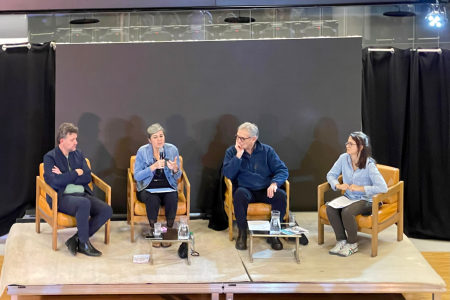
12/03/2024 - 06:30 PM 08:30 PMOn Tuesday, December 3, 2024, the Crash team was pleased to welcome Julia Grignon, Jean-François Corty and Rony Brauman for a conference-debate to mark the publication of the latest issue of Alternatives Humanitaires magazine: “Ukraine-Gaza, cross-perspectives”, in which humanitarian practitioners and observers share their analyses.
 Nour Alsaqqa/MSF
Interview
Nour Alsaqqa/MSF
Interview
Rony Brauman : « Gaza est devenu le lieu de tous les records... »
07/03/2025Dans cet entretien mené par Pierre Lagnel pour Golias Hebdo, Rony Brauman aborde la situation à Gaza, le positionnement des Etats occidentaux, la confrontation avec l'Iran et la couverture médiatique du conflit. Il appelle encore une fois la société civile à se lever contre les massacres en cours dans lesquels la Cour internationale de justice voyait dès le début 2024 « un risque de génocide ».
Past events
 Roger Job
Conference
Roger Job
Conference
France in Rwanda. Guilty neutrality
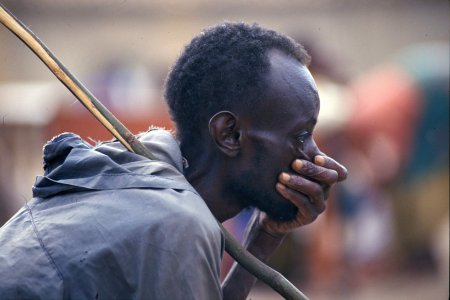
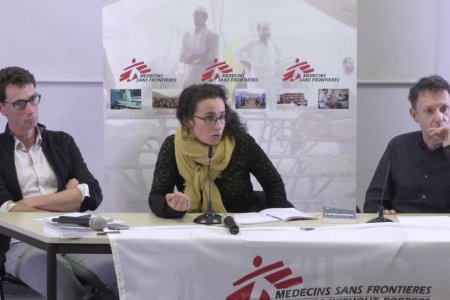
02/11/2019 - 06:00 PM 08:00 PMThe CRASH team invited you to the screening-debate “France in Rwanda. Guilty neutrality” on Monday 11th of February 2019 from 6 to 8pm, in the 1rst floor room of the 8 rue Saint-Sabin. A documentary film by Robert Genoud and Claudine Vidal (Director Emeritus for research at the CNRS, member of the CRASH scientific committee at MSF), and produced by EUP. Before and after the screening, Claudine Vidal and Jean-Hervé Bradol, both actors of MSF mobilization between 1994 and 1998 launched the discussion.
 Conference
Healing foreigners in France: The State and the civil society organisations from the 80s to the 90s
12/17/2018 - 06:00 PM 08:00 PMThe CRASH team invited you to the debate-conference “Healing foreigners in France: The State and the civil society organisations from the 80s to the 90s” on Monday 17th of December 2018. We hosted Caroline Izambert, who recently defended, at the EHESS, her PhD thesis focusing on the foreigners’ access to healthcare in France. Her title: “Heal foreigners?” The State and the civil society organisations for the health coverage of the poor and foreigners in France from the 1980s to the present day. This conference was prepared and moderated by Michaël Neuman.
 Conference
Borders and Hospitality
11/26/2018 - 06:00 PM 08:00 PMThe Crash team had the pleasure of welcoming Benjamin Boudou, politician and researcher at the Max Planck Institute, for a conference-debate on November 26, 2018. The meeting was prepared and moderated by Michaël Neuman.
 MSF-Crash
Conference
MSF-Crash
Conference
Immunization: new perspectives on vaccines - Conference with Lise Barnéoud
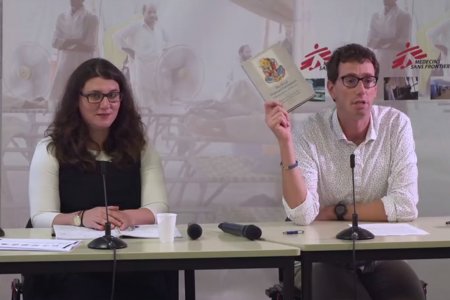
12/05/2017 - 06:00 PM 08:00 PMLise Barnéoud was a Crash guest speaker at a conference on vaccination held on December 5, 2017. A discussion with Epicentre, Crash and the MSF Medical Department allowed us to exchange views on vaccinal policy, which remains a cornerstone of MSF operations and a recurring subject of discussion and controversy. This meeting was prepared and moderated by Michaël Neuman and Emmanuel Baron.
 MSF
Conference
MSF
Conference
Humanitarian anthropology : conference with Sharon Abramowitz
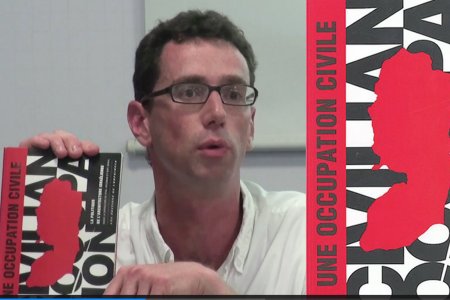
10/23/2017 - 06:00 PM 08:00 PMThe Crash team had the pleasure of welcoming Sharon Abramowitz, American medical anthropologist and author of "Medical Humanitarianism: Ethnographies of Practice", for a conference-debate on October 23, 2017. The meeting was prepared and moderated by Michaël Neuman.
 Conference
Eyal Weizman - Forensic Architecture at work
02/15/2016 - 07:00 PM 09:30 PMEyal Weizman, founder of Forensic Architecture at Goldsmiths College, University of London, presented his project and a number of his achievements at a Crash conference held on July 2, 2015. The event was organized and moderated by Michaël Neuman.