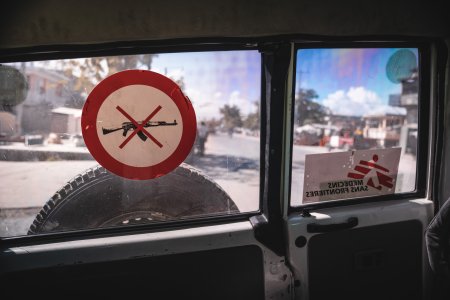
 Pierre Fromentin/MSF
A to Z
Pierre Fromentin/MSF
A to Z
09/01/2025
Rony Brauman
Caught between humanitarian commitment to vulnerable populations and security concerns, the issue of the use of armed escorts by humanitarian organisations raises some fraught questions. Médecins Sans Frontières has adopted this practice, controversial as it is, in a number of contexts throughout its history. Can we resort to this type of protection without compromising our neutrality? Are MSF's image and the very safety of its teams threatened by being so close to armed actors?
 Podcast
09/17/2024
Educateur spécialisé, juriste et militant des droits de l'homme, Dicko a rejoint Médecins Sans Frontières en 2020 comme "chargé de veille contextuelle". Sa mission : aider les équipes MSF à se déployer au Niger, au Burkina Faso, au Mali et au Nigéria, pays en proie à des conflits violents opposant leurs gouvernements à des mouvements armés se réclamant d'al-Qaida ou de l'Etat islamique.
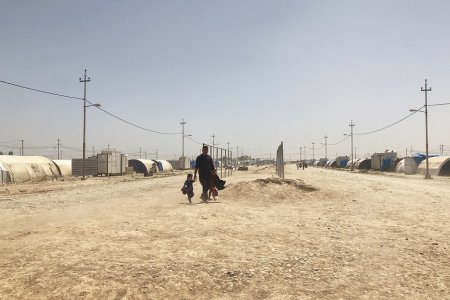 Candida Lobes
Analysis
Candida Lobes
Analysis
12/19/2023
Fabrice Weissman
Challenging the idea that humanitarian actors can act free from politics by virtue of their principles, this chapter argues that the politicization of humanitarian aid is in fact the primary condition for its deployment. Humanitarian actors can only act if they maintain a balance between their own interests and those of people in positions of power. This raises a crucial ethical question: At what point do humanitarian organisations consider that deals reached with political powers cross the blurred but very real line beyond which humanitarian assistance does more harm than good?
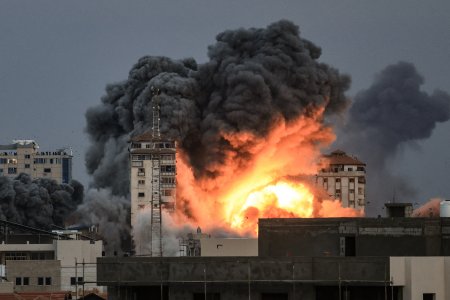 Mahmud Hams/AFP
In the media
Mahmud Hams/AFP
In the media
10/11/2023
Rony Brauman
Cette émission intitulée « Massacre de civils : comment nommer l’innommable ? » a été diffusée sur France Culture le mercredi 11 octobre 2023. Rony Brauman et Elie Barnavi, diplomate et ancien ambassadeur d'Israël en France, sont revenus sur les massacres accomplis dans deux kibboutz voisins de la bande de Gaza. A Beeri et Kfar Aza, environ 1200 civils, hommes, femmes et enfants confondus, ont été assassinés. Ces crimes révoltent car ils rompent avec l’idée d’une civilisation progressive des méthodes de combat. En effet, si les armées régulières essaient de respecter des règles épargnant les civils, il n’en est rien des groupes armés paramilitaires et terroristes.
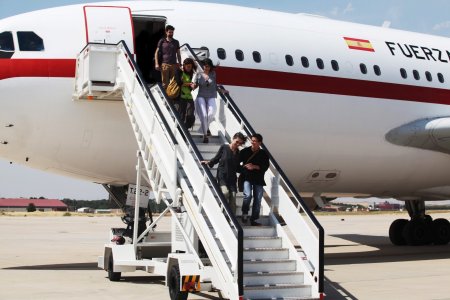 Anna Surinyach/MSF
In the media
Anna Surinyach/MSF
In the media
12/19/2022
Michaël Neuman
Cette émission des « Termes du débat » a été diffusée sur France culture le 2 décembre 2022. Michaël Neuman et Gilles Ferragu, maître de conférences en histoire contemporaine, y décrivent la manière dont les organisations humanitaires et les Etats font face aux prises d’otage.
 MSF/Europe 1 Studio
In the media
MSF/Europe 1 Studio
In the media
06/09/2021
Rony Brauman
Jean-Hervé Bradol
À l'occasion du 50ème anniversaire de Médecins Sans Frontières, l'association et Europe 1 Studio ont lancé un podcast de douze épisodes intitulé « Première ligne ». Ces épisodes permettent de revenir sur cinq décennies d’action humanitaire racontée par celles et ceux qui l’ont vécue.
Retour sur les épisodes avec Rony Brauman et Jean-Hervé Bradol, tous deux anciens présidents de MSF et membres actuels du CRASH.
 MSF
Analysis
MSF
Analysis
09/18/2020
Fabrice Weissman
On the 31st January, a symposium was held at Sciences Po in support of Fariba Adelkhah and Roland Marchal, researchers at Sciences Po's Center for International Research (CERI) who were arrested in Iran on June 5, 2019. Roland Marchal was released on 20th March 2020 in exchange for an Iranian engineer detained in France. On 6th May Fariba Adelkhah was sentenced to 6 years imprisonment for "propaganda against the political system of the Islamic Republic, and collusion to undermine national security". The researcher was offered conditional release on condition that she terminates her research, but she refused.
The symposium brought together diplomats, journalists, humanitarians and researchers, with the aim of "nourishing reflection about prisoners and hostages, from a political, legal and ethical point of view". Fabrice Weissman presented the experience of Médecins Sans Frontières in the face of kidnappings.
 Mack Alix Mushitsi
Interview
Mack Alix Mushitsi
Interview
09/06/2020
Rony Brauman
Dans cette interview parue dans Le Parisien le 6 septembre, Rony Brauman souligne les risques encourus dans certains pays un mois après l’attentat du Niger qui a coûté la vie à 8 personnes, dont 6 jeunes humanitaires français.
 Agnes Varraine-Leca/MSF
Interview
Agnes Varraine-Leca/MSF
Interview
03/30/2020
Rony Brauman
Dans cet entretien paru dans L'Obs le 27 mars, Rony Brauman approuve les mesures de confinement, mais dénonce la réduction des capacités des hôpitaux et la rhétorique martiale du chef de l’Etat : « Qualifier les soignants de “héros”, c’est gommer les raisons de la crise sanitaire. »
 Victor J. Blue
Analysis
Victor J. Blue
Analysis
11/22/2019
Xavier Crombé
Joanna Kuper
This article seeks to document and analyse violence affecting the provision of healthcare by Médecins Sans Frontières (MSF) and its intended beneficiaries in the early stage of the current civil war in South Sudan. Most NGO accounts and quantitative studies of violent attacks on healthcare tend to limit interpretation of their prime motives to the violation of international norms and deprivation of access to health services. Instead, we provide a detailed narrative, which contextualises violent incidents affecting healthcare, with regard for the dynamics of conflict in South Sudan as well as MSF’s operational decisions, and which combines and contrasts institutional and academic sources with direct testimonies from local MSF personnel and other residents. This approach offers greater insight not only into the circumstances and logics of violence but also into the concrete ways in which healthcare practices adapt in the face of attacks and how these may reveal and put to the test the reciprocal expectations binding international and local health practitioners in crisis situations.
 Robin Meldrum/MSF
Analysis
Robin Meldrum/MSF
Analysis
11/22/2019
Fabrice Weissman
This article discusses the policy of absolute secrecy on abductions adopted by aid organisations. It argues that the information blackout on past and current cases is to a large extent a function of the growing role of private security companies in the aid sector, which promote a ‘pay, don’t say’ policy as a default option, whatever the situation. The article contends that secrecy is as much an impediment to resolving current cases as it is to preventing and managing future ones. It suggests abandoning the policy of strict confidentiality in all circumstances – a policy that is as dangerous as it is easy to apply – in favour of a more nuanced and challenging approach determining how much to publicise ongoing and past cases for each audience, always keeping in mind the interests of current and potential hostages.
 Andre Quillien
Review
Andre Quillien
Review
11/24/2017
Kevin McMahon
Kevin MacMahon's review of "Saving Lives and Staying Alive: Humanitarian Security in the Age of Risk Management" (Michaël Neuman and Fabrice Weissman, London: C. Hurst & Co, 2016) is published in the Journal for the Study of Peace and Conflict (2016, pages 69-70).