
Why defend multilateralism?
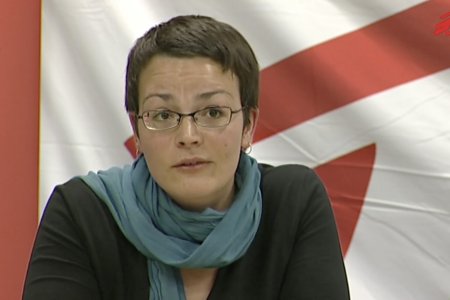
Monique Chemillier-Gendreau
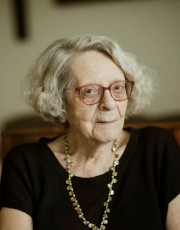
Monique Chemillier-Gendreau is professor emeritus of public law and political science at Paris Cité University, specialist in international law, and practitioner in international courts. She is the author of, among other publications, Rendre impossible un État palestinien. L’objectif d’Israël depuis sa création (Textuel, 2025); Pour un Conseil mondial de la résistance (Textuel, 2020); Régression de la démocratie et déchaînement de la violence (Textuel, 2019); and De la guerre à la communauté universelle. Entre droit et politique (Fayard, 2013).
On Tuesday, March 24th, 2026, we had the pleasure of welcoming Monique Chemillier-Gendreau, Professor Emerita of Public Law and Political Science, for a conference devoted to multilateralism in the current geopolitical context. This event was prepared and presented by Rony Brauman.
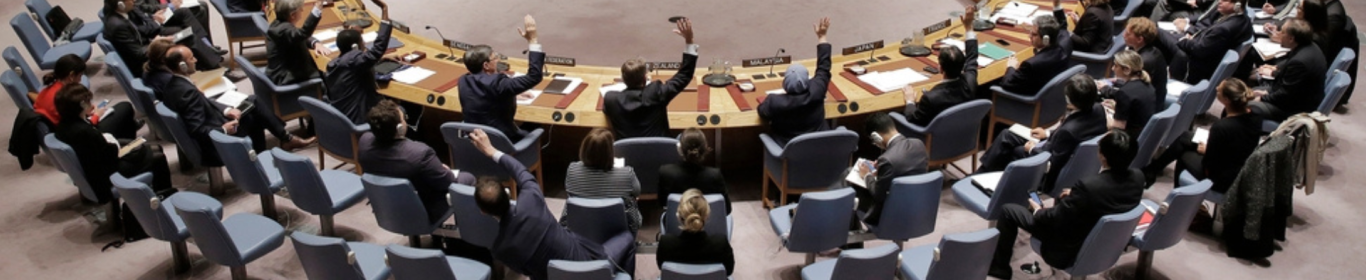
By endorsing the ‘Board of Peace’ on November 17th through the Resolution 2803, the United Nations Security Council entered into direct conflict with another UN body, the International Court of Justice, and the principles it strongly reiterated in its Opinion of July 19th, 2024. Furthermore, ignoring the various resolutions it had previously voted on, the Security Council trampled on international law by siding with the United States, which makes no secret of its ambition to compete with and subjugate the UN.
The days when the UN offered a multilateral façade are over. Humanitarian workers are well placed to know that behind the scenes, the picture was not so rosy. Multilateralism as a façade did little to conceal the reality of the Security Council as a directorate of the powerful, and the results of the many deployments of so-called peacekeeping forces were very meagre. The fact remains that the threat to UN agencies posed by budget cuts is already causing significant damage. The UNHCR, WHO and WFP fulfil essential roles that no one else can take over, while the International Criminal Court is the target of unprecedented attacks.
Should we therefore see this erosion of multilateralism as the beneficial unveiling of a logic of domination that had previously been disguised, with the corollary of the disappearance of vital assistance? Do the wars in the DRC, Sudan and Palestine, and violent oppressive regimes, mark the failure of international law? In short, beyond its humanitarian agencies, is the UN nothing more than fiction, reassuring for some, hypocritical for others?
We discussed these issues with Monique Chemillier-Gendreau, professor emeritus of public law and political science at Paris Cité University, specialist in international law, and practitioner in international courts. She is the author of, among other publications, Rendre impossible un État palestinien. L’objectif d’Israël depuis sa création (Textuel, 2025); Pour un Conseil mondial de la résistance (Textuel, 2020); Régression de la démocratie et déchaînement de la violence (Textuel, 2019); and De la guerre à la communauté universelle. Entre droit et politique (Fayard, 2013).
To cite this content :
Monique Chemillier-Gendreau, “Why defend multilateralism?”, 24 mars 2026, URL : https://msf-crash.org/en/conferences-debates/why-defend-multilateralism
If you would like to comment on this article, you can find us on social media or contact us here:
Contribute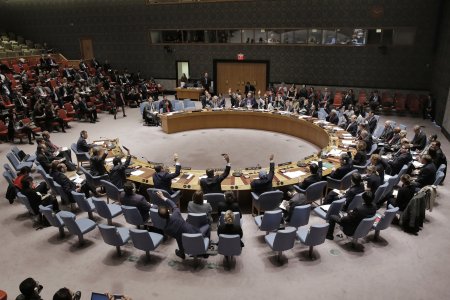 Paulo Filgueiras
Opinion
Paulo Filgueiras
Opinion
Pour une ONU réaliste
07/01/2004Rony Brauman appelle à une réflexion au sein de l'ONU afin que soit re-spécifiés les objectifs des ses opérations de maintien de la paix.
 Jacob Kuehn
Analysis
Jacob Kuehn
Analysis
Humanitarian Aid and the International Criminal Court. Grounds for Divorce
10/01/2009This essay points out the fragility of the arguments most often used by humanitarian organizations to justify their support for an international criminal court. Questioning NGOs' infatuation with punitive justice, Fabrice Weissman argues that humanitarian organizations should advocate for politics of aid and mediation rather than for a global moral order based on judicial punishment and just war.
 Nour Alsaqqa/MSF
Opinion
Nour Alsaqqa/MSF
Opinion
Who killed humanitarian law?
10/02/2025This article by Rony Brauman was originally published in French on October 2, 2025, in the thematic dossier "Deux ans après : penser depyuis le 7 octobre" (“Two Years Later: Reflecting on October 7”), by the Palestine Media Agency (Agence Média Palestine). The author reflects on the events of October 7, 2023, as well as on the disproportionate violence of Israeli reprisals response.
Past events
 Conference
The polio eradication campaign put to test
02/04/2014 - 01:30 PM 07:30 PMOn February 4, 2014, the Crash team was delighted to welcome Dr Rashid Jooma, from Aga Khan university, Karachi, Dr Elisha Renne, professor in the Department of Anthropology and the Department of Afroamerican and African Studies, University of Michigan ; Johannes Everts, WHO technical expert and Dr Hamid Jafari, Director of the Global Polio Eradication Initiative WHO. This round table was moderated by Claire Magone.
 Conference
Living a Natural Disaster
11/03/2010 - 07:00 PM 09:00 PMPeople wandering through the rubble in Haiti, arms outstretched begging for help amid the floods in Pakistan: the media coverage of disasters invariably features helpless victims, overwhelmed by the disaster, waiting to be helped...
 Virginie Nguyen Hoang/HUMA
Conference
Virginie Nguyen Hoang/HUMA
Conference
MSF’s contributions to the changes in trans-national medicine
02/18/2010 - 07:00 PM 09:00 PMThe emergency and constraints of certain catastrophes force MSF teams to medical and operational audacity. To take new paths or stray away from official protocols is to run the risk of doing things less well, of perhaps doing harm and dilapidating resources...
 Jacob Zocherman
Conference
Jacob Zocherman
Conference
Grounds for divorce ? MSF and the international criminal court
04/08/2009 - 08:30 PM 10:30 PMIn 1998 MSF decided to support the creation of the International Criminal Court. 10 years later MSF stated that it ‘would not cooperate and would not transmit any information to the ICC'. How can we explain this change of position?
 Lena Mucha
Conference
Lena Mucha
Conference
From their point of view
03/10/2009 - 07:00 PM 09:30 PMThe reasons why we are accepted, tolerated or sometimes rejected in the contexts where we work are often obscure. Caroline Abu-Sada and her team of sociology student shed some light on these issues.