
Why defend multilateralism?
Monique Chemillier-Gendreau
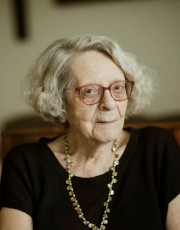
Monique Chemillier-Gendreau is professor emeritus of public law and political science at Paris Cité University, specialist in international law, and practitioner in international courts. She is the author of, among other publications, Rendre impossible un État palestinien. L’objectif d’Israël depuis sa création (Textuel, 2025); Pour un Conseil mondial de la résistance (Textuel, 2020); Régression de la démocratie et déchaînement de la violence (Textuel, 2019); and De la guerre à la communauté universelle. Entre droit et politique (Fayard, 2013).
On Tuesday, March 24th, 2026, we had the pleasure of welcoming Monique Chemillier-Gendreau, Professor Emerita of Public Law and Political Science, for a conference devoted to multilateralism in the current geopolitical context. This event was prepared and presented by Rony Brauman.
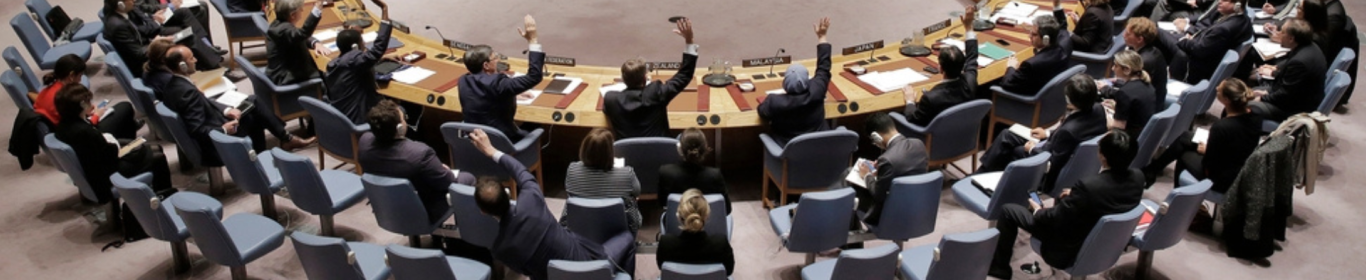
By endorsing the ‘Board of Peace’ on November 17th through the Resolution 2803, the United Nations Security Council entered into direct conflict with another UN body, the International Court of Justice, and the principles it strongly reiterated in its Opinion of July 19th, 2024. Furthermore, ignoring the various resolutions it had previously voted on, the Security Council trampled on international law by siding with the United States, which makes no secret of its ambition to compete with and subjugate the UN.
The days when the UN offered a multilateral façade are over. Humanitarian workers are well placed to know that behind the scenes, the picture was not so rosy. Multilateralism as a façade did little to conceal the reality of the Security Council as a directorate of the powerful, and the results of the many deployments of so-called peacekeeping forces were very meagre. The fact remains that the threat to UN agencies posed by budget cuts is already causing significant damage. The UNHCR, WHO and WFP fulfil essential roles that no one else can take over, while the International Criminal Court is the target of unprecedented attacks.
Should we therefore see this erosion of multilateralism as the beneficial unveiling of a logic of domination that had previously been disguised, with the corollary of the disappearance of vital assistance? Do the wars in the DRC, Sudan and Palestine, and violent oppressive regimes, mark the failure of international law? In short, beyond its humanitarian agencies, is the UN nothing more than fiction, reassuring for some, hypocritical for others?
We discussed these issues with Monique Chemillier-Gendreau, professor emeritus of public law and political science at Paris Cité University, specialist in international law, and practitioner in international courts. She is the author of, among other publications, Rendre impossible un État palestinien. L’objectif d’Israël depuis sa création (Textuel, 2025); Pour un Conseil mondial de la résistance (Textuel, 2020); Régression de la démocratie et déchaînement de la violence (Textuel, 2019); and De la guerre à la communauté universelle. Entre droit et politique (Fayard, 2013).
To cite this content :
Monique Chemillier-Gendreau, “Why defend multilateralism?”, 24 mars 2026, URL : https://msf-crash.org/en/conferences-debates/why-defend-multilateralism
If you would like to comment on this article, you can find us on social media or contact us here:
Contribute Paulo Filgueiras
Opinion
Paulo Filgueiras
Opinion
Pour une ONU réaliste
07/01/2004Rony Brauman appelle à une réflexion au sein de l'ONU afin que soit re-spécifiés les objectifs des ses opérations de maintien de la paix.
 Jacob Kuehn
Analysis
Jacob Kuehn
Analysis
Humanitarian Aid and the International Criminal Court. Grounds for Divorce
10/01/2009This essay points out the fragility of the arguments most often used by humanitarian organizations to justify their support for an international criminal court. Questioning NGOs' infatuation with punitive justice, Fabrice Weissman argues that humanitarian organizations should advocate for politics of aid and mediation rather than for a global moral order based on judicial punishment and just war.
 Nour Alsaqqa/MSF
Opinion
Nour Alsaqqa/MSF
Opinion
Who killed humanitarian law?
10/02/2025This article by Rony Brauman was originally published in French on October 2, 2025, in the thematic dossier "Deux ans après : penser depyuis le 7 octobre" (“Two Years Later: Reflecting on October 7”), by the Palestine Media Agency (Agence Média Palestine). The author reflects on the events of October 7, 2023, as well as on the disproportionate violence of Israeli reprisals response.
Past events
 Conference
Reconstructing Lives
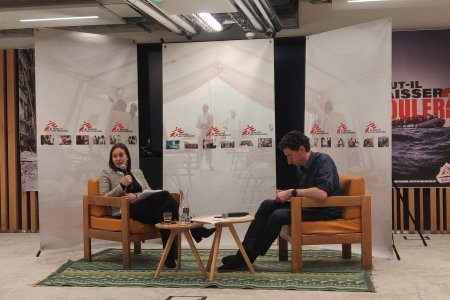
02/17/2022 - 06:30 PM 08:30 PMThe members of the Crash team were happy to welcome you all to an conference-debate with anthropologist Vanja Kovačič, on Thursday 17th of February. The author introduced her recently-published book "Reconstructing lives Victims of war in the Middle East and Médecins Sans Frontières" (Manchester University Press, translated in French and Arabic). This event, prepared with Jean-Hervé Bradol, was moderated by Michaël Neuman.
 Conference
Another approach to well-being at work
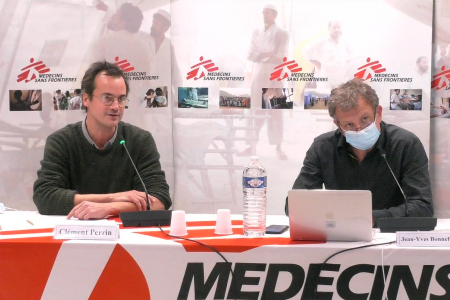
12/09/2021 - 06:30 PM 08:30 PMThe members of the Crash were very happy to welcome you all to this conference-debate with occupational psychologists Yves Clot and Jean-Yves Bonnefond, two of the authors of “Le prix du travail bien fait – La coopération conflictuelle dans les organisations” (Paris, La Découverte, 2021 ; co-written with Antoine Bonnemain and Mylène Zittoun). This event, prepared with Judith Soussan, was moderated by Clément Perrin.
 msf
Conference
msf
Conference
Book launch event - Violences extrêmes. Enquêter, secourir, juger République démocratique du Congo, Rwanda, Syrie
11/17/2021 - 06:30 PM 08:30 PMWe were happy to welcome Claudine Vidal, sociologist (CNRS) and Crash scientific committee member, and Jean-Hervé Bradol, doctor, former President of the French section of MSF and current director studies at the Crash, for the launching event of the newly-published book “Violences extrêmes. Enquêter, secourir, juger République démocratique du Congo, Rwanda, Syrie” (Éditions de la Maison des sciences de l’homme, Paris 2021). The event was hosted by Rony Brauman.
 Conference
Round Table - 50 years of Doctors without borders (Médecins sans frontières)
11/03/2021 - 07:30 PM 09:00 PMMédecins Sans Frontières celebrated its 50th anniversary. On this occasion and in the framework of the International Humanitarian Studies Association (IHSA) conference, the Crash organized a Round Table on the history of the organization, the myths surrounding it, and its recent evolution. This meeting, prepared with Elba Rahmouni, was moderated by Bertrand Taithe.
 Conference
Asylum and exile. A history of the distinction between migrants / refugees
04/12/2021 - 06:30 PM 08:30 PMOn April 12 2021, we were delighted to welcome Karen Akoka, political scientist and sociologist, fresh from her publication in November of “Asylum and Exile. A History of the Refugee/Migrant Distinction" (La Découverte, 2020). The author described and analyzed the trajectory of OFPRA, the French institution founded in 1952 and responsible for granting refugee status; she provided an insight into how the history of the distinction between migrants and refugees was established in France. This conference was prepared and moderated by Michaël Neuman.
 Conference
The quantification of needs
12/10/2020 - 06:00 PM 08:00 PMCombining historical research and ethnographic investigations, the Africanist historian Joël Glasman plunges us into the factory of the homo humanitarianus, the average individual, on the basis of which "needs" and aid projects today are assessed. This conversation took place on December 10th 2020, during a conference-debate at Crash prepared and moderated by Michaël Neuman.