
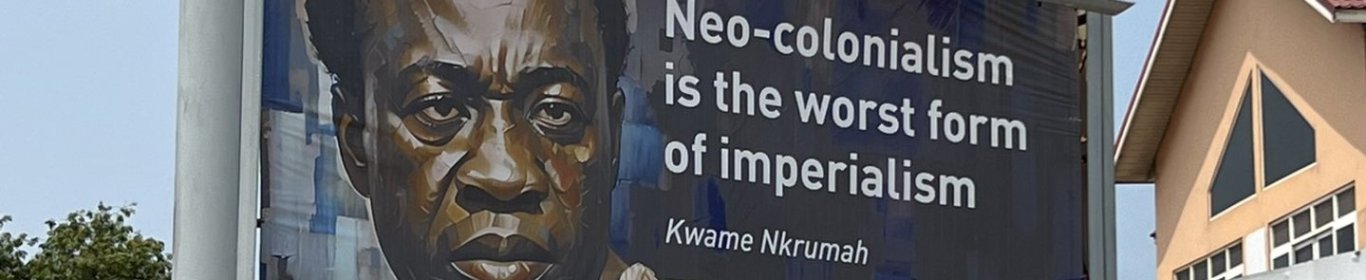
Russian influence strategies in Africa
Maxime Audinet
On Thursday April 3, the Crash team was delighted to welcome Maxime Audinet, researcher at IRSEM, for a conference on Russia's new trajectories in Africa. This meeting, prepared with Michaël Neuman (Crash), was moderated by Guillaume Baret (Operations Department).
Since the late 2010s, Russia has steadily increased its presence in Africa, combining diplomatic and economic leverage, military cooperation as well as informational and cultural influence. Russia is now well established in Libya, Sudan, the Central African Republic and the Sahel countries.
In addition to conventional means, such as military and intelligence apparatus, Moscow has recourse to hybrid players situated at the crossroads of public and private interests. The Wagner Group, which the Russian Ministry of Defense is now seeking to absorb under the aegis of Africa Corps, is a case in point. This strategy is accompanied by a structured ecosystem of informational influence, combining state media and social network campaigns, subsidizing local influencers and creating relay actors to spread a pro-Russian narrative and denigrate former European colonial powers.
On April 3, we will have the pleasure of welcoming Maxime Audinet, researcher at the “Institut de Recherche Stratégique de l'École Militaire” (IRSEM), specialist in Russian foreign policy and influence strategy, and co-founder of Coruscant, the research collective on Contemporary Russia for the Analysis of its New Trajectories.
With him, we analyzed the interactions between business, military and communication strategies, as well as the arguments mobilized by Russia in the information competition in Africa to counter Western influence and, above all, French influence in the Sahel and Central African Republic. We also looked at how certain health issues can be instrumentalized in these disinformation strategies. Moreover, it was an opportunity to discuss research methods in restricted contexts, in particular OSINT, which our guest has drawn on extensively in his work.
To cite this content :
Maxime Audinet, “Russian influence strategies in Africa”, 3 avril 2025, URL : https://msf-crash.org/en/conferences-debates/russian-influence-strategies-africa
If you would like to comment on this article, you can find us on social media or contact us here:
Contribute Book
Book
Humanitarian Negotiations Revealed: the MSF experience
02/17/2012From international NGOs to UN agencies, from donors to observers of humanitarianism, opinion is unanimous: in a context of the alleged ‘clash of civilisations’, our ‘humanitarian space’ is shrinking.
 Conference
Port-au-Prince, Haiti: living and working in chaos?
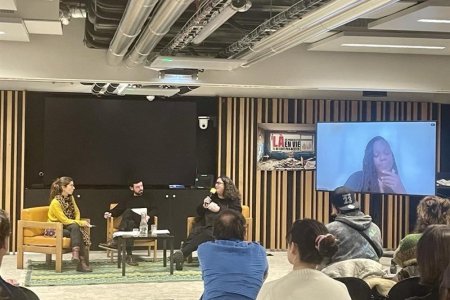
02/06/2025 - 06:30 PM 08:30 PMOn Thursday February 6, the Crash team was delighted to welcome Romain Le Cour Grandmaison, Arnaud Dandoy, Pascale Solages and Sarah Chateau (MSF) for a conference entitled “Port-au-Prince, Haiti: living and working in chaos?”. This meeting was prepared and moderated by Judith Soussan.
 Conference
The challenges and dead ends of delivering aid in government-held areas in Syria
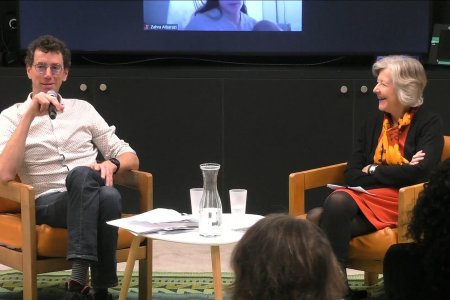
12/06/2023 - 07:30 PM 09:30 PMCrash and iReMMO were pleased to invite you on Wednesday 6 December to a round table discussion on the challenges, constraints, and limits of humanitarian aid in Syrian government zones. This meeting was prepared and moderated by Michaël Neuman.
Past events
 Conference
The polio eradication campaign put to test
02/04/2014 - 01:30 PM 07:30 PMOn February 4, 2014, the Crash team was delighted to welcome Dr Rashid Jooma, from Aga Khan university, Karachi, Dr Elisha Renne, professor in the Department of Anthropology and the Department of Afroamerican and African Studies, University of Michigan ; Johannes Everts, WHO technical expert and Dr Hamid Jafari, Director of the Global Polio Eradication Initiative WHO. This round table was moderated by Claire Magone.
 Conference
Living a Natural Disaster
11/03/2010 - 07:00 PM 09:00 PMPeople wandering through the rubble in Haiti, arms outstretched begging for help amid the floods in Pakistan: the media coverage of disasters invariably features helpless victims, overwhelmed by the disaster, waiting to be helped...
 Virginie Nguyen Hoang/HUMA
Conference
Virginie Nguyen Hoang/HUMA
Conference
MSF’s contributions to the changes in trans-national medicine
02/18/2010 - 07:00 PM 09:00 PMThe emergency and constraints of certain catastrophes force MSF teams to medical and operational audacity. To take new paths or stray away from official protocols is to run the risk of doing things less well, of perhaps doing harm and dilapidating resources...
 Jacob Zocherman
Conference
Jacob Zocherman
Conference
Grounds for divorce ? MSF and the international criminal court
04/08/2009 - 08:30 PM 10:30 PMIn 1998 MSF decided to support the creation of the International Criminal Court. 10 years later MSF stated that it ‘would not cooperate and would not transmit any information to the ICC'. How can we explain this change of position?
 Lena Mucha
Conference
Lena Mucha
Conference
From their point of view
03/10/2009 - 07:00 PM 09:30 PMThe reasons why we are accepted, tolerated or sometimes rejected in the contexts where we work are often obscure. Caroline Abu-Sada and her team of sociology student shed some light on these issues.