

The quantification of needs
Joël Glasman
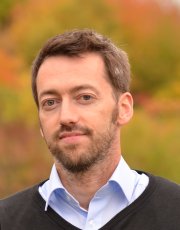
Joël Glasman is a historian and professor at the University of Bayreuth. His work focuses on the contemporary state in Africa and the history of humanitarian aid.
Latest work: Petit manuel d'autodéfense à l'usage des volontaires. Les humanités humanitaires, Paris, 2023.
www.joelglasman.com
Combining historical research and ethnographic investigations, the Africanist historian Joël Glasman plunges us into the factory of the homo humanitarianus, the average individual, on the basis of which "needs" and aid projects today are assessed. This conversation took place on December 10th 2020, during a conference-debate at Crash prepared and moderated by Michaël Neuman.
How did humanitarian organisations come to describe and measure the suffering of victims using numerical indicators ? When did impartiality become synonymous with allocating aid on the basis of universally quantifiable, comparable and prioritised needs ? What are the power struggles, conflicts of interest and value at the origin of the "universal minimum standards" of the SPHERE project? How did a three-colored plastic bracelet, the MUAC, become one of the key instruments for measuring and qualifying the severity of a nutritional crisis?
These questions are central to the latest book by the Africanist historian Joël Glasman entitled Humanitarianism and the Quantification of the Human Needs. Minimal Humanity (Routledge Humanitarian Press, 2019). Combining historical research and ethnographic investigations, he immerses us in the factory of the homo humanitarianus, the average individual, on the basis of which "needs" and aid projects are assessed today. He told us about it on December 10th, 2020, during this conference and debate.
To cite this content :
Joël Glasman, “The quantification of needs”, 10 décembre 2020, URL : https://msf-crash.org/en/conferences-debates/quantification-needs
If you would like to comment on this article, you can find us on social media or contact us here:
Contribute Eddy Van Wessel
Conference
Eddy Van Wessel
Conference
Extreme violence: investigate, rescue, judge. Syria, Rwanda, Democratic Republic of Congo
03/20/2019 - 02:00 PM 03/22/2019 - 05:00 PMTheaters of war, genocide, mass crimes, Syria, Rwanda and the Democratic Republic of Congo are at the heart of the international symposium organized by the platform L’humanitaire dans la globalisation of the Fondation Maison des sciences de l’homme (FMSH) and the Centre de Réflexion sur l'Action et les Savoirs Humanitaires (CRASH) of Médecins Sans Frontières. This symposium is part of the commemoration by these two institutions of the 25 years of the genocide of Rwandan Tutsis.
 Conference
Healing foreigners in France: The State and the civil society organisations from the 80s to the 90s
12/17/2018 - 06:00 PM 08:00 PMThe CRASH team invited you to the debate-conference “Healing foreigners in France: The State and the civil society organisations from the 80s to the 90s” on Monday 17th of December 2018. We hosted Caroline Izambert, who recently defended, at the EHESS, her PhD thesis focusing on the foreigners’ access to healthcare in France. Her title: “Heal foreigners?” The State and the civil society organisations for the health coverage of the poor and foreigners in France from the 1980s to the present day. This conference was prepared and moderated by Michaël Neuman.
 MSF
Conference
MSF
Conference
Humanitarian anthropology : conference with Sharon Abramowitz
10/23/2017 - 06:00 PM 08:00 PMThe Crash team had the pleasure of welcoming Sharon Abramowitz, American medical anthropologist and author of "Medical Humanitarianism: Ethnographies of Practice", for a conference-debate on October 23, 2017. The meeting was prepared and moderated by Michaël Neuman.
Past events
 Conference
The polio eradication campaign put to test
02/04/2014 - 01:30 PM 07:30 PMOn February 4, 2014, the Crash team was delighted to welcome Dr Rashid Jooma, from Aga Khan university, Karachi, Dr Elisha Renne, professor in the Department of Anthropology and the Department of Afroamerican and African Studies, University of Michigan ; Johannes Everts, WHO technical expert and Dr Hamid Jafari, Director of the Global Polio Eradication Initiative WHO. This round table was moderated by Claire Magone.
 Conference
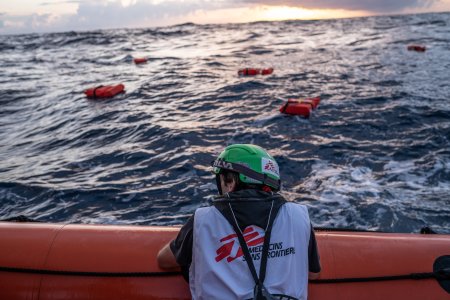
Living a Natural Disaster
11/03/2010 - 07:00 PM 09:00 PMPeople wandering through the rubble in Haiti, arms outstretched begging for help amid the floods in Pakistan: the media coverage of disasters invariably features helpless victims, overwhelmed by the disaster, waiting to be helped...
 Virginie Nguyen Hoang/HUMA
Conference
Virginie Nguyen Hoang/HUMA
Conference
MSF’s contributions to the changes in trans-national medicine
02/18/2010 - 07:00 PM 09:00 PMThe emergency and constraints of certain catastrophes force MSF teams to medical and operational audacity. To take new paths or stray away from official protocols is to run the risk of doing things less well, of perhaps doing harm and dilapidating resources...
 Jacob Zocherman
Conference
Jacob Zocherman
Conference
Grounds for divorce ? MSF and the international criminal court
04/08/2009 - 08:30 PM 10:30 PMIn 1998 MSF decided to support the creation of the International Criminal Court. 10 years later MSF stated that it ‘would not cooperate and would not transmit any information to the ICC'. How can we explain this change of position?
 Lena Mucha
Conference
Lena Mucha
Conference
From their point of view
03/10/2009 - 07:00 PM 09:30 PMThe reasons why we are accepted, tolerated or sometimes rejected in the contexts where we work are often obscure. Caroline Abu-Sada and her team of sociology student shed some light on these issues.