

Motivations for mass violence: different interpretations
Nicolas Mariot
What turns ordinary men into killers? The CRASH team organized a conference – debate with the sociologist and historian Nicolas Mariot.Author of an article entitled « Faut-il être motivé pour tuer ? Sur quelques explications aux violences de guerre » (Genèses, n°53, 2003, p. 154-177) and books such as “Face à la persécution. 991 Juifs dans la guerre" (with Claire Zalc, Paris, Odile Jacob, 2010), “Tous unis dans la tranchée ? 1914-1918, les intellectuels rencontrent le peuple" (Paris, Seuil, 2013). This meeting, prepared with Claudine Vidal, was moderated by Elba Rahmouni.
Nicolas Mariot presented two different interpretations of motivations for mass violence in the 20th century, drawn from a series of studies and surveys on the subject.
The first interpretation is culturalist. It suggests that massacres are motivated by hate due to racism, antisemitism, nationalism, fundamentalism, etc. This suggestion that the motivation for killing is rooted in a culture of hate has convinced a broad public. Some journalists and political personalities find scientific credibility in a vision of the world that reduces mass violence (in Syria, Central African Republic and South Sudan) to identity-based conflicts between radicalised groups opposed to each other on the simple basis of cultural, ethnic and religious differences.
The second interpretation is situational. It looks at the specific places and times at which massacres occurred. Without denying the role played by fervour, it highlights the ability of political rationales, group effects and collective conditioning to turn ordinary men into killers: pressure from groups of “friends”, local or family solidarity, micro-local rivalries, etc.
These subjects are relevant to the analyses of situations in which we work.
To cite this content :
Nicolas Mariot, “Motivations for mass violence: different interpretations”, 3 octobre 2019, URL : https://msf-crash.org/en/conferences-debates/motivations-mass-violence-different-interpretations
If you would like to comment on this article, you can find us on social media or contact us here:
Contribute Jodi Bieber
Conference
Jodi Bieber
Conference
Les viols au coeur de l’activité guerrière au XX ème Siècle
12/01/2005 - 07:30 PM 08:30 PMStéphane Audoin-Rouzeau, chercheur et enseignant à l'EHESS, nous apporte un éclairage historique sur la question des violences sexuelles en situation de conflit.
 Eddy Van Wessel
Conference
Eddy Van Wessel
Conference
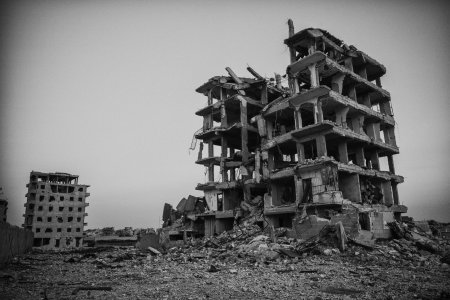
Extreme violence: investigate, rescue, judge. Syria, Rwanda, Democratic Republic of Congo
03/20/2019 - 02:00 PM 03/22/2019 - 05:00 PMTheaters of war, genocide, mass crimes, Syria, Rwanda and the Democratic Republic of Congo are at the heart of the international symposium organized by the platform L’humanitaire dans la globalisation of the Fondation Maison des sciences de l’homme (FMSH) and the Centre de Réflexion sur l'Action et les Savoirs Humanitaires (CRASH) of Médecins Sans Frontières. This symposium is part of the commemoration by these two institutions of the 25 years of the genocide of Rwandan Tutsis.
 Brendan Bannon
Dossier
Brendan Bannon
Dossier
Extreme violences: MSF experience in Rwanda
10/18/2017Several texts by members and associates of the CRASH published between 1994 and 2014 are united in this collection. In 2017, a book joins these publications: Humanitarian aid, genocide and mass killings: Médecins Sans Frontières, the Rwandan experience (1982-1997).
Read morePast events
 Roger Job
Conference
Roger Job
Conference
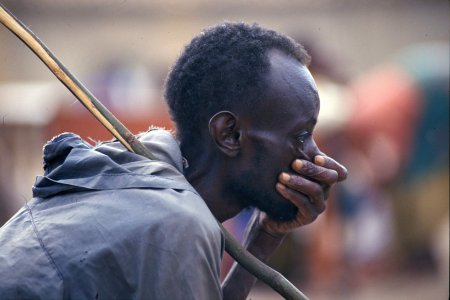
France in Rwanda. Guilty neutrality
02/11/2019 - 06:00 PM 08:00 PMThe CRASH team invited you to the screening-debate “France in Rwanda. Guilty neutrality” on Monday 11th of February 2019 from 6 to 8pm, in the 1rst floor room of the 8 rue Saint-Sabin. A documentary film by Robert Genoud and Claudine Vidal (Director Emeritus for research at the CNRS, member of the CRASH scientific committee at MSF), and produced by EUP. Before and after the screening, Claudine Vidal and Jean-Hervé Bradol, both actors of MSF mobilization between 1994 and 1998 launched the discussion.
 Conference
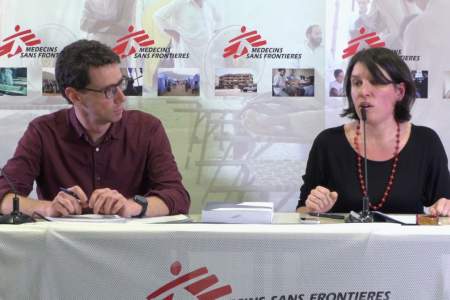
Healing foreigners in France: The State and the civil society organisations from the 80s to the 90s
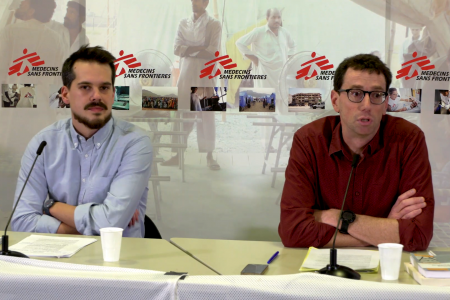
12/17/2018 - 06:00 PM 08:00 PMThe CRASH team invited you to the debate-conference “Healing foreigners in France: The State and the civil society organisations from the 80s to the 90s” on Monday 17th of December 2018. We hosted Caroline Izambert, who recently defended, at the EHESS, her PhD thesis focusing on the foreigners’ access to healthcare in France. Her title: “Heal foreigners?” The State and the civil society organisations for the health coverage of the poor and foreigners in France from the 1980s to the present day. This conference was prepared and moderated by Michaël Neuman.
 Conference
Borders and Hospitality
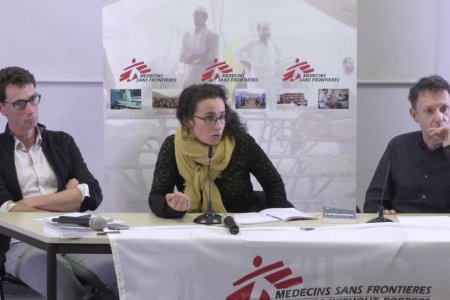
11/26/2018 - 06:00 PM 08:00 PMThe Crash team had the pleasure of welcoming Benjamin Boudou, politician and researcher at the Max Planck Institute, for a conference-debate on November 26, 2018. The meeting was prepared and moderated by Michaël Neuman.
 MSF-Crash
Conference
MSF-Crash
Conference
Immunization: new perspectives on vaccines - Conference with Lise Barnéoud
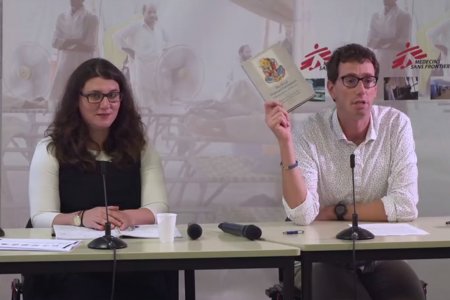
12/05/2017 - 06:00 PM 08:00 PMLise Barnéoud was a Crash guest speaker at a conference on vaccination held on December 5, 2017. A discussion with Epicentre, Crash and the MSF Medical Department allowed us to exchange views on vaccinal policy, which remains a cornerstone of MSF operations and a recurring subject of discussion and controversy. This meeting was prepared and moderated by Michaël Neuman and Emmanuel Baron.
 MSF
Conference
MSF
Conference
Humanitarian anthropology : conference with Sharon Abramowitz
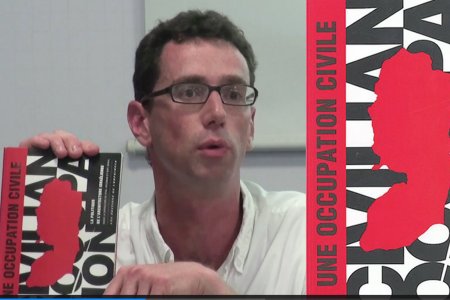
10/23/2017 - 06:00 PM 08:00 PMThe Crash team had the pleasure of welcoming Sharon Abramowitz, American medical anthropologist and author of "Medical Humanitarianism: Ethnographies of Practice", for a conference-debate on October 23, 2017. The meeting was prepared and moderated by Michaël Neuman.
 Conference
Eyal Weizman - Forensic Architecture at work
02/15/2016 - 07:00 PM 09:30 PMEyal Weizman, founder of Forensic Architecture at Goldsmiths College, University of London, presented his project and a number of his achievements at a Crash conference held on July 2, 2015. The event was organized and moderated by Michaël Neuman.