
Migratory deaths, missing persons and their identification
Rachid Koraïchi, José Pablo Baraybar , Filippo Furri & Silvia Di Meo
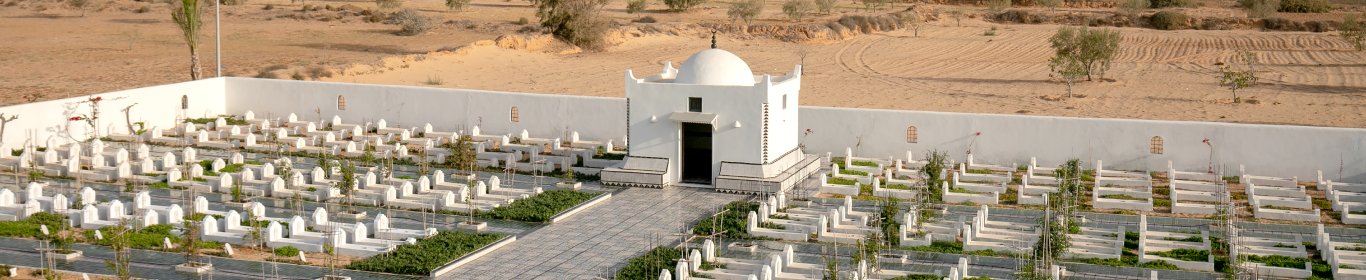
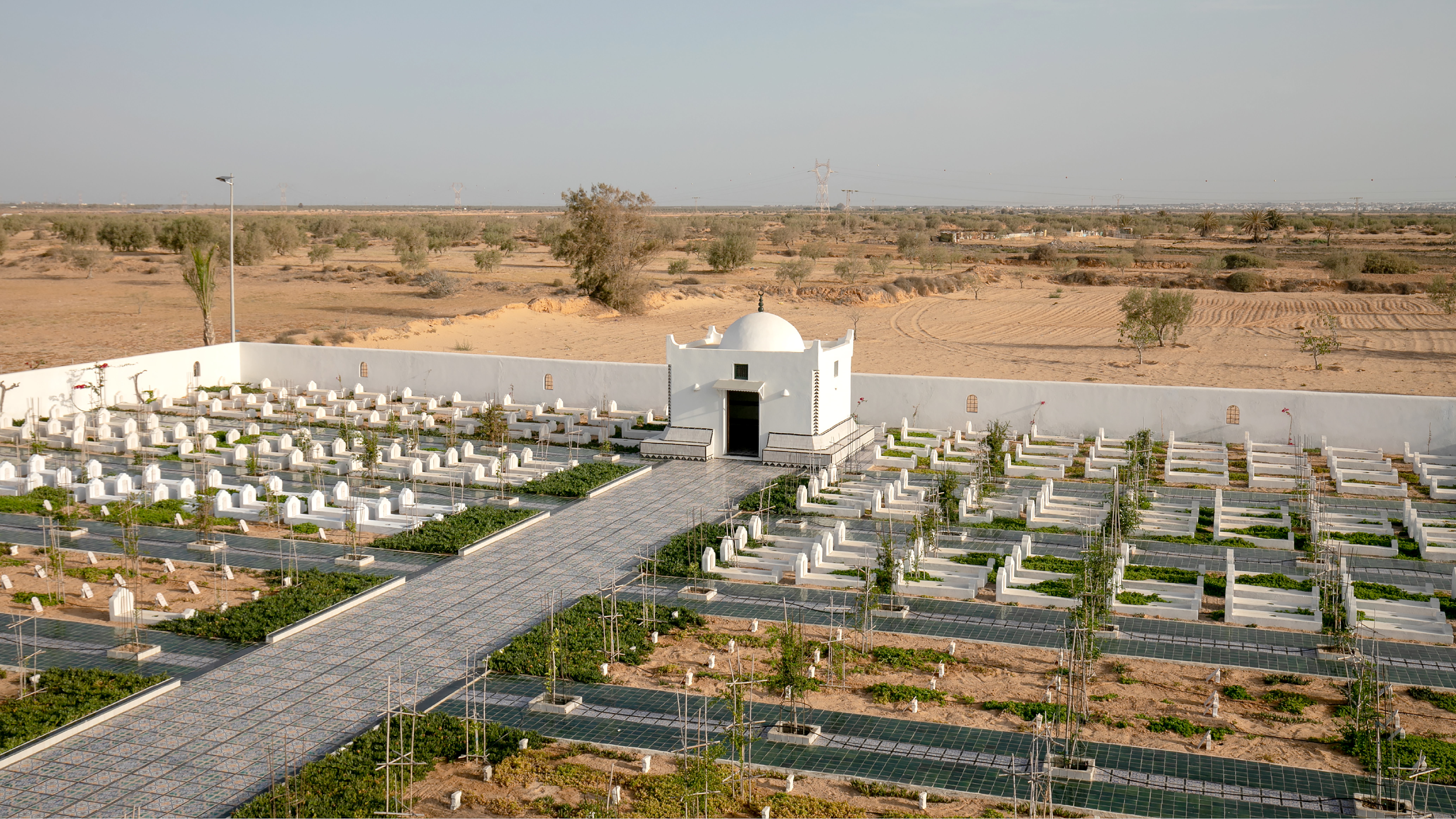


Algerian visual artist, graduate of the Ecole des Beaux-Arts in Algiers and the Ecole Nationale Supérieure des Arts Décoratifs in Paris. In 2021, he created "Jardin d'Afrique" in Zarzis, Tunisia, a cemetery-garden for migrants who died at sea, for which work began in 2018. There are also buildings on the site where autopsies can be performed to help identify the remains.
Peruvian forensic anthropologist. He has worked for 30 years as an expert for the United Nations, the inter-American system and Peru. He is currently forensic coordinator for the International Committee of the Red Cross in Mexico and Central America, having worked on the identification of migrants who have died or disappeared in the Mediterranean Sea.
Anthropologist. He began working on the issue of migration deaths in 2011 with the Migreurop network and the Boats4people coalition, with whom he produced a support guide for families searching for missing loved ones. He takes part in university research programs (Mecmi with Carolina Kobelinsky in particular) and has also worked on the search and identification of bodies with the ICRC and EuroMed Rights, and joined the CommemorAction network.
Silvia Di Meo is an anthropologist and researcher at the University of Genova. She is president of the Mem-Med Mémoire Méditerranée association (based between Sicily and Tunisia), which works to find missing persons and provides legal and psychosocial support to the families of migrants who have died or disappeared on the borders of the Mediterranean.
On Thursday 11 January 2024, we welcomed artist Rachid Koraïchi, forensic anthropologist Jose-Pablo Baraybar and anthropologists Filippo Furri and Silvia Di Meo for a round table discussion on missing and dead migrants and their identification. This conference, prepared with Michaël Neuman, was moderated by Sarah Chateau.
The Mediterranean has become a graveyard for migrants; it is estimated that more than 26,000 people have died since 2014 while attempting to cross from North Africa to Europe. Many others have died at Europe's borders: in the Balkans, in the Pas-de-Calais, in the Channel towards England and in the Atlantic Ocean towards the Canaries. Many of the bodies are never found, and of those that are, most are not identified.
Faced with this significant increase in anonymous deaths, our guests have joined forces to give these bodies a chance of one day being identified and treated with dignity. The aim is also to help families find their missing loved ones, to give them the opportunity to begin mourning and to take the administrative steps that require a death certificate. They will tell us about their work, the importance they attach to it, the obstacles they encounter and the role they see for an organisation like Médecins Sans Frontières in this work of tracing the identities of dead migrants.
José Pablo Baraybar is a Peruvian forensic anthropologist. He worked for 30 years as an expert for the United Nations, the inter-American system and Peru. He is currently forensic coordinator for the International Committee of the Red Cross in Mexico and Central America, having worked on the identification of migrants who have died or disappeared in the Mediterranean Sea.
Silvia Di Meo is an anthropologist and researcher at the University of Genova. She is president of the Mem-Med Mémoire Méditerranée association (based between Sicily and Tunisia), which works to find missing persons and provides legal and psychosocial support to the families of migrants who have died or disappeared on the borders of the Mediterranean.
Filippo Furri is an anthropologist. He began working on the issue of deaths in migration in 2011 with the Migreurop network and the Boats4people coalition, with whom he produced a guide to support families searching for missing relatives. He takes part in university research programmes (Mecmi with Carolina Kobelinsky in particular) and has also worked on the search for and identification of bodies with the ICRC and EuroMed Rights and joined the CommemorAction network.
Rachid Koraïchi is an Algerian visual artist who graduated from the Ecole des Beaux-Arts in Algiers and the Ecole Nationale Supérieure des Arts Décoratifs in Paris. In 2021, he created "Jardin d'Afrique" in Zarzis, Tunisia, a garden-cemetery for migrants who died at sea, work on which began in 2018. There are also buildings on the site where autopsies can be performed to help identify the remains.
The conference, which brought to a close a day of internal reflection on MSF's role in relation to migrant populations, was led by Sarah Chateau, Head of Programmes at MSF.
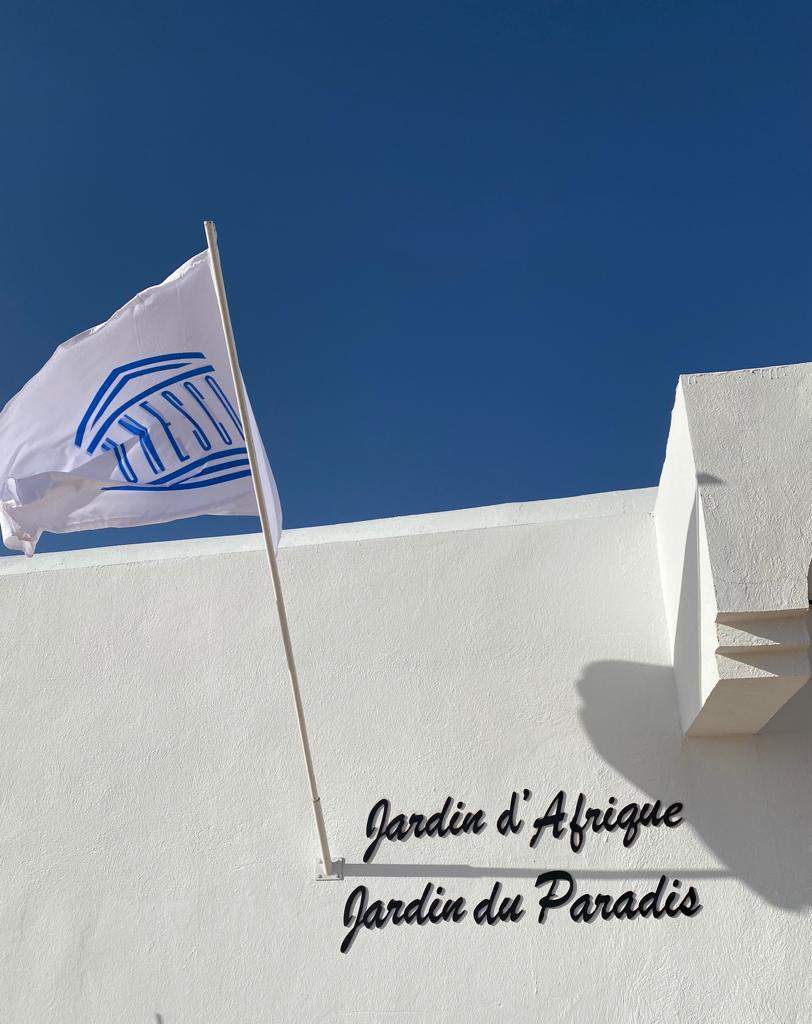
Here some pictures of the "Jardin d'Afrique" made by Rachid Koraïchi :
To cite this content :
Rachid Koraïchi, José Pablo Baraybar, Filippo Furri, Silvia Di Meo, “Migratory deaths, missing persons and their identification ”, 11 janvier 2024, URL : https://msf-crash.org/en/conferences-debates/migratory-deaths-missing-persons-and-their-identification
If you would like to comment on this article, you can find us on social media or contact us here:
Contribute Conference
The challenges and dead ends of delivering aid in government-held areas in Syria
12/06/2023 - 07:30 PM 09:30 PMCrash and iReMMO were pleased to invite you on Wednesday 6 December to a round table discussion on the challenges, constraints, and limits of humanitarian aid in Syrian government zones. This meeting was prepared and moderated by Michaël Neuman.
 Conference
Asylum and exile. A history of the distinction between migrants / refugees
04/12/2021 - 06:30 PM 08:30 PMOn April 12 2021, we were delighted to welcome Karen Akoka, political scientist and sociologist, fresh from her publication in November of “Asylum and Exile. A History of the Refugee/Migrant Distinction" (La Découverte, 2020). The author described and analyzed the trajectory of OFPRA, the French institution founded in 1952 and responsible for granting refugee status; she provided an insight into how the history of the distinction between migrants and refugees was established in France. This conference was prepared and moderated by Michaël Neuman.
 Conference
Borders and Hospitality
11/26/2018 - 06:00 PM 08:00 PMThe Crash team had the pleasure of welcoming Benjamin Boudou, politician and researcher at the Max Planck Institute, for a conference-debate on November 26, 2018. The meeting was prepared and moderated by Michaël Neuman.
Past events
 Roger Job
Conference
Roger Job
Conference
France in Rwanda. Guilty neutrality
02/11/2019 - 06:00 PM 08:00 PMThe CRASH team invited you to the screening-debate “France in Rwanda. Guilty neutrality” on Monday 11th of February 2019 from 6 to 8pm, in the 1rst floor room of the 8 rue Saint-Sabin. A documentary film by Robert Genoud and Claudine Vidal (Director Emeritus for research at the CNRS, member of the CRASH scientific committee at MSF), and produced by EUP. Before and after the screening, Claudine Vidal and Jean-Hervé Bradol, both actors of MSF mobilization between 1994 and 1998 launched the discussion.
 Conference
Healing foreigners in France: The State and the civil society organisations from the 80s to the 90s
12/17/2018 - 06:00 PM 08:00 PMThe CRASH team invited you to the debate-conference “Healing foreigners in France: The State and the civil society organisations from the 80s to the 90s” on Monday 17th of December 2018. We hosted Caroline Izambert, who recently defended, at the EHESS, her PhD thesis focusing on the foreigners’ access to healthcare in France. Her title: “Heal foreigners?” The State and the civil society organisations for the health coverage of the poor and foreigners in France from the 1980s to the present day. This conference was prepared and moderated by Michaël Neuman.
Conference
Borders and Hospitality
11/26/2018 - 06:00 PM 08:00 PMThe Crash team had the pleasure of welcoming Benjamin Boudou, politician and researcher at the Max Planck Institute, for a conference-debate on November 26, 2018. The meeting was prepared and moderated by Michaël Neuman.
 MSF-Crash
Conference
MSF-Crash
Conference
Immunization: new perspectives on vaccines - Conference with Lise Barnéoud
12/05/2017 - 06:00 PM 08:00 PMLise Barnéoud was a Crash guest speaker at a conference on vaccination held on December 5, 2017. A discussion with Epicentre, Crash and the MSF Medical Department allowed us to exchange views on vaccinal policy, which remains a cornerstone of MSF operations and a recurring subject of discussion and controversy. This meeting was prepared and moderated by Michaël Neuman and Emmanuel Baron.
 MSF
Conference
MSF
Conference
Humanitarian anthropology : conference with Sharon Abramowitz
10/23/2017 - 06:00 PM 08:00 PMThe Crash team had the pleasure of welcoming Sharon Abramowitz, American medical anthropologist and author of "Medical Humanitarianism: Ethnographies of Practice", for a conference-debate on October 23, 2017. The meeting was prepared and moderated by Michaël Neuman.
 Conference
Eyal Weizman - Forensic Architecture at work
02/15/2016 - 07:00 PM 09:30 PMEyal Weizman, founder of Forensic Architecture at Goldsmiths College, University of London, presented his project and a number of his achievements at a Crash conference held on July 2, 2015. The event was organized and moderated by Michaël Neuman.