

Attestation, an experiment of mass obedience
Nicolas Mariot & Théo Boulakia
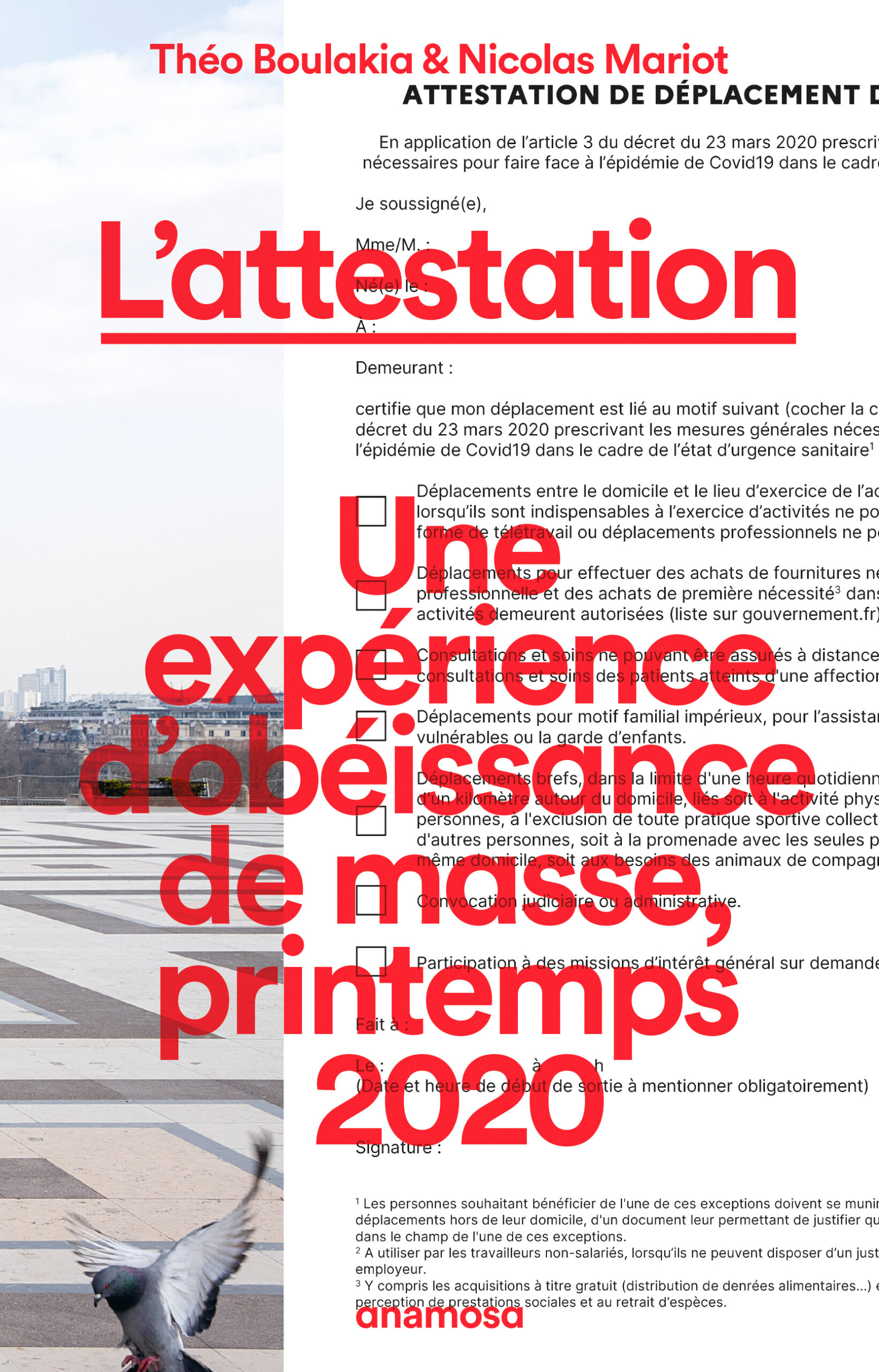
On Thursday 29 February 2024, we welcomed sociologists Théo Boulakia and Nicolas Mariot, the authors of "L’Attestation. Une expérience d’obéissance de masse, printemps 2020". This conference was prepared and moderated by Elba Rahmouni and Marc Le Pape.
"No population in the world stands to attention like that in 2-3 days", wrote Dr Jean-Hervé Bradol in an interview published in Médiapart three days after the start of the first lockdown in France during the Covid-19 pandemic. The people we work with often show us that, even in a health catastrophe, they are not prepared to change their habits at the simple request of the authorities. Moreover, aren't such requests a sign that health professionals have nothing else to offer (treatments, vaccinations, for example)?
During the 55 days of the first lockdown (17 March - 11 May 2020), 21 million checks were carried out in France in the name of the state of health emergency, and 1.1 million fines were imposed. Théo Boulakia and Nicolas Mariot explain that the massive surveillance inherent in French-style lockdown, presented as the only possible option, contrasts with other countries that have made less restrictive choices, sometimes with better results. For the authors, the decision by States to confine is ultimately "less the product of good intentions than of old habits" of authoritarianism specific to the history of each country.
As a citizen faced with an unprecedented event, why obey? How far should you accept having your freedom curtailed? Drawing on a variety of sources, including the survey "Life in confinement" (Vico), a survey distributed online at the very moment of the first lockdown, to which 16,000 people responded, Théo Boulakia and Nicolas Mariot deal with these questions in a practical way. They define six categories of individuals: the claustrated, the legalists, the exemplary, the unconcerned, the refractory and the protestors in the face of this "largely unprecedented experience of mass obedience". The reader learns about the frequency of denunciations and the specific nature of lockdown for women.
More information : here
To cite this content :
Nicolas Mariot, Théo Boulakia, “Attestation, an experiment of mass obedience”, 29 février 2024, URL : https://msf-crash.org/en/conferences-debates/attestation-experiment-mass-obedience
If you would like to comment on this article, you can find us on social media or contact us here:
Contribute Brendan Bannon
Conference
Brendan Bannon
Conference
Comment naissent les maladies virales émergentes ?
04/19/2006 - 08:30 PM 09:30 PMQuels sont les paramètres de l'émergence des maladies virales? Que peut-on dire des pathologies infectieuses à venir ? Jean-François Saluzzo, directeur en charge du développement des vaccins contre les maladies virales émergentes chez Sanofi Pasteur répond à ces questions.
 Conference
The polio eradication campaign put to test
02/04/2014 - 01:30 PM 07:30 PMOn February 4, 2014, the Crash team was delighted to welcome Dr Rashid Jooma, from Aga Khan university, Karachi, Dr Elisha Renne, professor in the Department of Anthropology and the Department of Afroamerican and African Studies, University of Michigan ; Johannes Everts, WHO technical expert and Dr Hamid Jafari, Director of the Global Polio Eradication Initiative WHO. This round table was moderated by Claire Magone.
Past events
Conference
The polio eradication campaign put to test
02/04/2014 - 01:30 PM 07:30 PMOn February 4, 2014, the Crash team was delighted to welcome Dr Rashid Jooma, from Aga Khan university, Karachi, Dr Elisha Renne, professor in the Department of Anthropology and the Department of Afroamerican and African Studies, University of Michigan ; Johannes Everts, WHO technical expert and Dr Hamid Jafari, Director of the Global Polio Eradication Initiative WHO. This round table was moderated by Claire Magone.
 Conference
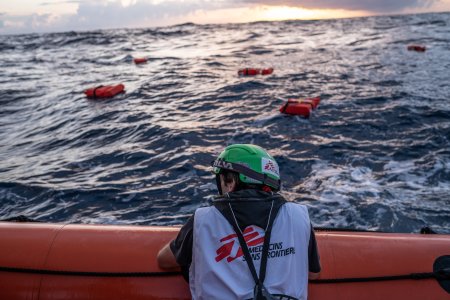
Living a Natural Disaster
11/03/2010 - 07:00 PM 09:00 PMPeople wandering through the rubble in Haiti, arms outstretched begging for help amid the floods in Pakistan: the media coverage of disasters invariably features helpless victims, overwhelmed by the disaster, waiting to be helped...
 Virginie Nguyen Hoang/HUMA
Conference
Virginie Nguyen Hoang/HUMA
Conference
MSF’s contributions to the changes in trans-national medicine
02/18/2010 - 07:00 PM 09:00 PMThe emergency and constraints of certain catastrophes force MSF teams to medical and operational audacity. To take new paths or stray away from official protocols is to run the risk of doing things less well, of perhaps doing harm and dilapidating resources...
 Jacob Zocherman
Conference
Jacob Zocherman
Conference
Grounds for divorce ? MSF and the international criminal court
04/08/2009 - 08:30 PM 10:30 PMIn 1998 MSF decided to support the creation of the International Criminal Court. 10 years later MSF stated that it ‘would not cooperate and would not transmit any information to the ICC'. How can we explain this change of position?
 Lena Mucha
Conference
Lena Mucha
Conference
From their point of view
03/10/2009 - 07:00 PM 09:30 PMThe reasons why we are accepted, tolerated or sometimes rejected in the contexts where we work are often obscure. Caroline Abu-Sada and her team of sociology student shed some light on these issues.