 Anonymous/Museo Che Guevara
Analysis
Anonymous/Museo Che Guevara
Analysis
01/25/2021
Yann Santin
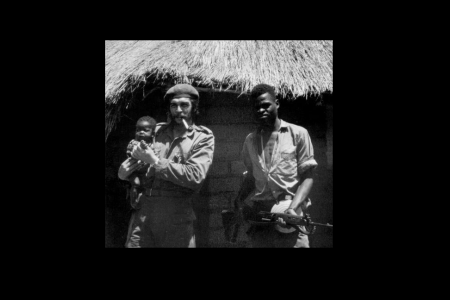
Operational partnerships between two organisations are a practical approach to humanitarian responses. MSF considers such partnerships when the objective it is pursuing in a country is similar to that of an existing national organisation, and when there is potential for synergy between these two entities. I would like to take a bit of a detour by looking at an experience that is in some ways similar: when Che Guevara tried to lead the revolution in Congo - Zaire by supporting the organisation of the guerrilla movement in the east of the country.
 Conference
12/10/2020 - 06:00 PM 08:00 PM
Joël Glasman
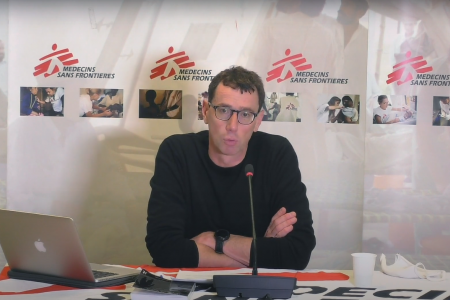
Combining historical research and ethnographic investigations, the Africanist historian Joël Glasman plunges us into the factory of the homo humanitarianus, the average individual, on the basis of which "needs" and aid projects today are assessed. This conversation took place on December 10th 2020, during a conference-debate at Crash prepared and moderated by Michaël Neuman.
 Sandra Calligaro
Analysis
Sandra Calligaro
Analysis
12/07/2020
Fabrice Weissman
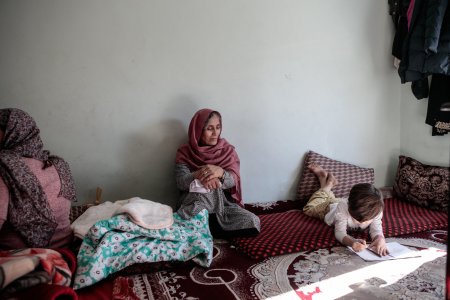
The May 12th massacre at the MSF-supported maternity hospital in Dasht-e-Barchi (Afghanistan) raises, yet again, the question of our limits with regard to risk. What is an acceptable level of danger for humanitarian aid workers? How do we set limits? Why would MSF decide to leave Kabul but remain in Herat, for example, or leave Afghanistan but remain in Niger, Burkina Faso, Mali, or Somalia, where the teams also face extreme danger?
 Clément Mahoudeau/MSF
Analysis
Clément Mahoudeau/MSF
Analysis
12/02/2020
Michaël Neuman
Emmanuel Baron
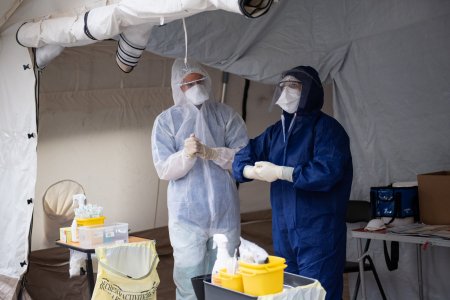
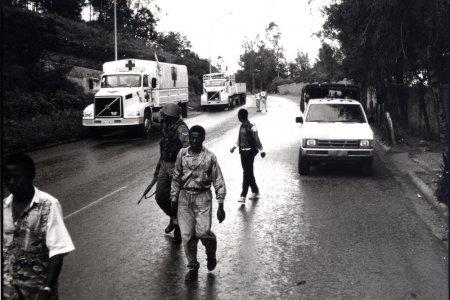
In this paper, the two authors examine certain aspects of the French response to the epidemic in the light of the experience of Médecins Sans Frontières (MSF) in that field, primarily with respect to the relationship between the actors of the response and the beneficiaries.
 Xavier Lassalle/MSF
In the media
Xavier Lassalle/MSF
In the media
11/23/2020
Rony Brauman
Rony Brauman a participé à une conversation autour de l’histoire de l’engagement humanitaire, dans le cadre de l'émission Histoire Vivante de la Radio Télévision Suisse (RTS), parue le 23 novembre 2020.
 Kaung Htet
Speaking Out Case Studies
Kaung Htet
Speaking Out Case Studies
11/19/2020
Laurence Binet
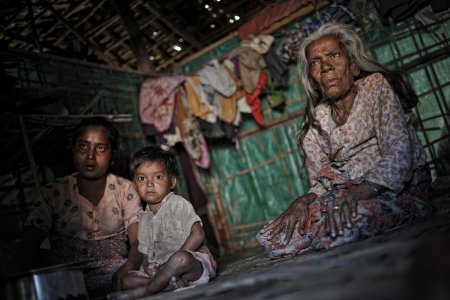
The case study "MSF and the Rohingya 1992 - 2014" brings to light two decades of MSF advocacy activities as part of its humanitarian assistance to the Rohingya people in Bangladesh and Myanmar and explores the questions and dilemmas the organisation was confronted with surrounding speaking out.
 MSF
Analysis
MSF
Analysis
09/18/2020
Fabrice Weissman
On the 31st January, a symposium was held at Sciences Po in support of Fariba Adelkhah and Roland Marchal, researchers at Sciences Po's Center for International Research (CERI) who were arrested in Iran on June 5, 2019. Roland Marchal was released on 20th March 2020 in exchange for an Iranian engineer detained in France. On 6th May Fariba Adelkhah was sentenced to 6 years imprisonment for "propaganda against the political system of the Islamic Republic, and collusion to undermine national security". The researcher was offered conditional release on condition that she terminates her research, but she refused.
The symposium brought together diplomats, journalists, humanitarians and researchers, with the aim of "nourishing reflection about prisoners and hostages, from a political, legal and ethical point of view". Fabrice Weissman presented the experience of Médecins Sans Frontières in the face of kidnappings.
 Aurélie Baumel
Interview
Aurélie Baumel
Interview
09/08/2020
Jean-Hervé Bradol
Interview by Helai Hosseini. A first version was published on the website of the MSF France association on 31 July 2020.
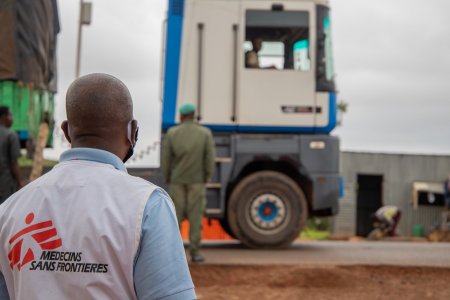
In the wake of the Black Lives Matter movement in the United States, voices have risen within MSF denouncing the racist and discriminatory nature of our organization. Equal opportunity, they say, is not offered to all our employees. Founded in France in the early 70s by a handful of doctors and journalists, the organization has grown and become international, now employing over 46,000 people around the world, nearly 39,000 of whom are recruited locally. How has MSF’s policy towards its personnel evolved down the years? What is currently being done to fight inequalities? Here is Jean Hervé Bradol’s take on the major phases that have marked MSF’s transformation and the ways in which discussions are engaged today.
 Mack Alix Mushitsi
Interview
Mack Alix Mushitsi
Interview
09/06/2020
Rony Brauman
Dans cette interview parue dans Le Parisien le 6 septembre, Rony Brauman souligne les risques encourus dans certains pays un mois après l’attentat du Niger qui a coûté la vie à 8 personnes, dont 6 jeunes humanitaires français.
 MSF/Antoine Kremer
Interview
MSF/Antoine Kremer
Interview
07/20/2020
Marion Péchayre
Elba Rahmouni
In our first interview, Marion Péchayre discussed a variety of management-related problems at Médecins Sans Frontières: working in silos, the ever-growing number of management tools for monitoring, the endless validation requests, the vanishing role of the individual in favour of pseudoscientific presentations of events and projects, etc. This interview, conducted by Elba Rahmouni, focuses on solutions to these problems and hypotheses on how to improve our ways of working. Rather than offering set recipes, Marion Péchayre advocates an approach based on “practical wisdom” (a concept from the sociology of professions) and deliberative management that every individual and team can apply in their own way.
 Juan Carlos Tomasi/MSF
In the media
Juan Carlos Tomasi/MSF
In the media
03/04/2020
Fabrice Weissman
Dans l'émission « Matières à penser » de France Culture, Fabrice Weissman revient sur les dilemmes rencontrés par les organisations humanitaires confrontées à l’enlèvement d’un de leurs employés.
 MSF/Antoine Kremer
Interview
MSF/Antoine Kremer
Interview
02/28/2020
Marion Péchayre
Elba Rahmouni
In this interview, different issues related to management at MSF are broached with Marion Péchayre, Director of Studies at the CRASH, such as the fragmentation of different components of our work, professionalisation drifting towards an attitude of control as embodied by the multiplication of management tools and the omnipresence of requests for validation, and the devaluation of the role of the individual against the promotion of a pseudo-scientific presentation of facts and projects.