

Clinical trials, between science and financial and academic interests
Pierre Chirac
The Crash team was delighted to welcome Pierre Chirac, pharmacist and editor of the magazine Prescrire, for a conference on his analysis of the pharmaceutical industry's influence strategies and the special interests of university hospital researchers, their consequences on the reliability of drug information and the means now required to rectify a harmful situation. This meetting was prepared and moderated by Rony Brauman.
On May 22, the Lancet published a peer-reviewed article based on an analysis of 96,000 Covid patient files, which concluded that hydroxychloroquine was ineffective. A few days later, researchers published a letter questioning the methodology and data used by the Surgisphere company to develop this conclusion, and on June 4, the Lancet withdrew the article from publication. This was the beginning of what some people call "Lancetgate", or the "Surgisphere Scandal".
Beyond the frenzy of scientific publications triggered by the Covid-19 outbreak (47,000 in three months!), this event highlighted the questionable reliability of clinical trials. In September 2009, the scientific journal PloS Medicine argued that most trials of new drugs, including those supposedly authored by academic physicians, are subject to frequent manipulation. The title of their editorial clearly indicates scorn: Ghostwriting: The Dirty Little Secret of Medical Publishing That Just Got Bigger, and the piece specifically outlines the influence and power of drug manufacturers in the clinical research process. Yet the poor quality studies published by French hospital doctors on hydroxychloroquine, even with no link to pharmaceutical companies, show that the problem goes far beyond that of trials financed by 'Big Pharma'.
To cite this content :
Pierre Chirac, “Clinical trials, between science and financial and academic interests”, 8 octobre 2020, URL : https://msf-crash.org/en/conferences-debates/clinical-trials-between-science-and-financial-and-academic-interests
If you would like to comment on this article, you can find us on social media or contact us here:
Contribute Daro Sulakauri
Opinion
Daro Sulakauri
Opinion
No credit for Drs Knock
12/01/2009Pharmaceutical companies produce drugs and are increasing involved in the clinical trials of these products. This conflict of interest is incompatible with the expectations of Public Health. Rony Brauman suggests that the industry no longer be responsible for therapeutic trials.
 Giorgos Moutafis
Analysis
Giorgos Moutafis
Analysis
Postface à l’ouvrage "Médiator 150mg"
06/30/2010Ce texte est une postface au livre du Dr Irène Frachon Médiator, 150mg dont le sous-titre « Combien de morts ?», a été retiré à la suite d'une plainte du laboratoire Servier, producteur du médicaments incriminé. Rony Brauman y aborde la question du poids croissant des compagnies pharmaceutiques dans les décisions de santé publique.
 Aurelie Baumel
Interview
Aurelie Baumel
Interview
Santé mondiale. L’évolution vers la privatisation
12/01/2014Pour Rony Brauman, la question de la santé globale se caractérise d'abord et avant tout par la circulation des agents infectieux et toxiques qui relève d'une action mondiale.
Past events
 Conference
The polio eradication campaign put to test
02/04/2014 - 01:30 PM 07:30 PMOn February 4, 2014, the Crash team was delighted to welcome Dr Rashid Jooma, from Aga Khan university, Karachi, Dr Elisha Renne, professor in the Department of Anthropology and the Department of Afroamerican and African Studies, University of Michigan ; Johannes Everts, WHO technical expert and Dr Hamid Jafari, Director of the Global Polio Eradication Initiative WHO. This round table was moderated by Claire Magone.
 Conference
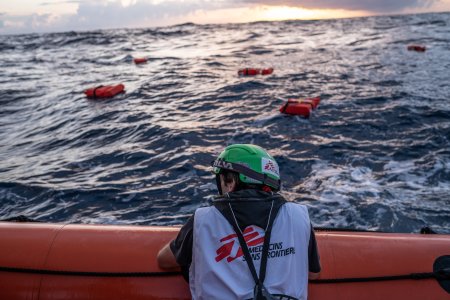
Living a Natural Disaster
11/03/2010 - 07:00 PM 09:00 PMPeople wandering through the rubble in Haiti, arms outstretched begging for help amid the floods in Pakistan: the media coverage of disasters invariably features helpless victims, overwhelmed by the disaster, waiting to be helped...
 Virginie Nguyen Hoang/HUMA
Conference
Virginie Nguyen Hoang/HUMA
Conference
MSF’s contributions to the changes in trans-national medicine
02/18/2010 - 07:00 PM 09:00 PMThe emergency and constraints of certain catastrophes force MSF teams to medical and operational audacity. To take new paths or stray away from official protocols is to run the risk of doing things less well, of perhaps doing harm and dilapidating resources...
 Jacob Zocherman
Conference
Jacob Zocherman
Conference
Grounds for divorce ? MSF and the international criminal court
04/08/2009 - 08:30 PM 10:30 PMIn 1998 MSF decided to support the creation of the International Criminal Court. 10 years later MSF stated that it ‘would not cooperate and would not transmit any information to the ICC'. How can we explain this change of position?
 Lena Mucha
Conference
Lena Mucha
Conference
From their point of view
03/10/2009 - 07:00 PM 09:30 PMThe reasons why we are accepted, tolerated or sometimes rejected in the contexts where we work are often obscure. Caroline Abu-Sada and her team of sociology student shed some light on these issues.