 Michaël Neuman
Opinion
Michaël Neuman
Opinion
10/31/2023
Michaël Neuman
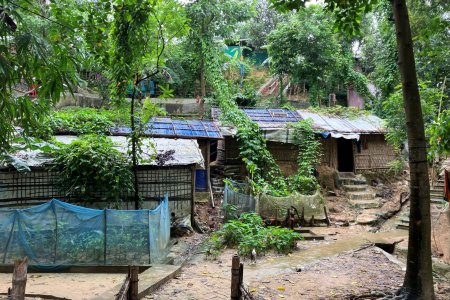
This article was published in the London Review of books website on September 8, 2023. The former evokes the dire conditions in which roughly 1 000 000 Rohingyas live in Cox’s Bazar, the largest refugee camp in the world. In this coastal district in south-east Bangladesh, the humanitarian deployment is impressive, but commitment by donors is waning. Between March and June, monthly food allocations fell from $12 to $8 per person. The difficulties of accessing care, the social control to which they are subjected and the lack of prospects are many reasons explaining the perils faced by the Rohingya population.
 Interview
10/16/2023
Rony Brauman
This interview by Didier Billion and Marc Verzeroli was originally published in the Revue internationale et stratégique. To examine the concept of de-westernization, Rony Brauman describes the current state of international relations, marked by fluid alliances and new power relationships. He states and details his reservations about whether universal values truly exist and how the international criminal justice system functions.
 Sebastiao Salgado
Review
Sebastiao Salgado
Review
10/11/2023
Jean-Hervé Bradol
Marc Le Pape
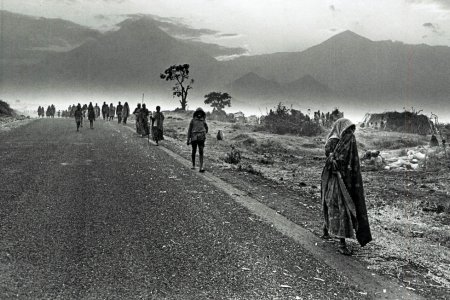
Nous publions ici le compte-rendu de Jules Lyothier (Cairn, 2020) du livre de J.-H. Bradol et M. Le Pape (Génocide et crimes de masse, 2017) car la lecture de ce texte rend sensible l’intérêt toujours actuel d’observer, et de ne pas oublier, l’expérience rwandaise de MSF entre 1982 et 1997. En effet, ce compte-rendu met en évidence plusieurs dilemmes, tensions, controverses observables autrefois mais dont certains restent bien présents et parfois vivaces aujourd’hui.
 MSF/Mohamad Cheblak
Analysis
MSF/Mohamad Cheblak
Analysis
10/05/2023
Michaël Neuman
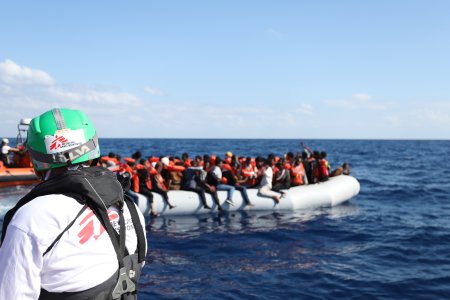
In Groupe URD's new issue of "Humanitaires en mouvement" (n°25), Michaël Neuman describes rescue operations in the Mediterranean and the strategies put in place by MSF to adapt to the constraints imposed by governments.
 Todd Brown
Interview
Todd Brown
Interview
06/30/2023
Bertrand Taithe
Fabrice Weissman
Mickaël Le Paih
The central question raised in this discussion relates to two profoundly intermeshed issues for humanitarian practitioners and organisations: the use of history for humanitarian organisations, and the need for them to preserve and maintain archives
 MSF/Michael Neuman
Opinion
MSF/Michael Neuman
Opinion
06/16/2023
Michaël Neuman
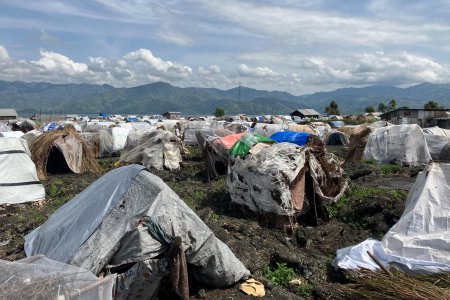
Michaël Neuman describes his visit to Goma’s IDP camps, where he spent two weeks. He shares his dismay at the low level of assistance provided by the aid sector, especially when we recall that the Sphere standards, born precisely out of the failure of the humanitarian response in this same region of Goma in the mid-1990s, were conceived and championed by all of us.
 Mariana Abdalla/MSF
Analysis
Mariana Abdalla/MSF
Analysis
06/05/2023
Laure Wolmark
This article was published on March 27th, 2023 in the journal Alternatives Humanitaires, in an edition focused on mental health.
 Diego Menjibar
Opinion
Diego Menjibar
Opinion
06/01/2023
Fabrice Weissman
Based on a reflection regarding how patient rights have changed, in France in particular, Fabrice Weissman discusses humanitarian medicine’s shortcomings in that regard and proposes several avenues for improvement at MSF. This text was originally posted on MSF’s associative website, The Souk.
 Hadia Mansour
Interview
Hadia Mansour
Interview
02/15/2023
Rony Brauman
Cet entretien avec Rony Brauman, conduit par Ella Micheletti, a été publié le 7 février 2023 dans le journal Marianne.
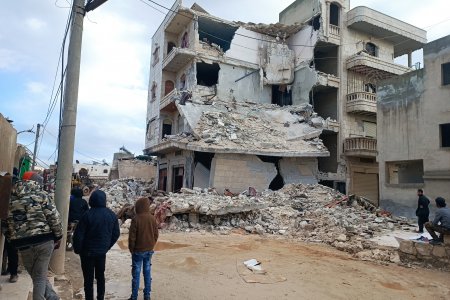
Le séisme de magnitude 7,8 qui a touché la Syrie et la Turquie lundi 6 février a causé la mort de plus de 2 600 personnes. L'ensemble de la communauté internationale a aussitôt proposé son aide aux deux pays. Derrière cette initiative, c'est toute une géopolitique de l'aide humanitaire qui est à l'œuvre. Pays amis, pays ennemis, chacun a un intérêt à aider un État à terre.
 Djerabe Ndegrgar
Opinion
Djerabe Ndegrgar
Opinion
12/30/2022
Michel-Olivier Lacharité
This article was published on December 26th, 2022 on the Souk, the MSF associative website.
Accusing the mothers of malnourished children of being lawless fraudsters is a well-worn trope in malnutrition treatment programmes worldwide – and one that has resurfaced recently in Nigeria, stirred up by health workers and the media. These types of accusations obscure a series of tricky truths on the control of resources, the quality of malnutrition treatment programmes, and on the extreme precariousness in which many families live. We see all of this in northwest Nigeria’s Katsina state, where we are currently conducting the largest malnutrition programme in the history of Médecins Sans Frontières/Doctors Without Borders (MSF).
 Olivier Guillard
Interview
Olivier Guillard
Interview
12/08/2022
Jean-Sébastien Marx
Olivier Guillard
Elba Rahmouni
“Death is an extremely grave non-emergency; its only treatment is mourning”. That is how doctor Miguel Martinez Almoyna introduces his concept of emergency. The retired 92-year-old anaesthesiologist played an active role in creating France’s SMUR, and later SAMU, emergency medical systems. Still quite active overseas (in Brazil and Mexico), where he has exported the French pre-hospital model, he explains his approach to régulation médicale, whose purpose is to guide patients to the medical services their condition requires while offering a range of responses corresponding to different degrees of severity and urgency.
 Wairimu Gitau/MSF
Interview
Wairimu Gitau/MSF
Interview
11/30/2022
Pierre Mendiharat
Elba Rahmouni
Léon Salumu Luzinga
This article was published on December 22nd, 2021, in the Journal of Humanitarian Affairs (Issue 3, Volume 3).
Despite a concerted international effort in recent decades that has yielded significant progress in the fight against HIV/AIDS, the disease continues to kill large numbers of people, especially in certain regions like rural Ndhiwa district in Homa Bay County, Kenya. Although there is still no definitive cure or vaccine, UNAIDS has set an ambitious goal of ending the epidemic by 2030, specifically via its 90-90-90 (treatment cascade) strategy – namely that 90 per cent of those with HIV will know their status; 90 per cent of those who know their status will be on antiretroviral therapy and 90 per cent of those on antiretroviral therapy will have an undetectable viral load. These bold assumptions were put to the test in a five-year pilot project launched in June 2014 by Médecins Sans Frontières (MSF) and Kenya’s Ministry of Health in Ndhiwa district, where an initial NHIPS 1 study by Epicentre (MSF’s epidemiology centre) in 2012 revealed some of the world’s highest HIV incidence and prevalence, and a poor “treatment cascade”. Six years later a new Epicentre study, NHIPS 2, showed that the 90-90-90 target had been more than met. What explains this ‘success’? And given the still-high incidence, is it truly a success? What follows is an interview on the political, scientific, and operational challenges of the Ndhiwa project with MSF Deputy Director of Operations Pierre Mendiharat and physician Léon Salumu, Head of MSF France Kenya programs, conducted by Elba Rahmouni.