
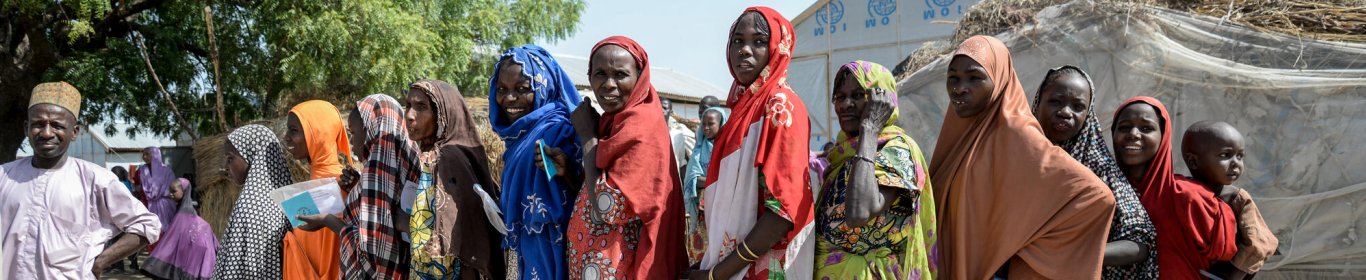
MSF in the Borno war. The story of an operation in Nigeria, 2015-2016
Judith Soussan & Fabrice Weissman
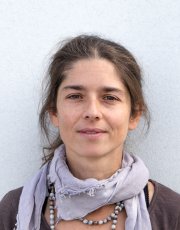
Graduated in International relations (Institut d'Etudes Politiques de Paris), Logistics in humanitarian settings (Bioforce-Développement) and Anthropology (University Paris I), Judith Soussan joined MSF in 1999. After missions in Sri Lanka, Ethiopia, Sudan and the Palestinian territories, she worked in Paris, in particular on protection of civilians. Following a few years break from MSF working as a radio reporter, she has come back to Crash in 2015. She contributed to the book "Saving lives and staying alive. Humanitarian Security in the Age of Risk Management" (chapter "Security Issues and Practices in an MSF Mission in the Land of Jihad" - London: Hurst and Co, 2016).
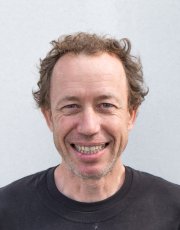
A political scientist by training, Fabrice Weissman joined Médecins sans Frontières in 1995. First as a logistician, then as project coordinator and head of mission, he has worked in many countries in conflict (Sudan, Ethiopia, Eritrea, Kosovo, Sri Lanka, etc.) and more recently in Malawi in response to natural disasters. He is the author of several articles and collective works on humanitarian action, including "In the Shadow of Just Wars. Violence, Politics and Humanitarian Action" (ed., London, Hurst & Co., 2004), "Humanitarian Negotiations Revealed. The MSF Experience" (ed., Oxford University Press, 2011) and "Saving Lives and Staying Alive. Humanitarian Security in the Age of Risk Management" (ed., London, Hurst & Co, 2016). He is also one of the main hosts of the podcast La zone critique.
 Shaista Aziz/MSF
Interview
Shaista Aziz/MSF
Interview
Borno, Nigeria : a critical look at our operations
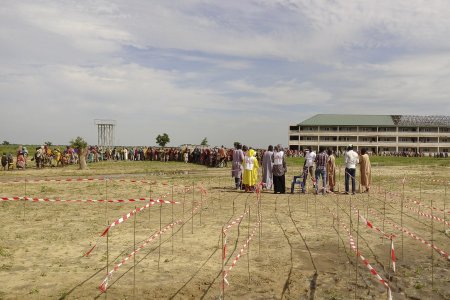
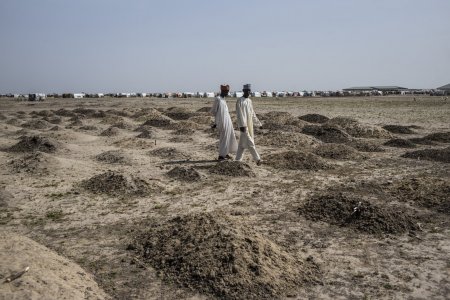
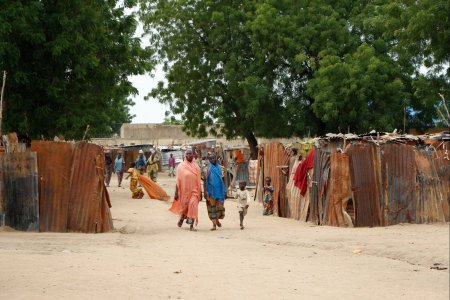
07/01/2019In 2016, the Operations Department commissioned a critical review of the operations carried out between 2015 and 2016 in Borno State by MSF France in the north east of Nigeria. In response, and with the help of Epicentre, Judith Soussan and Fabrice Weissman from CRASH produced a detailed historical account of the analyses made of the situation by the teams, capital and headquarters at the time, as well as the objectives they set themselves, the actions they undertook, the obstacles they encountered and the results they achieved. As part of this project, some of the directors and operations managers who had been involved in these operations took a retrospective look at their own practices: were they late in responding to the catastrophic situation in the IDP camps in rural areas and on the outskirts of Maiduguri, the capital of Borno State, in 2016 and, if so, why? What conclusions can be drawn a posteriori about the operational choices made and the effectiveness of MSF intervention strategies? And, to take things a step further, what does this experience teach us about how MSF functions and how our teams work? Interview with Isabelle Defourny, Operations Director at MSF-OCP. By Elba Rahmouni.
 Sylvain Cherkaoui/COSMOS
Opinion
Sylvain Cherkaoui/COSMOS
Opinion
Mortality emergency threshold: A case for revision
06/25/2018The crude mortality rate (CMR) is one of the most widely used indicators at MSF and the humanitarian sector to evaluate the severity of a health crisis within a given population. It is widely recognized that a CMR equal to or greater than one death per 10,000 persons a day signifies an emergency situation requiring an immediate response. However, the usage of the standard emergency threshold as “1/10,000/day” is very questionable: it goes against the official recommendations endorsed by humanitarian organizations and ignores the worldwide decline in mortality rates over the last 30 years.
 Benoit Finck/MSF
Analysis
Benoit Finck/MSF
Analysis
La fabrique d’une « crise humanitaire ». Le cas du conflit entre Boko Haram et le gouvernement nigérian (2010-2018)
04/30/2020La contre-offensive menée par l’armée nigériane contre Boko Haram à partir de 2015 a entraîné une catastrophe sanitaire parmi les populations civiles déplacées. Cette catastrophe n’a été reconnue que difficilement, après qu’une alliance instable se soit progressivement forgée entre certains acteurs nationaux – politiques et militaires – et certains acteurs humanitaires internationaux pour formuler et s’accorder sur le diagnostic d’une « crise humanitaire » et essayer d’y remédier. Cela a ainsi permis de rendre visibles certaines dimensions du conflit tout en en invisibilisant d’autres, à commencer par la brutalité de la contre-insurrection de l’armée nigériane.
To cite this content :
Judith Soussan, Fabrice Weissman, MSF in the Borno war. The story of an operation in Nigeria, 2015-2016 , 25 mai 2023, URL : https://msf-crash.org/en/humanitarian-actors-and-practices/msf-borno-war-story-operation-nigeria-2015-2016
If you would like to comment on this article, you can find us on social media or contact us here:
Contribute