
Waging war for peace
Sylvain Venayre

Sylvain Venayre has been a professor of Contemporary History at the University of Grenoble Alpes since 2013. A specialist in 19th century history, his work focuses on the history of movement (travel, tourism, military expeditions), as well as the history of the imagination, sensibilites and emotions. His publications include Une guerre au loin (Les Belles Lettres, 2016), Jardin des colonies (with Thomas B. Reverdy, Flammarion, 2017), Histoire du monde au XIXe siècle (with Pierre Singaravélou, Fayard, 2017) and Les Guerres lointaines de la paix (Gallimard, 2023). Also a comic book writer, his latest book was published by Delcourt: Les crieurs du crime, with Hugues Micol (2024). He edits the series "Histoire dessinée de la France" (La Découverte/La Revue dessinée), for which he co-authored the first volume with Etienne Davodeau: La Balade nationale in 2017, and the "La Découverte-Delcourt" series of humanities and social sciences books in comic book form.
© Claire Delfino
On Tuesday, May 5th, 2026, at the headquarters of MSF (14-34 avenue Jean Jaurès, 75019), the CRASH team was delighted to welcome Sylvain Venayre, professor of contemporary history and writer, for a conference on the distant wars of the 19th century and the debates they continue to spark today. This exchange was prepared and moderated by Rony Brauman.
The first humanitarian conventions and conferences took place in a Europe that had, to some extent, moved away from wars. Contrary to their predecessors, Europeans of the 19th century, or at least most of them, did not directly experience war. The telegraph and the printing press, however, provided them with the means to be informed, with the emergence of the daily press and war correspondents.
A founder of the Red Cross, Gustave Moynier, wrote in 1899, as if to describe a new sensibility towards war: “The descriptions provided by the daily news place, as it were, the dying on the battlefields before the readers’ very eyes and make resound in their ears, alongside the songs of victory, the agonising cries of the poor, mutilated men who fill the ambulances.”
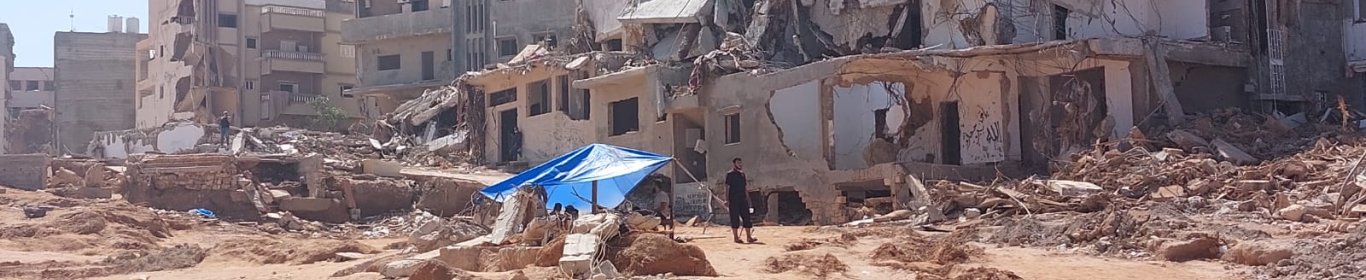
The ‘century of peace’, as it appeared to Europeans at the time, was in reality a century of never-ending wars led by the Europeans in the rest of the world – wars of which they themselves became mere spectators.
Some of these “peacetime” wars were also, in certain instances, “humanitarian wars,” carried out by coalitions whose justifications resonate familiarly in our own ears: restoring order, bringing peace, eradicating slavery, etc. Free trade, often praised as a factor of peace, was in practice enforced at gunpoint.
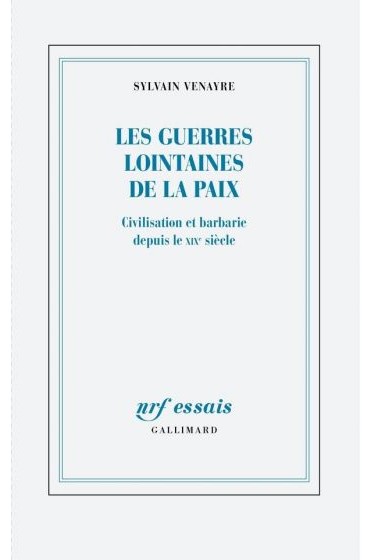
In Les Guerres lointaines de la paix. Civilisation et barbarie depuis le XIXe siècle (Gallimard), Sylvain Venayre, a historian specialised in the 19th century, recounts these expeditions and reports on the fierce controversies they gave rise to. The author of numerous scholarly works, as well as graphic novels and historic comic books, he will give a conference on these distant wars of the 19th century and the debates they continue to elicit today.
To cite this content :
Sylvain Venayre, “Waging war for peace”, 5 mai 2026, URL : https://msf-crash.org/en/conferences-debates/waging-war-peace
If you would like to comment on this article, you can find us on social media or contact us here:
Contribute Benoit Finck
Analysis
Benoit Finck
Analysis
War and humanitarian aid
07/25/2016Rony Brauman focuses on the humanitarian environment and practices in war, in order to try to understand and analyze its political and ethical stakes. Starting with the creation of the Red Cross at the end of the XIXth century, he then focused on the contemporary postcolonial period, switching between various scales and reporting on contradictory points of view and issues.
 Book
Book
In the Shadow of Just Wars
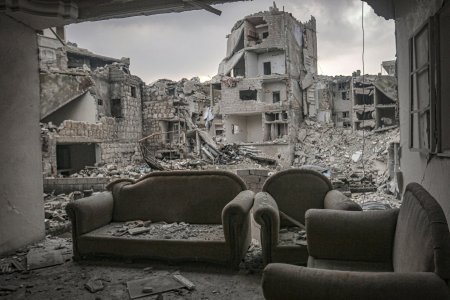
09/01/2003During the planning stages of military intervention in Iraq, humanitarian organizations were offered U.S. government funds to join the Coalition and operate uneder the umbrella of Operation Iraqi Freedom.
 Muhammed Said
Book
Muhammed Said
Book
Humanitarian wars ? Lies and brainwashing
04/18/2019In the eyes of Rony Brauman of Médecins sans Frontières, wars are always triggered in the name of morality. Today’s “humanitarian” interventions are little more than new moral crusades – and their justifications are based on lies.
Past events
 Conference
The polio eradication campaign put to test
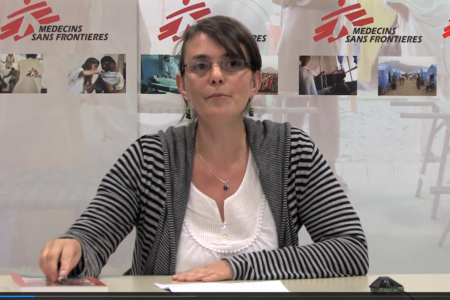
02/04/2014 - 01:30 PM 07:30 PMOn February 4, 2014, the Crash team was delighted to welcome Dr Rashid Jooma, from Aga Khan university, Karachi, Dr Elisha Renne, professor in the Department of Anthropology and the Department of Afroamerican and African Studies, University of Michigan ; Johannes Everts, WHO technical expert and Dr Hamid Jafari, Director of the Global Polio Eradication Initiative WHO. This round table was moderated by Claire Magone.
 Conference
Living a Natural Disaster
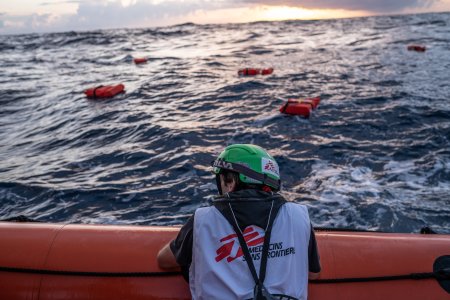
11/03/2010 - 07:00 PM 09:00 PMPeople wandering through the rubble in Haiti, arms outstretched begging for help amid the floods in Pakistan: the media coverage of disasters invariably features helpless victims, overwhelmed by the disaster, waiting to be helped...
 Virginie Nguyen Hoang/HUMA
Conference
Virginie Nguyen Hoang/HUMA
Conference
MSF’s contributions to the changes in trans-national medicine
02/18/2010 - 07:00 PM 09:00 PMThe emergency and constraints of certain catastrophes force MSF teams to medical and operational audacity. To take new paths or stray away from official protocols is to run the risk of doing things less well, of perhaps doing harm and dilapidating resources...
 Jacob Zocherman
Conference
Jacob Zocherman
Conference
Grounds for divorce ? MSF and the international criminal court
04/08/2009 - 08:30 PM 10:30 PMIn 1998 MSF decided to support the creation of the International Criminal Court. 10 years later MSF stated that it ‘would not cooperate and would not transmit any information to the ICC'. How can we explain this change of position?
 Lena Mucha
Conference
Lena Mucha
Conference
From their point of view
03/10/2009 - 07:00 PM 09:30 PMThe reasons why we are accepted, tolerated or sometimes rejected in the contexts where we work are often obscure. Caroline Abu-Sada and her team of sociology student shed some light on these issues.