

From their point of view
Caroline Abu-sada
The reasons why we are accepted, tolerated or sometimes rejected in the contexts where we work are often obscure. Caroline Abu-Sada and her team of sociology student shed some light on these issues.
In charge of this research project for MSF Switerzland, Caroline interviewed villagers, local authorities and staff members to find out how they perceive MSF and others humanitarian actors.
With examples from Niger, Cameroun, Liberia, Kenya, Ouganda, Jordanie, Guatemala and Irak, she presents here the initial conclusion of her work.
Table of contents
1. Introduction
2. Results of the study
3. Stable and unstable contexts
4. Unsurprising results
5. Perception and identity
6. International and local staff
7. International or local staff
8. Duration of projects
9. Principles of perception
10. Healthcare quality
11. Humanitarian assistance
12. Social categories
13. Semantic interpretation
14. Can we control our image?
15. Different sections
To cite this content :
Caroline Abu-sada, “From their point of view”, 10 mars 2009, URL : https://msf-crash.org/en/conferences-debates/their-point-view
If you would like to comment on this article, you can find us on social media or contact us here:
ContributePast events
 Conference
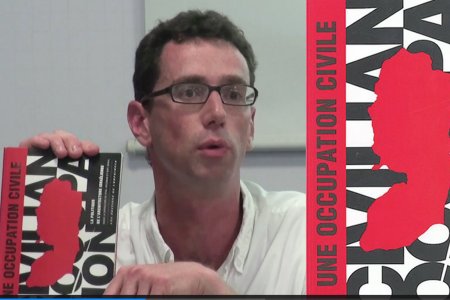
Eyal Weizman - Forensic Architecture at work
02/15/2016 - 07:00 PM 09:30 PMEyal Weizman, founder of Forensic Architecture at Goldsmiths College, University of London, presented his project and a number of his achievements at a Crash conference held on July 2, 2015. The event was organized and moderated by Michaël Neuman.
 Conference
The polio eradication campaign put to test
02/04/2014 - 01:30 PM 07:30 PMOn February 4, 2014, the Crash team was delighted to welcome Dr Rashid Jooma, from Aga Khan university, Karachi, Dr Elisha Renne, professor in the Department of Anthropology and the Department of Afroamerican and African Studies, University of Michigan ; Johannes Everts, WHO technical expert and Dr Hamid Jafari, Director of the Global Polio Eradication Initiative WHO. This round table was moderated by Claire Magone.
 Conference
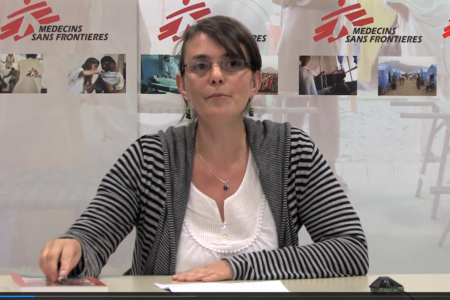
Living a Natural Disaster
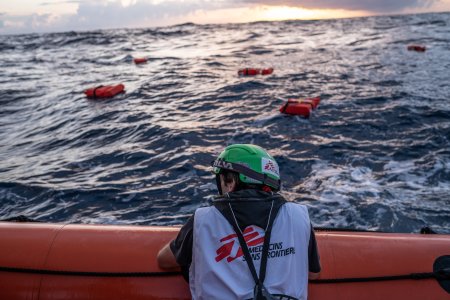
11/03/2010 - 07:00 PM 09:00 PMPeople wandering through the rubble in Haiti, arms outstretched begging for help amid the floods in Pakistan: the media coverage of disasters invariably features helpless victims, overwhelmed by the disaster, waiting to be helped...
 Virginie Nguyen Hoang/HUMA
Conference
Virginie Nguyen Hoang/HUMA
Conference
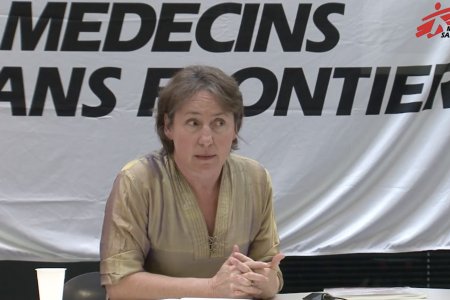
MSF’s contributions to the changes in trans-national medicine
02/18/2010 - 07:00 PM 09:00 PMThe emergency and constraints of certain catastrophes force MSF teams to medical and operational audacity. To take new paths or stray away from official protocols is to run the risk of doing things less well, of perhaps doing harm and dilapidating resources...
 Jacob Zocherman
Conference
Jacob Zocherman
Conference
Grounds for divorce ? MSF and the international criminal court
04/08/2009 - 08:30 PM 10:30 PMIn 1998 MSF decided to support the creation of the International Criminal Court. 10 years later MSF stated that it ‘would not cooperate and would not transmit any information to the ICC'. How can we explain this change of position?