 Alexandre Marcou/MSF
A to Z
Alexandre Marcou/MSF
A to Z
06/29/2026
Fabrice Weissman
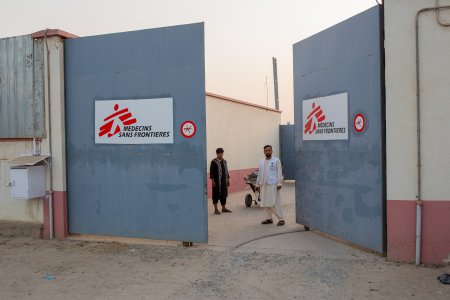
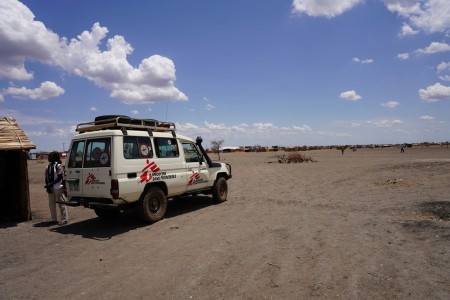
The term “acceptance” became part of the humanitarian vocabulary in the late 1990s, with the publication of the first manuals and training programs dedicated to the security management of aid operations. It refers to one of three strategies proposed to humanitarian actors to reduce risks in violent environments: using passive protection measures (helmets, bulletproof vests, armoured vehicles, fortified compounds, etc.), deterring potential attackers through local or international armed forces, or eliminating threats by earning everyone’s appreciation (acceptance). But how does one become appreciated, tolerated, and accepted? Two approaches coexist: one, political, emphasises the importance of caring for one’s friends; the other, marketing-oriented, emphasises the need to cultivate an image as a “principled organization”—neutral, independent, and impartial.
 MSF
Opinion
MSF
Opinion
04/29/2026
Rony Brauman
This article was initially published the 29th of April 2026, in the book « Gaza, un génocide colonial », by the author Colette Braeckman. Rony Brauman develops a critical reflection on the war crimes committed in Palestine, on the limits of humanitarian law as well as the complicity of Europe in the methodical erasure of Palestinians.
 Léa Gillabert
Analysis
Léa Gillabert
Analysis
04/24/2026
Lucas Faure
Véronique de Geoffroy
Michaël Neuman
Raphaëlle Parizet
In one year, according to the National Observatory of the Social and Solidarity Economy, the French civil society sector lost a total of 12,305 jobs. In the face of the global authoritarian shift towards restricting the activities of civil society organisations, there is a need for a collective response to restore solidarity as a foundational political principle. You may find the translated version of the article written by Lucas Faure, Véronique de Geoffroy, Michaël Neuman et Raphaëlle Parizet published the 24 April 2026 here.
 Giulia Gustavsen Angelini/MSF
Analysis
Giulia Gustavsen Angelini/MSF
Analysis
03/30/2026
Fabrice Weissman
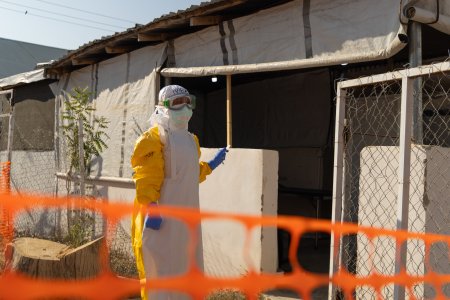
To what extent should a medico-humanitarian organization become concerned with the field of environmental health? Written in 2025, Fabrice Weissman has conducted a brief literature review on the links between health and the environment to help MSF address this question. Identifying around a dozen paradigms, he encourages the organization to pay particular attention to extreme climatic events, health crises linked to various forms of contamination, and the implications of “environmental justice.”
 Isaac Buay/MSF
Analysis
Isaac Buay/MSF
Analysis
01/20/2026
Emmanuel Baron
Jean-Hervé Bradol
Elba Rahmouni
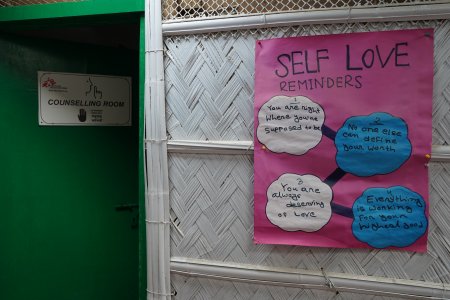
Declaring an epidemic is a major political and social issue capable of raising the crucial questions that could challenge the authorities’ legitimacy: have they correctly assessed the severity of the situation? On what basis have they declared an epidemic? Are they communicating in a timely manner? The experience that Médecins Sans Frontières has built up over the decades fighting epidemics seems to show that tackling the political and media crises that can accompany a health disaster means that an attempt must be made to answer these questions or, at least, not sidestep them.
 Mohammad Sazzad Hossain/MSF
A to Z
Mohammad Sazzad Hossain/MSF
A to Z
01/13/2026
Françoise Duroch
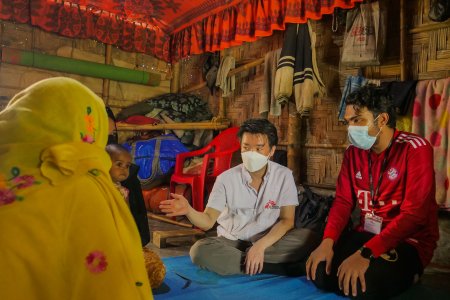
The notion of resilience, which originated in materials science, is now used in a wide range of fields, including psychology, ecology, physics, and the social sciences. It denotes the ability of individuals, groups, and systems to resist shocks, adapt, and rebuild themselves; its definition varies between a return to normal, adaptation, and transformation. Its use has become so common in so many fields that Time magazine named it the "Environmental Buzzword of 2013". With its vague contours, the term “resilience” is readily criticized for its contradictory interpretations, how difficult it is to operationalize, and how often it is manipulated, for political purposes, to justify or deny funding.
 Elizabeth Costa/MSF
A to Z
Elizabeth Costa/MSF
A to Z
11/18/2025
Marc Le Pape
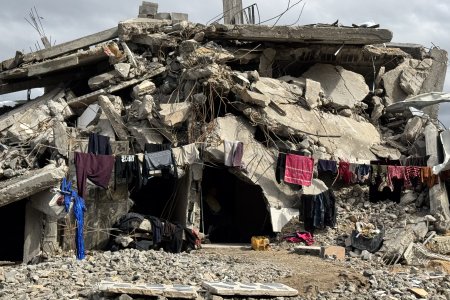
In this article, Marc Le Pape examines a variety of situations where applying the concept of culture can prove problematic. To explore how this concept is applied in a humanitarian aid context, the author asks numerous questions: During a crisis, is it appropriate for humanitarian workers to call on anthropologists in an emergency to eventually gain a better understanding of the communities involved? Who are the informants and interpreters employed by humanitarian workers for their networks and knowledge of local social dynamics? How much of a challenge is translation in the caregiver-patient relationship? Why take rumours about the medical field seriously?
 Nour Alsaqqa/MSF
Opinion
Nour Alsaqqa/MSF
Opinion
10/02/2025
Rony Brauman
This article by Rony Brauman was originally published in French on October 2, 2025, in the thematic dossier "Deux ans après : penser depyuis le 7 octobre" (“Two Years Later: Reflecting on October 7”), by the Palestine Media Agency (Agence Média Palestine). The author reflects on the events of October 7, 2023, as well as on the disproportionate violence of Israeli reprisals response.
 A to Z
09/01/2025
Michaël Neuman
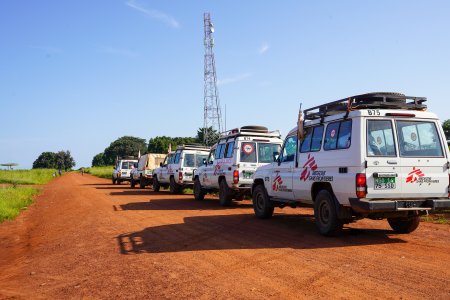
For governments, relief actors and international organizations, the classification of famine is a source of tension, due to the political, media-related, humanitarian, financial and emotional stakes involved. But what is famine, what criteria and data are used to define it, and by whom? Who declares it, and what are the public and political uses of such declarations? These are some of the questions examined in this article by Michaël Neuman.
 Manon Massiat/MSF
A to Z
Manon Massiat/MSF
A to Z
09/01/2025
Maelle L'Homme
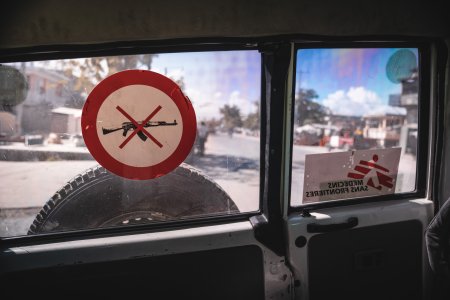
Frequently portrayed as tools to enable access in wartime, humanitarian corridors in fact reveal the ambiguities and limits of contemporary humanitarian action. Through a critical analysis this article questions the effectiveness, neutrality, and political implications of such mechanisms, which, under the guise of protection, may also serve military or diplomatic agendas.
 Pierre Fromentin/MSF
A to Z
Pierre Fromentin/MSF
A to Z
09/01/2025
Rony Brauman
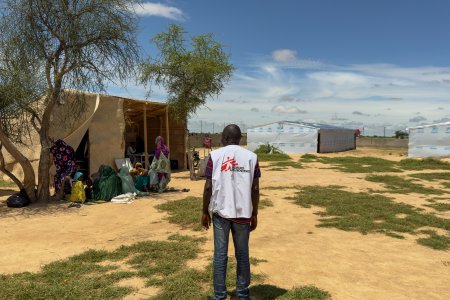
Caught between humanitarian commitment to vulnerable populations and security concerns, the issue of the use of armed escorts by humanitarian organisations raises some fraught questions. Médecins Sans Frontières has adopted this practice, controversial as it is, in a number of contexts throughout its history. Can we resort to this type of protection without compromising our neutrality? Are MSF's image and the very safety of its teams threatened by being so close to armed actors?
 Hareth Mohammed/MSF
A to Z
Hareth Mohammed/MSF
A to Z
09/01/2025
Michaël Neuman
As deconfliction has become a central tool in civil-military relations within conflict zones, this concept — rooted in military jargon — raises serious questions about its actual effectiveness. Michaël Neuman examines the origins, uses, and ambiguities of these mechanisms meant to protect humanitarian actors, while highlighting the risks of replacing legal guarantees with limited contractual arrangements.