 Review
La violence au microscope
05/25/2022Cet article est une recension du livre Violences Extrêmes. Enquêter, secourir, juger écrite par Benoît Guillou et publiée le 13 mai 2022 dans la Revue Projet n°388 (juin-juillet 2022).
 Review
Cet article est une recension du livre Violences Extrêmes. Enquêter, secourir, juger écrite par Benoît Guillou et publiée le 13 mai 2022 dans la Revue Projet n°388 (juin-juillet 2022).
 Remco Bohle
Review
Remco Bohle
Review
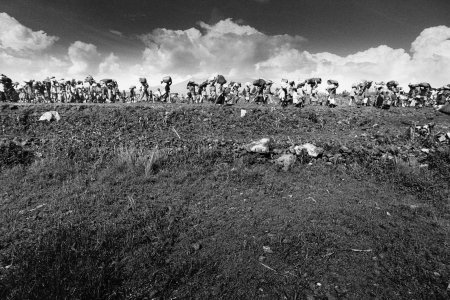
The film Empire of Silence, directed by Thierry Michel, examines the massacres committed in the Democratic Republic of the Congo from 1996 to the present. In this blog, Marc Le Pape introduces the film’s structure, some of the principal witnesses to the mass executions and some of the military and political actors responsible for them, and Congolese reactions to their impunity.
 Opinion
In his book, La Traversée. Une odyssée au cœur de l’Afrique, Patrick de Saint-Exupéry challenges the reality of Hutu Rwandan refugees’ hunt and massacre facing the advancement of the Rwandan Patriotic Army and their Congolese allies in 1996-97. This systematic exercise of denying reality – especially the denial of the Mapping Report written by the Office of the United Nations High Commissioner for Human Rights (1143 pages, published in June 2009) – but also this denial of Human Rights Advocacy groups’ investigations, and those of journalists’ witnesses present in DRC at the time – does not spare MSF’s teams who came to help these refugees in 1996-97. However, as a front-line witness of the Tutsi genocide in Rwanda, MSF was also one of the organizations noticing the intense violence perpetrated by the new Rwandan political regime in Zaire / DRC back in 1996 and 1997, mostly against a population constituted at three-quarters of women and children.
 Yves Ndjadi
Book
Yves Ndjadi
Book
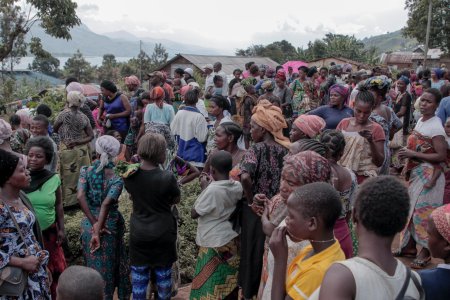
Over the last few years, Rwanda, the Democratic Republic of Congo (DRC) and Syria have been places where situations of extreme violence took place. As witnesses and investigators of such, the authors of this book shed light on three key-moments that marked these tragic episodes: the investigation, the intervention of emergency relief teams and the implementation of justice procedures leading to judgement.
 Podcast
Le 10 septembre 2021, Rony Brauman était l'invité d'Amélie Perrot sur Radio France pour revenir sur son expérience d'humanitaire chez MSF.
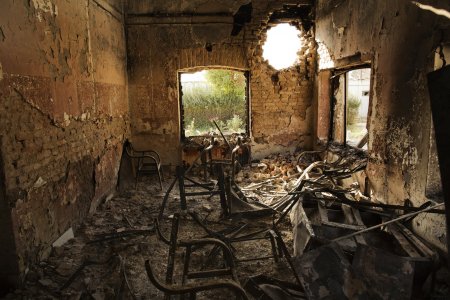 Victor J. Blue
Analysis
Victor J. Blue
Analysis
This article seeks to document and analyse violence affecting the provision of healthcare by Médecins Sans Frontières (MSF) and its intended beneficiaries in the early stage of the current civil war in South Sudan. Most NGO accounts and quantitative studies of violent attacks on healthcare tend to limit interpretation of their prime motives to the violation of international norms and deprivation of access to health services. Instead, we provide a detailed narrative, which contextualises violent incidents affecting healthcare, with regard for the dynamics of conflict in South Sudan as well as MSF’s operational decisions, and which combines and contrasts institutional and academic sources with direct testimonies from local MSF personnel and other residents. This approach offers greater insight not only into the circumstances and logics of violence but also into the concrete ways in which healthcare practices adapt in the face of attacks and how these may reveal and put to the test the reciprocal expectations binding international and local health practitioners in crisis situations.
 Conference
What turns ordinary men into killers? The CRASH team invited you to a conference – debate with the sociologist and historian, Nicolas Mariot. This meeting, prepared with Claudine Vidal, was moderated by Elba Rahmouni.
 Agnes Varraine-Leca/MSF
In the media
Agnes Varraine-Leca/MSF
In the media
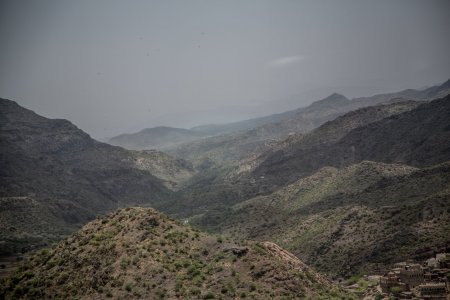
Dans l'émission Du grain à moudre d'été, sur France Culture, Michaël Neuman et François Frison-Roche répondent aux questions de Julie Gacon sur la possibilité d'une résolution politique du conflit entre le gouvernement yéménite et les rebelles houthis après l'annonce en juillet dernier du retrait des Emirats arabes unis. Les invités apportent un éclairage sur les intérêts divergents qui animent les différents acteurs du confit, notamment l’Arabie saoudite et l’Iran, et donnent à voir l'articulation entre économie de guerre et aide humanitaire.
 MSF
In the media
MSF
In the media
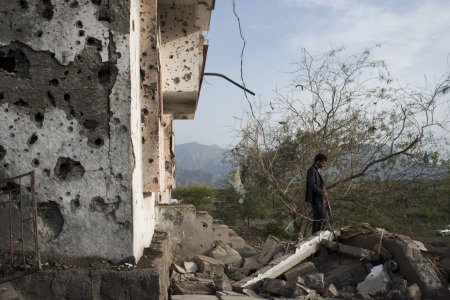
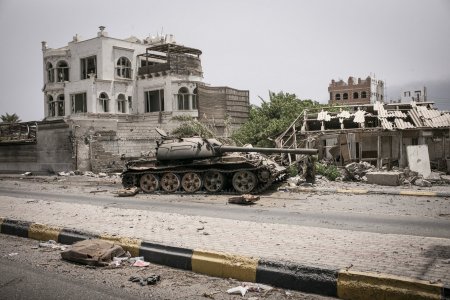
Bombardements de structures civiles (notamment des hôpitaux), situation sociale et économique catastrophique, malnutrition élevée, le Yémen est depuis mars 2015 le terrain d’un affrontement violent aux composantes multiples. . Débat avec la grand reporter Manon Quérouil-Bruneel, Marc Goutalier, politologue et consultant à l'Observatoire des Pays Arabes et Michaël Neuman, directeur d'études pour Médecins Sans Frontières.
 Guillaume Binet/
Review
Guillaume Binet/
Review
Tomorrow’s war? Bertrand Badie is pessimistic given the extremely high tension in the Middle East. Modern conflicts in the region are defined by their uncertain, composite and heterogeneous nature, as well as by their permanence, as there are no winners and no losers. The situation can be interpreted vertically as a “superposition of logics of conflict” and horizontally as an “aggregate of logics of coalition”. Bertrand Badie explained that a conflict situation is really dangerous when it combines several logics of conflict and several logics of alliance, making it virtually impossible to reach a compromise. Today, we can distinguish fives layers of conflict in the Middle East, a level of superposition never previously attained, according to this specialist in international relations.