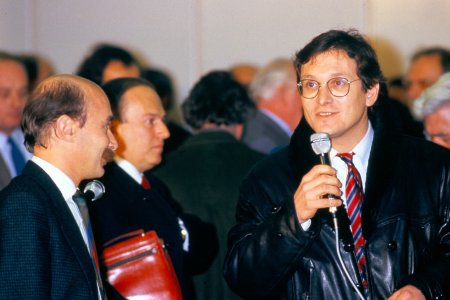
 Francis Apesteguy
Interview
Francis Apesteguy
Interview
06/19/2021
Rony Brauman
Cet entretien a été réalisé par Célia Héron pour Le Temps, et a été publié pour la première fois le 19 juin 2021.
Cette année, Médecins sans frontières fête les 50 ans de son étonnante histoire. A l’occasion du lancement de plusieurs événements à travers le monde ce mois-ci, Le Temps donne la parole à celui qui fut président de MSF de 1982 à 1994.
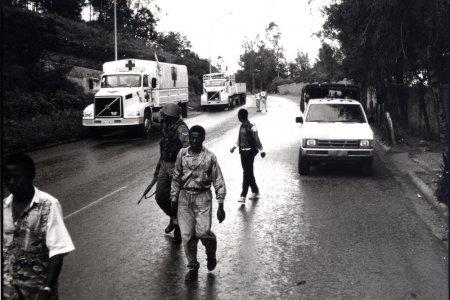 Xavier Lassalle/MSF
In the media
Xavier Lassalle/MSF
In the media
11/23/2020
Rony Brauman
Rony Brauman a participé à une conversation autour de l’histoire de l’engagement humanitaire, dans le cadre de l'émission Histoire Vivante de la Radio Télévision Suisse (RTS), parue le 23 novembre 2020.
 Aurélie Baumel
Interview
Aurélie Baumel
Interview
09/08/2020
Jean-Hervé Bradol
Interview by Helai Hosseini. A first version was published on the website of the MSF France association on 31 July 2020.
In the wake of the Black Lives Matter movement in the United States, voices have risen within MSF denouncing the racist and discriminatory nature of our organization. Equal opportunity, they say, is not offered to all our employees. Founded in France in the early 70s by a handful of doctors and journalists, the organization has grown and become international, now employing over 46,000 people around the world, nearly 39,000 of whom are recruited locally. How has MSF’s policy towards its personnel evolved down the years? What is currently being done to fight inequalities? Here is Jean Hervé Bradol’s take on the major phases that have marked MSF’s transformation and the ways in which discussions are engaged today.
 Maya Abu Ata/MSF
Analysis
Maya Abu Ata/MSF
Analysis
11/27/2019
Philippe Biberson
François Jean
First Published December 1, 1999 - Nonprofit and Voluntary Sector Quarterly (NVSQ) - Volume 28 Issue 1.
This article begins with a look at the role played by Médecins Sans Frontières (MSF) since its inception in 1971, and then looks at the challenges facing MSF today. It focuses on the confusion of humanitarian and political roles and on the goals MSF has laid out for itself to address this confusion. Humanitarian aid has become the favored response of governments to political crises, and governments have increasingly turned to NGOs to carry out their policies. In turn, NGOs have become increasingly dependent on governments for financial support. These changes have politicized aid delivery and made it difficult for NGOs to maintain their independence. In addition, as the number of NGOs increases and their activities become more specialized, there are pressures toward institutionalization and bureaucratization. To respond to these challenges, MSF has identified several goals, including maintaining organizational independence and flexibility and avoiding bureaucratization.
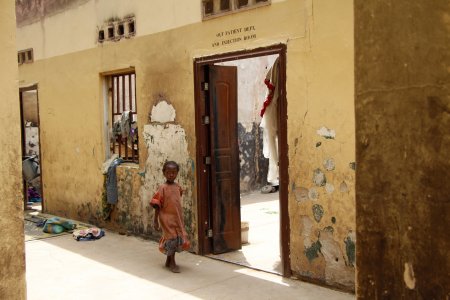 Benoit Finck
Analysis
Benoit Finck
Analysis
07/25/2016
Rony Brauman
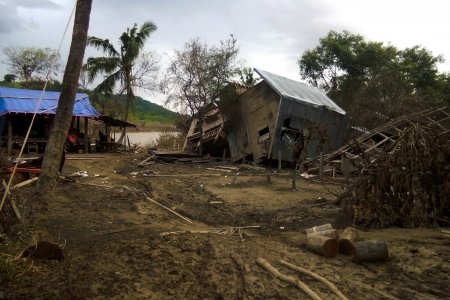
Rony Brauman focuses on the humanitarian environment and practices in war, in order to try to understand and analyze its political and ethical stakes. Starting with the creation of the Red Cross at the end of the XIXth century, he then focused on the contemporary postcolonial period, switching between various scales and reporting on contradictory points of view and issues.
 Inconnu
Analysis
Inconnu
Analysis
06/30/2015
Rony Brauman
Le texte ci-dessous est la transcription d'une intervention donnée dans le cadre du colloque « L'Ingérence », organisé par la Fondation Res Publica le 19 janvier 2015.
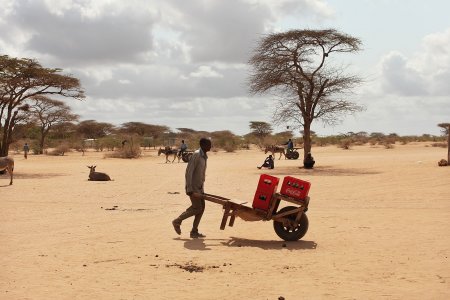
Cette conférence porte exclusivement sur des interventions armées menées contre la volonté de l'Etat du pays concerné, qu'elles aient été seulement promues sans voir le jour (Birmanie, Darfour) ou qu'elles aient eu lieu (Kosovo, Irak, Libye).
 Spencer Platt
Analysis
Spencer Platt
Analysis
07/03/2014
Michaël Neuman
Rony Brauman
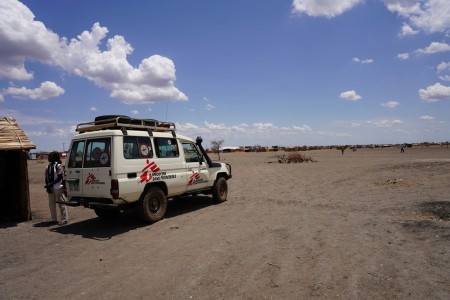
We often hear it said within MSF that the aid system is unable to provide effective relief, or that the aid system's ability to provide aid is in decline. Rony Brauman and Michaël Neuman aim at exploring MSF's relationship with the aid system, while showing how the ambitions of the aid system itself have evolved.
 Analysis
07/03/2014
Rony Brauman
Michaël Neuman
We often hear it said within MSF that the aid system is unable to provide effective relief, or that the aid system’s ability to provide aid is in decline. These statements, which suggest that MSF is itself outside the "system", are based on the very real number of people in relief operations who need help but do not receive it, or do not receive enough of it.
 Peter Casaer
Interview
Peter Casaer
Interview
09/27/2013
Rony Brauman
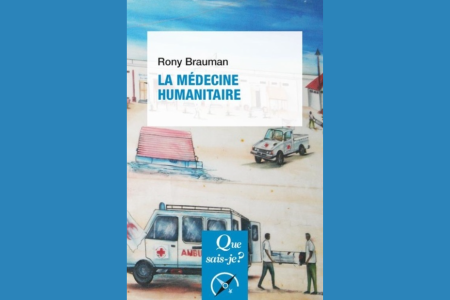
Entre morale du devoir et morale des conséquences, le droit humanitaire d'urgence, pourtant reconnu internationalement, est bien difficile à appliquer.
 Frederic Noy
Book
Frederic Noy
Book
02/01/2012
Rony Brauman
Humanitarian medicine is made up of a wide range of practices with few obvious connections between them. Battlefield medicine and surgery, rural dispensaries in remote areas, campaigns to raise awareness about health problems in poor countries, emergency teams in disaster situations, vaccination campaigns, health education, help for marginalised groups in affluent countries and public health advice are just some examples of actions that fall within the scope of “humanitarian medicine” when they are carried out by organisations and in circumstances that can be classified as “humanitarian”.
 Alexandre Sargos
Interview
Alexandre Sargos
Interview
03/03/2011
Rony Brauman
Rony Brauman explique pourquoi l'organisation fait, historiquement, « cavalier seul » et dit comprendre que MSF puisse donner l'impression à d'autres acteurs de l'humanitaire d'être une ONG « arrogante ».
 Juan Carlos Tomasi
Interview
Juan Carlos Tomasi
Interview
07/20/2010
Rony Brauman
Dans cet entretien, Rony Brauman répond aux questions du philosophe Régis Debray sur la notion de frontière dans un organisme "sans frontières".