
A / A / A

Rony Brauman

Rony Brauman

Medical doctor, specialized in tropical medicine and epidemiology. Involved in humanitarian action since 1977, he has been on numerous missions, mainly in contexts of armed conflicts and IDP situations. President of Médecins sans Frontières from 1982 to1994, he has taught at the Humanitarian and Conflict Response Institute (HCRI) at the University of Manchester (UK) and at Sciences Po Paris. He has published several books and articles, including "Guerre humanitaires ? Mensonges et Intox" (Textuel, 2018), "La Médecine Humanitaire" (PUF, 2010), "Penser dans l'urgence" (Editions du Seuil, 2006) and "Utopies Sanitaires" (Editions Le Pommier, 2000).
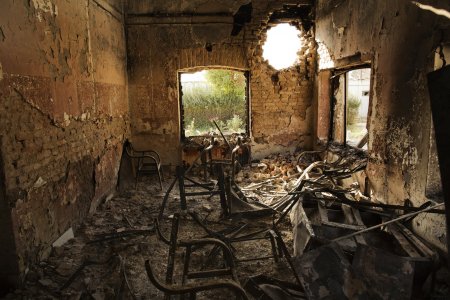
Vue de l'intérieur de l'hôpital MSF à Kunduz, après son bombardement, octobre 2015 Victor J. Blue Video

Humanitarian Wars ? - Interview with Rony Brauman

02/19/2018 Rony Brauman Olivier Falhun

Rony Brauman has just published “Guerres humanitaires ? Mensonges et intox”. This book, a collection of interviews co-authored with Régis Meyran, explores a number of recent armed interventions that have all shared the goal of saving lives. Reviewing conflicts in Somalia, Libya, Kosovo, Afghanistan and Iraq, Brauman discusses the reasons advanced for justifying these wars and the accompanying lies.

Read more
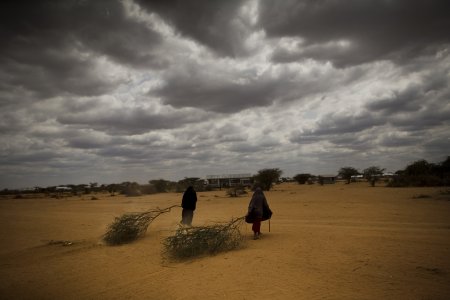
Deux femmes transportent des branches d'arbre, camp de Dagahaley, Kenya, 2009 Dominic Nahr Dossier

Famine: political implications and operational responses

06/12/2017 Rony Brauman

The articles and essays in this publication discuss the specific context in which famines arise and the responses mobilised to address them. MSF has been involved in a number of famine responses (Uganda 1980, Ethiopia 1984-1985, Somalia 1991-1993) and has contributed to many chronic and acute malnutrition operations (Niger, Sudan and Ethiopia in particular in the 2000s). As theses famines were systematically related to armed conflict, the political implications are particularly significant and consequently, feature as a common theme in most of the analyses.

Read more
Opinion

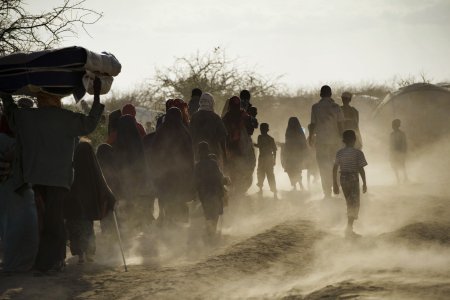
When camps become cities

03/06/2017 Rony Brauman

There can scarcely be any more sensitive marker of geopolitical transformations than the refugee. Not the individual refugee as such, but the phenomenon of refugees, the representations that make them visible and the discourse around them. From this point of view, 2016 was a year of upheaval, the like of which Europe had not seen since the war in the former Yugoslavia.

Read more
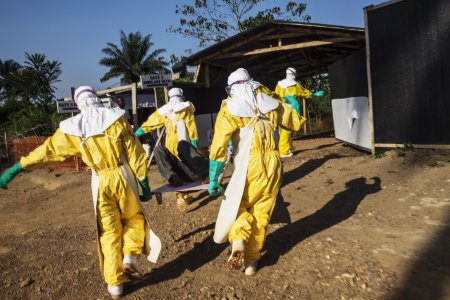
Doctors carry a patient infected by ebola Anna Surinyach Cahier

Médecins Sans Frontières and medical quality

01/01/2017 Rony Brauman Michèle Beck

The question of quality in the work of Médecins Sans Frontières has been asked from the very beginning of MSF's existence. On the one hand, the issue of improving the quality of practice is a part of ordinary professional activity; on the other hand, Médecins Sans Frontières' work involved working in distant lands and very specific environments, which demanded adjustments to medical practice as a result.

Read more
A young girl walks in the streets of Bama Benoit Finck Analysis

War and humanitarian aid

07/25/2016 Rony Brauman

Rony Brauman focuses on the humanitarian environment and practices in war, in order to try to understand and analyze its political and ethical stakes. Starting with the creation of the Red Cross at the end of the XIXth century, he then focused on the contemporary postcolonial period, switching between various scales and reporting on contradictory points of view and issues.

Read more
Analysis

MSF and the aid system: choosing not to choose

07/03/2014 Rony Brauman Michaël Neuman

We often hear it said within MSF that the aid system is unable to provide effective relief, or that the aid system’s ability to provide aid is in decline. These statements, which suggest that MSF is itself outside the "system", are based on the very real number of people in relief operations who need help but do not receive it, or do not receive enough of it. 

Read more