
When Aid Recedes: NGOs and Civil Society Organisations in the face of the Authoritarian Turn
Lucas Faure, Véronique de Geoffroy, Michaël Neuman & Raphaëlle Parizet
He is a political scientist and a post-doctoral researcher at the Université libre de Bruxelles (GERME) as part of the ECO-MUS research project (INNOVIRIS). Having completed a PhD on on Muslim humanitarianism at Sciences Po Aix, his research focuses on the voluntary sector and Muslim activism in support of environmental causes in Europe.
© Natacha de Mahieu
Véronique de Geoffroy is Groupe Urgence Réhabilitation Développement Association (URD´s) Director. She has worked in the humanitarian sector for more than 25 years, having worked in the field in the 1990s, in Colombia, the Balkans and the Great Lakes region.
Director of studies at Crash / Médecins sans Frontières, Michaël Neuman graduated in Contemporary History and International Relations (University Paris-I). He joined Médecins sans Frontières in 1999 and has worked both on the ground (Balkans, Sudan, Caucasus, West Africa) and in headquarters (New York, Paris as deputy director responsible for programmes). He has also carried out research on issues of immigration and geopolitics. He is co-editor of "Humanitarian negotiations Revealed, the MSF experience" (London: Hurst and Co, 2011). He is also the co-editor of "Saving lives and staying alive. Humanitarian Security in the Age of Risk Management" (London: Hurst and Co, 2016).

Raphaëlle Parizet is a political scientist and senior lecturer at the University of Paris-Est Créteil; she heads the Master's programme in Political Science and International Humanitarian Action at the IEP of Fontainebleau-UPEC. Her research focuses on issues relating to development, poverty, and the support of vulnerable populations.
This is the translated version of an article written by Lucas Faure, Véronique de Geoffroy, Michaël Neuman et Raphaëlle Parizet on 24 April 2026, and published on AOC media. You can find the original text here.
In one year, according to the National Observatory of the Social and Solidarity Economy, the French civil society sector lost a total of 12,305 jobs. In the face of the global authoritarian shift towards restricting the activities of civil society organisations, there is a need for a collective response to restore solidarity as a foundational political principle.
Although it was announced during his campaign, Donald Trump’s closure of USAID by executive order remains a bold, spectacular, and unapologetic move. In its brutality, it appears as the visible manifestation of a deeper undercurrent calling into question public aid, multilateralism, and, more broadly, the international order. Such a frontal attack on the place and role of civil society and humanitarian actors is part of a broader pattern of restrictions on freedom of association observed in France in recent years, even though these two movements—on the international and national stages—have, until now, rarely been analysed together outside of certain specialised circles and working groups.
Between 2025 and 2026, the collapse of humanitarian budgets at the global level, at the very moment when crises and conflicts are multiplying, illustrates this turning point. This offensive resonates with an illiberal logic that prioritises national interest, bilateral transactions, and suspicion toward anything pertaining to universality, law, or advocacy.In this sense, whilst this strategy contributes to discrediting the aid sector as a whole – a point on which we agree with Stéphanie Tchiombiano’s analysis – nevertheless, her argument, in our view, reflects a deliberate and apparent opposition to human rights and international solidarity. See: “Les ONG sur les banc des accusès” AOC, 20 February 2026.In France, as elsewhere within so-called liberal democracies, civil society organisations are experiencing declining public funding, heightened scrutiny, and smear campaigns, often justified in terms of alleged complicity, at best counter-terrorism concerns, or their supposed “woke” agenda. This convergence reflects a broader global trend in which states are restricting the activities of critical organisations, whether through administrative measures or political pressure, with the aim of limiting their influence and their capacity for dissent.See Simon Cottin-Marx, Matthieu Hély, Gilles Jeannot and Maud Simonet, “La recomposition des relations entre l’État et les associations : désengagements et réengagements,” Revue française d’administration publique, n° 163, 2017.We are therefore witnessing a selective closure of public space to civil society actors—one that is not limited to authoritarian regimes but that is also observable in democracies, where surveillance, criminalisation, and political discrediting of critical actors have become frequent and well-documented.Observatoire des libertés associatives, Report “Neutraliser le monde associatif. Enquête sur une injonction à la dépolitisation,” February 2026; Report “Entraves aux libertés associatives dans les HLM,” June 2024; Report “Une citoyenneté réprimée,” an assessment of the constraints on civil society organisations in France, Octobre 2020.
In response, some associations and NGOs are adapting their strategies by aligning with new directives (seeking a “return on investment,” revising their messaging—particularly on gender issues—or focusing on less visible activities), while others are mobilising civil society to resist attempts of repression. This phenomenon raises significant challenges for the survival of humanitarian and social organisations, as well as for the preservation of their legitimacy. The year 2025 marks a similar—if not converging—shift at both the international and national levels: in France, organisations working in the social sector or defending civil liberties are increasingly targeted by political authorities, much like NGOs operating internationally, as exemplified in its most acute form by the situation in Gaza.
These developments can be understood as part of a single authoritarian turn aimed at neutralising the critical capacity and countervailing role of associations and NGOs, whether they operate on the national or international stage. This is illustrated by the radical opposition to international aid embodied in France by MEP Sarah Knafo, as well as by that of the European People’s Party, which initiated the creation of a “monitoring group” to oversee NGO funding.
The year 2025 thus marks a rupture: that of a form of partnership—admittedly not always acknowledged—between the state and NGOs. A dichotomous logic frequently structures the way relations between the state and civil society are understood, positioning the latter either in support of state actors or in opposition to them. Those who, in the name of defending the vulnerable and the marginalized, directly oppose state practices are dismissed. In a context aimed at homogenizing and aligning the legitimacy of “acting for others” with government policies, the survival of civil society actors and NGOs is at stake: how, from the countries of the North, can they organise, continue to exist, and carry out aid work in a world where they have lost some of their legitimacy among a segment of the political class and public opinion and are at odds with public policies?
This observation reflects a global dynamic in which governments selectively reshape the scope for action available to civil society actors by excluding those perceived as critical or dissenting.
The situation in Gaza marks the culmination of the gradual deterioration of relations between liberal democracies and NGOs, centred on accusations of excessive politicization of aid. The treatment of NGOs in Gaza prevents us from viewing international aid through a homogenizing lens: it is by no means a unified or homogeneous community. The landscape of international NGOs is not limited to the major traditional organisations (Doctors Without Borders, the Red Cross, CARE…), which, despite their differences, have appeared aligned with the imperative to aid the Palestinian population and the demand to halt the massacres committed by Israel in the name of humanitarian ethics. When Benjamin Netanyahu decided to replace thirty-seven humanitarian organisations with a group of evangelical organisations, this was indeed a specific, ideologically driven form of international aid.
This pattern points to a broader global trend in which governments selectively reorganise the scope of possibilities for civil society actors by excluding those perceived as critical or dissenting. One of the most emblematic cases is the desire of governing parties, encouraged by the government, to remove civil society organisations from administrative detention centres. These organisations—critical of the state while operating directly within these centres—perfectly illustrate this growing hostility toward certain solidarity-based actors. This selective exclusion undermines the plurality essential to democratic functioning: Hannah Arendt demonstrated in a 1950 essay, “The Eggs Are Rebelling,”Text published in the French collection La Philosophie de l’existence et autres essais (trans. A. Damour, Payot, 2000), based on essays from Essays in Understanding, 1930-1954. that this plurality is an essential condition for preserving a mode of political being specific to human existence.
Moreover, voices calling for solidarity to be placed back at the centre of political debates are emerging but remain too limited. Above all, they struggle to move beyond a compartmentalization of their activities (national or international) whether driven by individual figuresPierre Micheletti, « De la dépendance à la refondation : l’aide internationale à l’heure du basculement », The Conversation, 14 April 2026.or confined to separate platforms, from Coordination Sud to the Collective des associations citoyennes.Coordination Sud, Press Release « La solidarité internationale ne peut pas disparaître dans le silence », 30 janvier 2026. In France, it is the 1901 law that governs private nonprofit associations and has historically fostered the emergence of state-funded countervailing powers, making possible the existence of a democratic space marked by plurality.
Even though they operate primarily on the international stage, NGOs headquartered in France derive their legitimacy to act from the legal framework established by the 1901 law. The largest NGO and the smallest neighbourhood association share the same legal status and similar rights and duties. However, their legitimacy is now being undermined by increasing restrictions on freedom of association, characterised by the curtailment of fundamental freedoms of association, expression, and assembly; the elimination of tax exemptions; cuts to subsidies; their disqualification as countervailing forces; or their dissolution—all of which undermine associations’ ability to act and defend their causes.
A united response would therefore gain strength and power. The political phase opened by the municipal elections and leading up to the presidential elections is conducive to collective statements aimed at restoring solidarity as a structuring political principle, in a context of ecological, social, and democratic crises. Finally, while associations have made solidarity one of their core principles, the individuals who have made it their profession cannot claim a monopoly on it:Romain Lecler, Yohann Morival and Yasmine Bouagga, « Pour une ethnographie des professionnels de l’international », Critique internationale, 81, 2018 ; Pascal Dauvin and Johanna Siméant-Germanos, Le travail humanitaire. Les acteurs des ONG, du siège au terrain, Sciences Po Press, 2002 ; Matthieu Hély, Les Métamorphoses du monde associatif, Presses Universitaires de France, 2009 ; Simonet Maud, Le Travail bénévole, La Dispute, 2010.solidarity operates through a multitude of non-professional actors (volunteers, local communities, diasporas) who respond horizontally to crises, where highly structured and professionalized actors (associations and NGOs) struggle or step aside. This continuum between national dynamics (local solidarity in the face of state failures) and international ones (territorial responses to crises) shifts the focus away from a top-down approach to aid—whether social or humanitarian—and leads to a greater consideration of practices on the margins.
To cite this content :
Lucas Faure, Véronique de Geoffroy, Michaël Neuman, Raphaëlle Parizet, “When Aid Recedes: NGOs and Civil Society Organisations in the face of the Authoritarian Turn”, 24 avril 2026, URL : https://msf-crash.org/en/humanitarian-actors-and-practices/when-aid-recedes-ngos-and-civil-society-organisations-face
If you would like to comment on this article, you can find us on social media or contact us here:
Contribute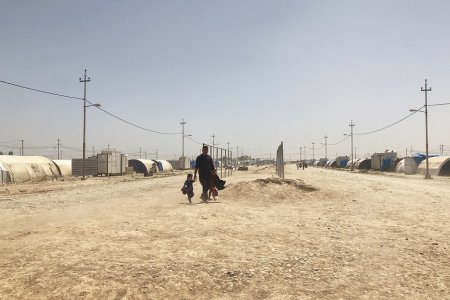 Candida Lobes
Analysis
Candida Lobes
Analysis
Crisis and Humanitarian Containment
12/19/2023Challenging the idea that humanitarian actors can act free from politics by virtue of their principles, this chapter argues that the politicization of humanitarian aid is in fact the primary condition for its deployment. Humanitarian actors can only act if they maintain a balance between their own interests and those of people in positions of power. This raises a crucial ethical question: At what point do humanitarian organisations consider that deals reached with political powers cross the blurred but very real line beyond which humanitarian assistance does more harm than good?
 A to Z
What “solidarity” means for MSF: the uses and applications of a notion
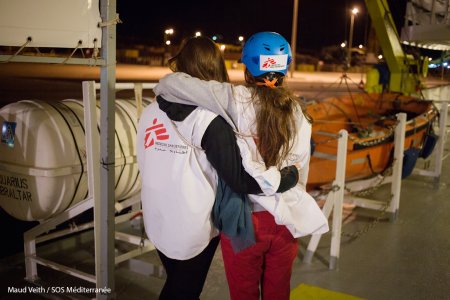
08/01/2025A central concept in humanitarian discourse, international solidarity has established itself as a hallmark of emergency and development interventions. But what does this widely used term truly encompass? This article explores the various dimensions of solidarity, its political and symbolic stakes, and examines the concrete practices it generates within humanitarian organizations, particularly Médecins Sans Frontières (MSF).
 Book
Book
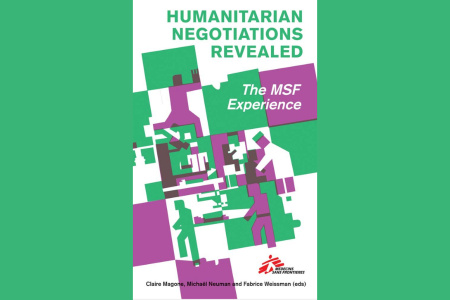
Humanitarian Negotiations Revealed: the MSF experience
02/17/2012From international NGOs to UN agencies, from donors to observers of humanitarianism, opinion is unanimous: in a context of the alleged ‘clash of civilisations’, our ‘humanitarian space’ is shrinking.