 Borja Ruiz Rodriguez/MSF
Op-ed
Borja Ruiz Rodriguez/MSF
Op-ed
07/11/2018
Rony Brauman
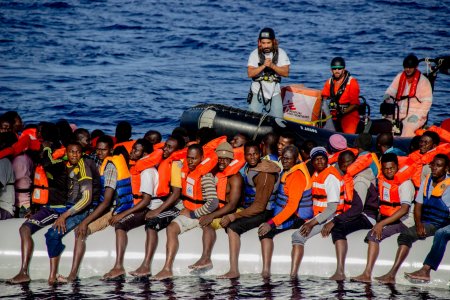
Humanitarian organisations coming to the rescue of migrants in the Mediterranean Sea are kindly required either to watch them drown or to hand them over to human traffickers and torturers. We have seen countless political statements, opinion polls and editorials on the need to take a harder line against African migrants and accusing NGOs of being the accomplices of “smugglers”. We have even heard it said that these NGOs are organising the departures of those aspiring to migrate to Europe coincide with the presence of a rescue ship, making relief workers conscious actors in a criminal enterprise.
 Andrew McConnell/Panos Pictures
Op-ed
Andrew McConnell/Panos Pictures
Op-ed
07/10/2018
Michaël Neuman
Thierry Allafort-Duverger
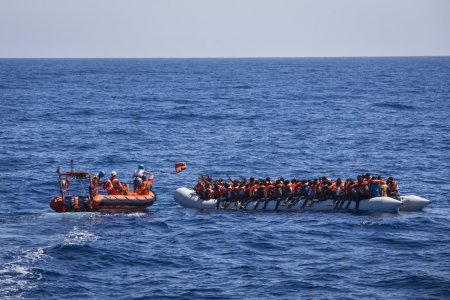
Humanitarian aid organisations carrying out rescues at sea were made into the accomplices of human traffickers. This accusation is as absurd as it is unacceptable. Not only do rescue operations at sea save people from drowning, but they evacuate people in situations of immediate danger in Libya, MSF recalls.
 msf
Interview
msf
Interview
07/09/2018
Rony Brauman
Rony Brauman takes a critical look at "humanitarian wars" and argues for political solutions that could include Islamists. He recently published "Humanitarian Wars? Lies and intox "(Textuel, 2018). This interview was published on July 03, 2018 in l'Opinion.
 Guillaume Binet/
Review
Guillaume Binet/
Review
07/03/2018
Elba Rahmouni
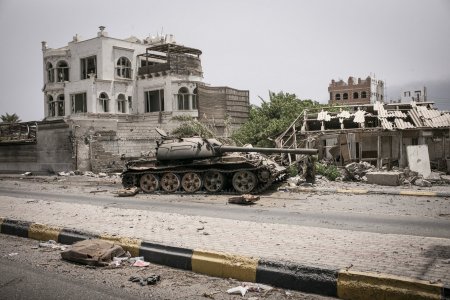
Tomorrow’s war? Bertrand Badie is pessimistic given the extremely high tension in the Middle East. Modern conflicts in the region are defined by their uncertain, composite and heterogeneous nature, as well as by their permanence, as there are no winners and no losers. The situation can be interpreted vertically as a “superposition of logics of conflict” and horizontally as an “aggregate of logics of coalition”. Bertrand Badie explained that a conflict situation is really dangerous when it combines several logics of conflict and several logics of alliance, making it virtually impossible to reach a compromise. Today, we can distinguish fives layers of conflict in the Middle East, a level of superposition never previously attained, according to this specialist in international relations.
 Review
07/02/2018
Marc Le Pape
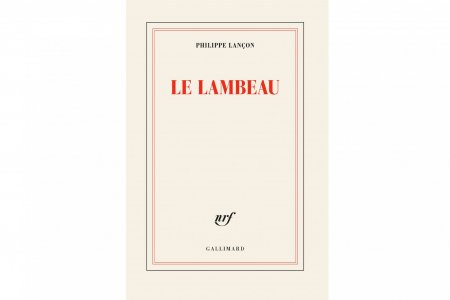
Philippe Lançon works as a journalist for the French satirical magazine, Charlie Hebdo, and Libération newspaper. His book, Le lambeau was published in April. As the author and subject of his narrative, he relates his experience as a hospital patient after surviving the terrorist attack against Charlie Hebdo during its editorial meeting on 7 January 2015. Although a “novice" when it comes to hospitals and operating theatres, he is a seasoned journalist. He is currently writing for Libération’s culture page, but previously reported on armed conflicts (Iraq and Somalia). So he’s no novice when it comes to casualties of war. In 2015, he became a reporter reporting on himself and on hospital surgery.
 Sylvain Cherkaoui/COSMOS
Opinion
Sylvain Cherkaoui/COSMOS
Opinion
06/25/2018
Fabrice Weissman
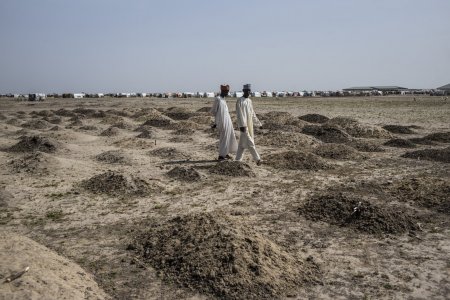
The crude mortality rate (CMR) is one of the most widely used indicators at MSF and the humanitarian sector to evaluate the severity of a health crisis within a given population. It is widely recognized that a CMR equal to or greater than one death per 10,000 persons a day signifies an emergency situation requiring an immediate response. However, the usage of the standard emergency threshold as “1/10,000/day” is very questionable: it goes against the official recommendations endorsed by humanitarian organizations and ignores the worldwide decline in mortality rates over the last 30 years.
 Eddy Van Wessel
Review
Eddy Van Wessel
Review
06/13/2018
Rony Brauman
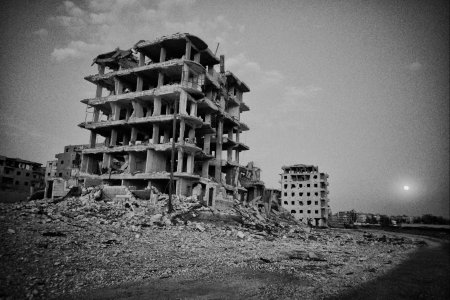
La guerre humanitaire sonne comme un oxymore. Dans Guerres humanitaires ? Mensonges et Intox, cette longue interview avec Régis Meyran, Rony Brauman réfléchit notamment à ce que peut et doit être aujourd’hui la guerre humanitaire, dans la continuité du « droit d’ingérence » tel qu’il fut théorisé par Mario Bettati et Bernard Kouchner avec la fin de la guerre froide, puis de « la responsabilité de protéger » telle qu’elle fut élaborée en 2000 par Kofi Annan, alors secrétaire général de l’ONU.
 John Parkin
Opinion
John Parkin
Opinion
06/06/2018
Claudine Vidal
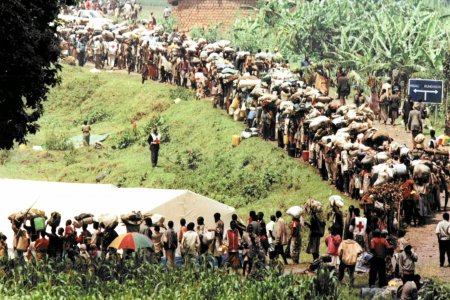
Published in March 2018, Judi Rever’s investigative work, In Praise of Blood, quickly garnered international attention. It is an indictment of both the Rwandan patriotic front (RPF) and its leader, current Rwandan president Paul Kagame, and foreign governments and international institutions – the International Criminal Tribunal for Rwanda (ICTR), in particular – that allowed crimes committed against Hutu civilians to go unpunished.Judi Rever’s book is more than a work of investigation. It reads like a prosecutor’s closing argument: the massacres are described in such a way as to classify them as genocide. And it is precisely this combination of investigation and the pursuit of evidence that would stand up in a court of law that is problematic.
 Mohammad Ghannam/MSF
Review
Mohammad Ghannam/MSF
Review
05/31/2018
Elba Rahmouni
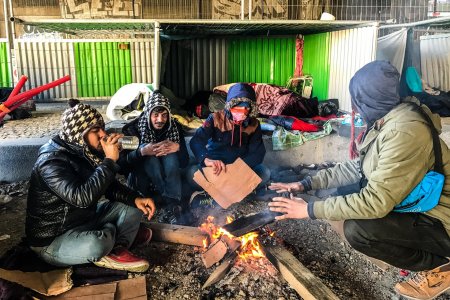
Thanks to the migrant crisis, or the reception crisis as it would be more appropriate to call it, the issue of hospitality is back in the forefront. On 17 May, the Maison des Métallos organised a conference with two social science researchers - Michel Agier and Benjamin Boudou - and an NGO manager Cécile Poletti to discuss existing tensions between private hospitality and public hospitality.
 Xavier Lassalle/MSF
Opinion
Xavier Lassalle/MSF
Opinion
04/05/2018
Jean-Hervé Bradol
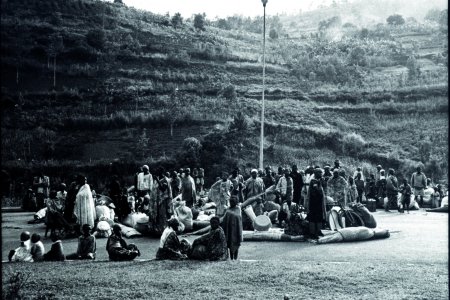
The publication of the journalist Judi Rever’s book, In Praise of Blood, on the crimes committed by the Rwandan Patriotic Front’s armed rebellion has rekindled discussion over the existence of a “double genocide”, one committed against the Tutsis under the orders of Rwanda’s interim government which took power in April 1994 following the assassination of President Habyarimana, and the other against the Hutus by the Rwandan Patriotic Front (RPF) which seized power in July 1994. There is little or no controversy about the reality of the genocide of the Tutsis in the world of Rwandan studies, but the claim that the Hutus were in turn victims of genocide sparks reactions as violent as they are confused. The cause of this confusion can be found in the different definitions of a term used in at least three fields: history, law and politics.
 Review
04/01/2018
Clara Egger
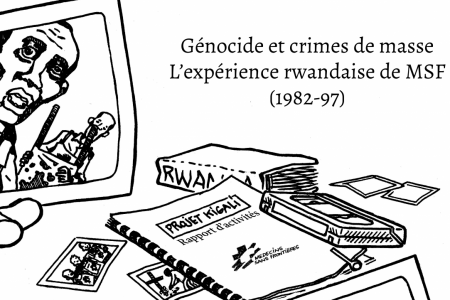
Voici une recension du livre de Jean-Hervé Bradol et Marc Le Pape, Génocide et crimes de masse. L'expérience rwandaise de MSF 1982-1997 (CNRS éditions, 2017), rédigée par Clara Egger dans la Revue française de science politique en avril 2018.
 Alessandro Penso
Op-ed
Alessandro Penso
Op-ed
01/12/2018
Michaël Neuman
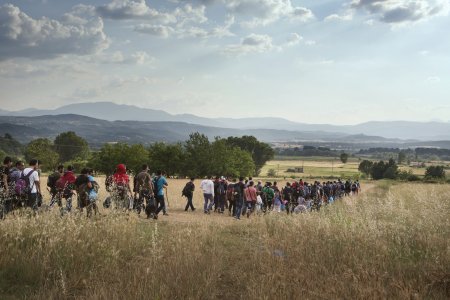
Abstaining from participation in a meeting taking place this coming Thursday, MSF feels that "government officials have listened politely at best and shown condescension and contempt at worst in response to positions expressed in meetings, op-ed pieces published in the press and questions asked in meetings by NGOs" and do not hide "a policy that is sliding into harsh repression".