 MSF
Analysis
MSF
Analysis
11/04/2022
Natalie Roberts
This article was published on December 22nd, 2021 in the Journal of Humanitarian Affairs (Issue 3, Volume 3).
In this article, Natalie Roberts analyses the actions and positioning of MSF during the Ebola outbreak in Nord Kivu (Democratic Republic of Congo, 2018-2020).
 Alexis Huguet
Analysis
Alexis Huguet
Analysis
03/25/2021
Natalie Roberts
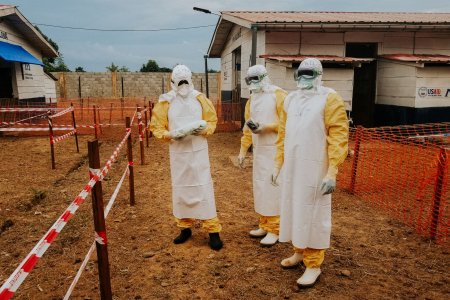
Within four months of the first notification of Ebola cases in August 2018, the Nord Kivu (and Ituri) Ebola epidemic had become the second-largest on record. Notwithstanding a rapid and massive mobilisation of resources, the outbreak continued beyond the most pessimistic predictions and the case fatality rate (the proportion of people with the infection who die from it) remained static at 66%. Despite numerous lesson-learning exercises following the Ebola epidemic in West Africa in 2014–2016, and despite the development of new vaccines and treatments, after 3,444 cases and 2,264 deaths it is difficult to claim that outcomes are better this time around.
 Fabio Basone/MSF
Interview
Fabio Basone/MSF
Interview
03/20/2020
Jean-Hervé Bradol
Pour le journal La Croix, Jean-Hervé Bradol évoque les similitudes entre l’épidémie de coronavirus et les précédentes épidémies qu’il a vécues au sein de MSF : "On prévoit un moment de crise où l’offre de soins sera de très loin inférieure à la demande en ce qui concerne les cas graves."
 John Wessels
Interview
John Wessels
Interview
09/10/2019
Jean-Hervé Bradol
Elba Rahmouni
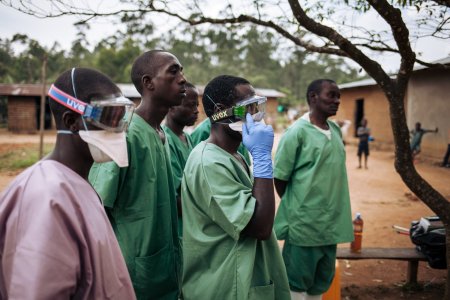
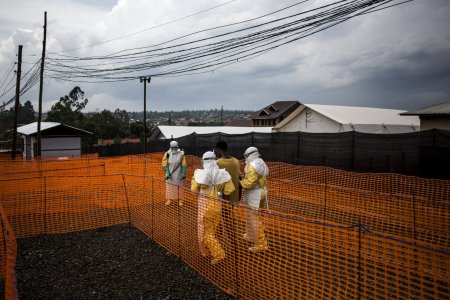
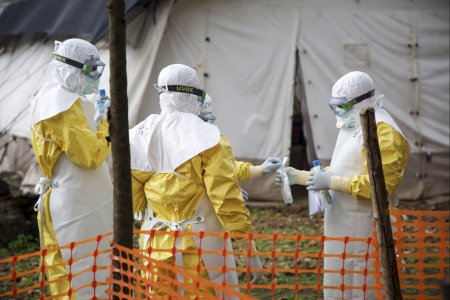
On August 1st 2018, the Democratic Republic of Congo’s health authorities declared the country’s tenth outbreak of Ebola virus disease (EVD), this time in North Kivu province. Just over a year later, this outbreak is still ongoing, with several dozen new cases reported each week. In the space of 12 months, 3000 people contracted the disease and 2000 of them have since died. This latest outbreak can be seen as a failure at two levels: first, it is already the second biggest EVD outbreak ever recorded, and second, two out of three patients have died. What are the reasons for this failure? What operational strategies should we develop in response?
Interview with Jean-Hervé Bradol, Director of studies at CRASH, by Elba Rahmouni.
 Carl Theunis/MSF
Interview
Carl Theunis/MSF
Interview
10/26/2018
Elba Rahmouni
Rebecca Grais, Research Director at Epicentre, MSF’s epidemiology arm, and Pierre Mendiharat, Deputy Director of Operations for MSF-France, offer their insights on the Ebola outbreak in North Kivu Province in the eastern Democratic Republic of the Congo (DRC). This joint interview in four parts (the outbreak, social context, treatments, and vaccination) aims to show how science and practice interact around each outbreak.
 MSF-Crash
Conference
MSF-Crash
Conference
05/16/2017 - 06:30 PM 08:30 PM
Michaël Neuman
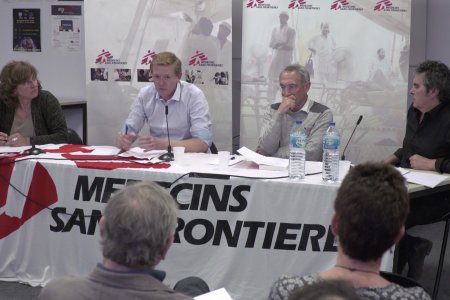
A l'occasion de la parution du livre « La politique de la peur : MSF et l'épidémie d'Ebola », coordonné par Michiel Hofman et Au Sokhieng de la section belge de MSF, le CRASH a organisé une conférence/débat le mardi 2 mai 2017, animée par Michèle Diaz, journaliste à RFI et spécialiste des questions santé, en présence de Bertrand Draguez, Thierry Allafort et Olivier Bouchaud.
 Yann Libessart
Analysis
Yann Libessart
Analysis
02/08/2016
Jean-Hervé Bradol
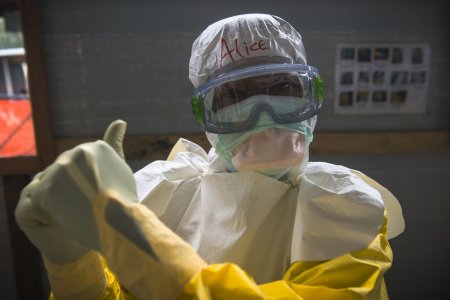
If MSF has held a preponderant position in the response to the Ebola crisis, it owes it just as much to its intervention capacities as to its capacity for criticism. The following article by Jean-Hervé Bradol embodies perfectly the latter in pointing to the issues that appeared on the occasion of this epidemic.
 Conference
02/07/2015 - 01:30 PM 07:30 PM
Guillaume Lachenal
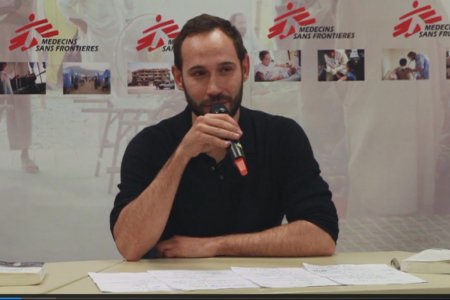
Le 7 février 2015, nous avons eu le plaisir de recevoir Guillaume Lachenal, historien de la médecine, pour une conférence-débat intitulée "Le médicament qui devait sauver l'Afrique". Cette rencontre a été préparée et animée par Michaël Neuman.
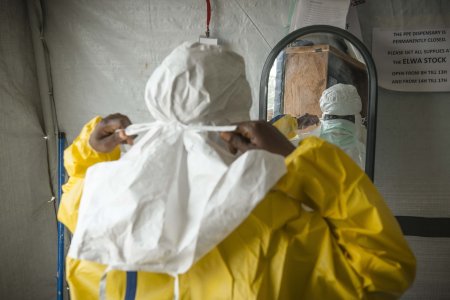 Yann Libessart
Interview
Yann Libessart
Interview
02/04/2015
Rony Brauman
Rony Brauman analyse les critiques internes à l’ONG, évoquant «une forme de non-assistance à personne en danger de mort» dans son approche d’Ebola.
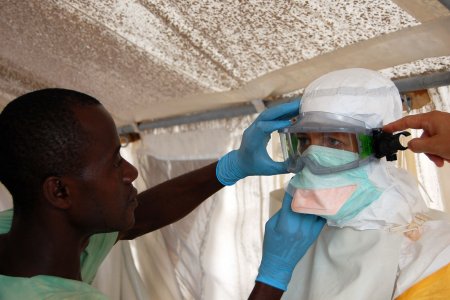 Fathema Murtaza
Interview
Fathema Murtaza
Interview
11/07/2014
Rony Brauman
Entretien avec Rony Brauman, ancien président de Médecins Sans Frontières et directeur d'études au Crash, sur la réponse à l'épidémie d'Ebola.
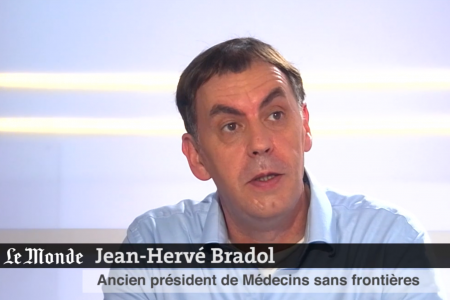 Le Monde
In the media
Le Monde
In the media
10/09/2014
Jean-Hervé Bradol
Le 9 octobre 2014, le docteur Jean-Hervé Bradol était l'invité du Monde.fr pour discuter de la lutte contre l'épidémie d'Ebola.