
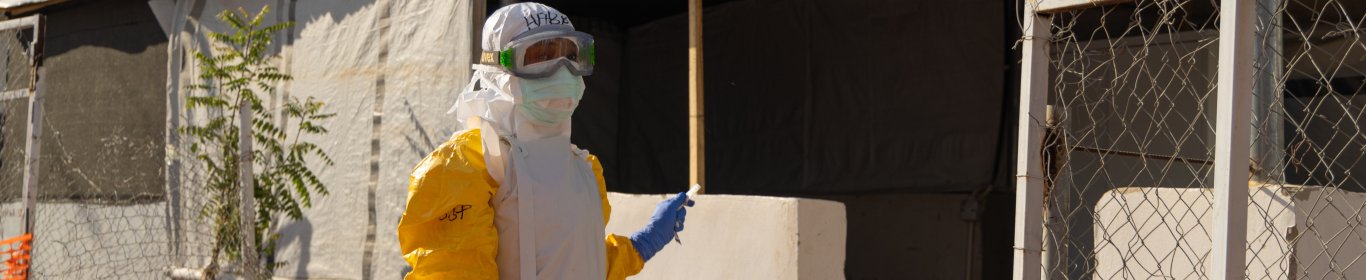
Acknowledging, characterising and declaring an epidemic
Emmanuel Baron, Jean-Hervé Bradol & Elba Rahmouni
Emmanuel Baron is a general practitioner who graduated from the University of Nantes. He spent several years working with Médecins Sans Frontières in the field and at headquarters. He was trained in epidemiology in London and joined Epicentre as General Director in 2008.

Medical doctor, specialized in tropical medicine, emergency medicine and epidemiology. In 1989 he went on mission with Médecins sans Frontières for the first time, and undertook long-term missions in Uganda, Somalia and Thailand. He returned to the Paris headquarters in 1994 as a programs director. Between 1996 and 1998, he served as the director of communications, and later as director of operations until May 2000 when he was elected president of the French section of Médecins sans Frontières. He was re-elected in May 2003 and in May 2006. From 2000 to 2008, he was a member of the International Council of MSF and a member of the Board of MSF USA. He is the co-editor of "Medical innovations in humanitarian situations" (MSF, 2009) and Humanitarian Aid, Genocide and Mass Killings: Médecins Sans Frontiéres, The Rwandan Experience, 1982–97 (Manchester University Press, 2017).
Since April 2018, Elba has been in charge of dissemination at CRASH. Elba holds a Master's degree in History of Classical Philosophy and a Master's degree in editorial consulting and digital knowledge management. During her studies, she worked on moral philosophy issues and was particularly interested in the practical necessity and the moral, legal and political prohibition of lying in Kant's philosophy.
An epidemic becomes a public safety issue when it involves a significant number of severe and fatal cases. The way in which this potential threat to public order is dealt with by the authorities is constantly assessed by both their supporters and their opponents within society and in public debate. They may be held responsible for worsening the epidemic or, conversely, seen as protecting citizens by implementing an effective response. The first step, the declaration of an epidemic by the authorities, is essential, as it gives the event a political and administrative existence over and above its mere biological and social existence. Although certain measures can be taken by the various actors involved pending this official declaration, that very declaration allows exceptional measures, such as an emergency plan, to be implemented. Declaring an epidemic is a major political and social issue capable of raising the crucial questions that could challenge the authorities’ legitimacy: have they correctly assessed the severity of the situation? On what basis have they declared an epidemic? Are they communicating in a timely manner? The experience that Médecins Sans Frontières has built up over the decades fighting epidemics seems to show that tackling the political and media crises that can accompany a health disaster means that an attempt must be made to answer these questions or, at least, not sidestep them. In this sense, this paper is not, strictly speaking, a scientific article, but rather a summary of lessons learned.
How do the authorities respond to the existence and severity of an epidemic?
When confronted with an epidemic, the authorities and the general public can react in many different ways, ranging from denial to exaggeration. Some people may maintain that there is no epidemic, while the authorities assert that there is, and conversely, the authorities may deny its existence or its severity.
In today's world, an outright refusal to acknowledge the existence of an epidemic is a difficult position for any state to adopt, as information circulates within neighbouring countries and regional and international organisations (the WHO, for example). Furthermore, the International Health Regulations (IHR) adopted by WHO member states to coordinate the prevention of and response to epidemics, require member states of the World Health Assembly to declare their occurrence. Although very sensitive on sovereignty issues, China finally acknowledged the SARS-CoV-1 epidemic in 2003, following a request from Gro Harlem Brundtland, Director-General of the WHO, not to adopt an attitude of denial.China vs the WHO: a behavioural norm conflict in the SARS crisis - PMCEven North Korea has acknowledged that it has been affected by Covid-19.
What are the International Health Regulations (IHR) and a Public Health Emergency of International Concern (PHEIC)?
The nineteenth century saw a diplomatic effort in the form of the first international health conference organised in Paris in 1851. Since then, the intention to contain the international spread of disease has been expressed at numerous meetings and conventions, and through the creation of control bodies and the signing of treaties, culminating in the 2005 revision of the International Health Regulations (IHR) by the World Health Assembly to take account of the threats posed by new or re-emerging diseases.National Security and Pandemics | United NationsChina's late acknowledgement of SARS as a potential global threat in 2003 was a determining factor here.
The IHR, which are legally binding, do not just cover infectious diseases, and can apply to any public health event and emergency with the potential to cross borders. They aim to prevent and control the spread of a disease, trigger a concerted response and thus safeguard international trade and travel. They require States to maintain a balance between restrictions on freedom and the preservation of human rights. Signatory states undertake to cooperate with each other and with the WHO, to report any unusual phenomena, to share relevant information and to implement health response measures.
The IHR also define the conditions under which the WHO’s Director-General, on the recommendation of an Emergency Committee convened by them, can declare a Public Health Emergency of International Concern (PHEIC). This declaration is based on three main criteria: an unexpected event, the potential for it to spread to several countries, and the need for an international response. Since 2005, several situations have been declared a PHEIC: H1N1 influenza in 2009–2010, polio in 2014, Ebola in 2014 and 2019, Zika in 2016, Covid-19 in 2020 and monkeypox in 2022.Wilder-Smith A, Osman S. Public health emergencies of international concern: a historic overview. J Travel Med. 2020 Dec 23;27(8):taaa227. doi: 10.1093/jtm/taaa227. PMID: 33284964; PMCID: PMC7798963. URL : Public health emergencies of international concern: a historic overview - PubMed
In addition to the criteria established to categorise an epidemic situation as a PHEIC, the interests and passions of the various stakeholders also come into play. Some epidemics, such as the MERS outbreak in 2012, were therefore never declared a PHIEC, despite their severity.
Refusing to acknowledge the existence of an epidemic or disputing its severity
At state level, political power has unlimited creativity when it comes to denial: denying an epidemic or its severity is a way of escaping the obligation to respond to it and of being held responsible for its consequences. Political and health authorities may consider the problem solved, re-classify it, dispute its aetiology, or deny that it is a threat to the public at large, etc. Here are a few examples illustrating these different attitudes.
A problem solved. From the start of the Covid-19 pandemic and until the end of 2022, China adopted a “zero Covid” policy, with closed borders, strict lockdowns of entire cities or neighbourhoods, an extensive screening policy, quarantine centres for isolating people testing positive etc. The aim of this policy was to resolve the problem through the total elimination of infections. It was a way of asserting the omnipotence of the Communist Party in the face of the epidemic: as soon as the threat appeared, it disappeared, thanks to the discipline imposed on the population by the authorities. If new cases appeared, they could only have come from abroad, as China was meant to be living under a strict “zero Covid” regime. For two years, it failed to recognise the limits of this strategy.
A different, less worrying epidemic. In April 1985, cholera had been raging for five months in a number of treatment centres for famine victims in Ethiopia, with no official declaration of the epidemic being made. Government representatives claimed that the camps were affected by acute diarrhoea, not cholera. At a meeting between the Ethiopian government and donors, an MSF France administrator spoke about the situation in the Korem nutrition centre in the Ethiopian Highlands: “I have 20 deaths a day because of a disease that we cannot name. I am importing medicines and I have to lie about the name of the disease.”Laurence Binet - Médecins Sans Frontières, Famine and Forced Relocations in Ethiopia 1984–1986. URL : https://www.msf.org/sites/default/files/2019-04/Famine_transferts_populations_Ethiopie_VF.pdf p.38For relief organisations, it is important to call cholera by its name so that they can obtain medicines more quickly, implement quarantine measures, and start an investigation to track down the source of the disease. So why was it decided to transform cholera into “watery diarrhoea” in official documents? Probably to avoid frightening off the buyers of coffee and meat, which are major businesses for the country. Some also claim that it was to avoid quarantine that may interrupt the “resettlement” programme for famine-stricken populations which, since late 1984, had already displaced more than 330,000 people from the high plateaux of the north to the lowlands of the south-west.
Refusing to accept the origin of the disease. In the 2000s, the South African government denied that AIDS was caused by HIV infection. For the leaders of the African National Congress (ANC), the party in power at the time, the disease was due to poverty inherited from apartheid. To combat HIV, the Minister of Health advised people to consume garlic, lemons and beetroot – a health policy that ran counter to the efforts of all those fighting the pandemic (including MSF) to put patients on antiretroviral drugs. It is now estimated that the attitude of the South African political and health authorities played a role in some 300,000 deaths.Chigwedere, Pride MD*†; Seage, George R III ScD, MPH‡§; Gruskin, Sofia JD, MIA‖¶; Lee, Tun-Hou ScD*†; Essex, M DVM, PhD*†. Estimating the Lost Benefits of Antiretroviral Drug Use in South Africa. JAIDS Journal of Acquired Immune Deficiency Syndromes 49(4):p 410-415, December 1, 2008. | DOI: 10.1097/QAI.0b013e31818a6cd5. URL : https://journals.lww.com/jaids/Fulltext/2008/12010/Estimating_the_Lost_Benefits_of_Antiretroviral.10.aspxAnother emblematic example of denial regarding the origin: the United Nations acknowledged only six years later that Nepalese peacekeepers had brought cholera to Haiti in 2010.The origins of the 2010 Haiti cholera outbreak - Alternatives Humanitaires
Only dangerous for some. On another continent, from the early 1980s to the early 1990s, Thailand's leaders claimed that HIV was a disease principally affecting Westerners.Thailand Social Monitor: Thailand's Response to AIDS – Building on Success, Confronting the Future. The World Bank. 2010, pp. 7–8.This tendency to claim that only individuals belonging to particular groups could be infected with HIV prevailed in many other countries. In North America, for example, the four Hs (homosexuals, heroin addicts, Haitians and haemophiliacs) were singled out at a time when the heterosexual dimension of the epidemic had not yet been recognised.
Whatever form the denial takes, the aim is usually to downplay the severity of an epidemic. In the following example, it was because of their difficulty dealing with the epidemic that the authorities chose to deny its severity.
In November 2003, the Oromia Regional Health Bureau in Ethiopia agreed to MSF’s proposal to organise an emergency intervention in response to a malaria epidemic in the East Wollega health zone which had been declared by the authorities the previous August. Rapid diagnostic tests confirmed that the parasite involved was Plasmodium falciparum, known to cause severe and fatal cases. In this area, inhabited by 1.2 million people and exposed to two seasonal peaks in malaria cases every year, MSF's proposal for reducing mortality was to increase the inpatient capacity of the hospital in Gutten and send health workers to the surrounding villages to detect and treat cases earlier. As the United Nations and MSF pointed out, however, one of the characteristics of this epidemic was that the parasites had become resistant to the antimalarial drug sulfadoxine-pyrimethamine (SP) recommended as the first-line treatment in the Federal Ministry of Health’s treatment protocols. According to data supplied by the United Nations, the proportion of treatment failures was as high as 36%.https://reliefweb.int/report/ethiopia/focus-ethiopia-aug-2004-1Exasperated by MSF's insistence that the Federal Ministry of Health urgently authorise the use of a new generation of treatments (combinations based on artemisinin derivatives), the authorities condemned MSF’s attitude in the press, calling its directors “charlatans” who were undermining the country's sovereignty despite the fact that “the situation [had] never been out of control, either now or in the past”.Press release from the Federal Ministry of Heath on the malaria situation in Ethiopia. 23 December 2003.
The authorities’ attitude can be explained by their constraints. How could technical, educational and financial resources be mobilised in just a few months to change a national treatment protocol for an infection affecting millions of people every year? For MSF, the urgent need was to ensure therapeutic efficacy in the short term before the year’s second peak in transmission – a laudable but probably unrealistic objective. As a result of these two opposing viewpoints being aired in public, revised malaria treatment protocols incorporating the new generation of drugs will be rolled out over a period of several years.
Before a disease is officially recognised by academic bodies, there can be a period during which an epidemic is identified by patients and patient associations without there being any consensus about the existence of the disease and without it being acknowledged by the authorities. This was the case with long Covid at the beginning of 2020. TThe signs of Covid-19 usually disappear two to three weeks after the onset of the disease but, in some cases, patients continue to suffer from a variety of symptoms for many months. In France, it took one year for the National Assembly, the Haute Autorité de santé [National Authority for Health] and the Ministry of Health to recognise the chronic evolution of certain Covid cases. On 17 February 2021, members of the French parliament unanimously adopted a motion for a resolution “aimed at recognising and managing the long-term complications of Covid-19”.Proposition de résolution n°3743 visant à reconnaître et accompagner les patients atteints de covid-long (assemblee-nationale.fr) [Motion for resolution no. 3743 to recognise and support long Covid patients]In so doing, they complied with a request from the WHO, which, since August 2020, had been urging the member countries of the World Health Assembly to recognise long Covid. This first step was also welcomed by the associations of patients affected by this form of the disease who had been campaigning for this recognition for months.
Overestimating the severity of an epidemic
It is quite rare for authorities to assert the existence of an epidemic without solid evidence to back it up. However, the severity of an epidemic can be overestimated.
When an unknown virus appears that could lead to a pandemic, the severity of the situation is measured by the WHO according to six phases. Phase 6 is when the circulation of a new pathogen is at its highest among susceptible hosts with little or no immunity, spread over several continents. At this stage, known as a pandemic, the danger is deemed to be at its height, and requires a number of preventive and therapeutic measures to be taken, including, where possible, the vaccination of a large segments of the population. Centred on the spread of viruses between countries and continents, the WHO's plan for responding to influenza epidemics was modified in December 2004, with lethality and mortality no longer among the criteria for moving up the 6-phase scale.phases d'alerte de l'OMSThe reason for this change in definition is undoubtedly to be more reactive, i.e. not to wait for a high number of deaths before taking action when an epidemic is already affecting large geographical areas.
In the summer of 2009, cases of influenza A/H1N1 were diagnosed in North America, causing major concern worldwide. This specific combination of numbers and letters refers to proteins on the surface of the virus that are similar to those of the virus that caused the influenza pandemic of 1918–1920, an event thought to have claimed between 50 and 100 million lives – a higher death toll than that of the First World War. This pandemic was incorrectly labelled “Spanish” because of the public debate that was possible in that country, one of the few where wartime censorship did not prevail. In 2009, the new A/H1N1 pandemic, distinct from the annual seasonal epidemics, was just as inaccurately dubbed “Mexican” or “swine” flu. In reality, the virus may have been imported from Asia by a traveller, and its genetic material was an assortment of genes found in humans, pigs and birds.
Data from Mexico and the United States showed that the incidence and lethality of the various outbreaks remained within limits deemed acceptable for seasonal influenza. Despite these reassuring data, the international response went into overdrive, particularly at the WHO and in wealthy countries. A number of observers questioned the pertinence of declaring a phase 6, given the low severity of the situation and the influence exerted on this decision by the companies marketing the vaccines. The UN agency replied that it was impossible to envisage vaccinating hundreds of millions of doses without coordinating with the manufacturers concerned. Nevertheless, the presence of representatives of these pharmaceutical companies at WHO meetings where the transition to phase 6 was being discussed should have raised red flags at the UN agency.Cohen D., Carter P. WHO and the Pandemic Flu “Conspiracies”. BMJ 2010;340:1274–9.
In France, where the “precautionary principle” was incorporated into the Constitution in 2005, the government adopted a plan to equip itself with masks and antivirals and to vaccinate 75% of the population with two doses. Keen to appear to be protecting its population effectively, the French government allocated nearly a billion euros in 2009 and 2010. At the heart of the argument in favour of this precautionary, albeit not protective, policy was the idea that mutations, which are common in this type of RNA virus, could lead to the emergence of a viral variant that would cause an explosion in the number of cases and deaths, as happened in 1918–1920.
As for the country's population and healthcare workers, they saw no cause for concern. They were very reluctant to adhere to the Ministry of Health's vaccination policy. Ultimately, less than 10% of the population took part in the mass vaccination operation. In order to manage the huge backlog of unused vaccines, the government renegotiated its contracts with the industry and began attempts to persuade countries with limited resources to accept donations of vaccines for a pandemic that they had not realised existed due to a lack of diagnostic capacity and the absence of any unusual mortality figures. A parliamentary committee of enquiry into the way in which the A/H1N1 influenza vaccination campaign was planned, explained and managed was set up on 6 July 2010. It concluded that there had been a “public health failure” given the low vaccination rate in relation to the resources committed.https://www.assemblee-nationale.fr/13/rap-enq/r2698.asp
Even if it means overestimating their severity, certain epidemics are favoured by those in power. Throughout the 2000s, health policies, for example, placed greater emphasis on developing and distributing vaccines against meningitis rather than cholera. This led to the near disappearance of major meningitis epidemics in West Africa. This success is partly rooted in a favorable bias among policymakers. Indeed, meningitis epidemics do not call into question the services responsible for public hygiene. Moreover, prevention—by administering a single dose of vaccine to all individuals in the target population—allows leaders to present themselves as benefactors. It also enables them to give everyone the exact same thing, a form of equality to which their constituents are highly sensitive. From a socio-political perspective, it is as if some epidemics were ‘clean’ and others ‘dirty’. The latter would highlight the negligence of those responsible for protecting populations against infectious threats.
Elements enabling the authorities to produce a profile of an epidemic so that it can be declared
The declaration of an epidemic by health and political authorities is based firstly on the development of a case definition and secondly on the construction of diagrams showing the time-space distribution of cases. These two elements make it possible to construct a qualitative and quantitative profile of the epidemic.
Case definition
Producing a case definition allows a series of health events to be grouped into one category. There are two main types of case definition. The first, known as the “clinical” or “syndromic” case definition (e.g. fevers, haemorrhagic fevers, dehydration due to gastroenteritis, suffocating pneumonia, etc.), is used to determine at an early stage that a particular and unusual phenomenon is taking place. Then, with the help of laboratory tests and medical imaging, a second case definition can be made identifying the disease more precisely.
On 30 December 2019, a Chinese ophthalmologist contacted a small group of his former fellow students on a social media platform to alert them to the arrival of several atypical patients at Wuhan Central Hospital during the month of December. These patients presented with asphyxiating pneumonia, often fatal, suggestive of SARS. Several of them had visited the city's live-animal market. The whistleblower had accessed data collected by the hospital's emergency department director who had already alerted her superiors to a series of atypical pneumonias that had led to an unusual mortality rate. The occurrence of an unprecedented clinical syndrome was supported by lesions observed on the thoracic imaging of certain patients and, in one case, by a laboratory test that was positive for a coronavirus. After relaying this information on his personal network, the ophthalmologist – along with eight other doctors – was accused by the authorities of spreading fake news. They were all arrested on 1 January 2020. The police asked the ophthalmologist to sign a document acknowledging that he was “disturbing public order”. On 9 January 2020, the Chinese authorities and the WHO announced the discovery of a new coronavirus whose genome had been sequenced. A review of available data indicated the existence of a first case back in mid-November. On 20 January, the medical authorities acknowledged the existence of a high number of cases of atypical pneumonia and confirmed that the virus (although not the one involved in the SARS epidemic of 2003) was spread by human transmission. On the same day, the Chinese president took charge of the national mobilisation against this new virus in circulation. On 28 January, a Chinese Supreme Court judge admitted that the information disseminated by the ophthalmologist could have enabled citizens to protect themselves – by wearing a mask, for example. Also on 28 January, the Director-General of the WHO, on a visit to Beijing, praised the speed and transparency shown by the Chinese authorities. For other observers on the social networks Weibo and Webchat, Chinese bureaucracy was responsible for a three-week delay in adopting the measures needed to respond to the epidemic.
The declaration of the epidemic and the exceptional recognition of an error by the authorities were possible thanks to a very small group of healthcare workers who grouped together seven cases and established an essentially syndromic definition. They had no specific mandate to do so; they were motivated by the desire to warn their colleagues of the need to wear protective equipment. It took around two months to substantiate the suspicion of a new infectious disease, sequence the genome of the virus in question, and take the public health decision that formed the heart of the Chinese response to Covid-19: on 23 January, 11 million Wuhanese were placed under lockdown where they remained for an initial period of 77 days, until 8 April.
On 7 February 2020, after being cleared by the authorities, the ophthalmologist died of the virus. Following his death, his Weibo page was one of the few digital forums where criticism of the authorities could be posted without immediately incurring the wrath of the police.
The construction of diagrams showing the time-space distribution of cases
To visualise an outbreak, health and political authorities can construct diagrams showing the distribution of cases over time and the distribution of cases in space. During an epidemic, these two diagrams will show an increase in the number of new cases; a stable number of cases over time and in space suggests an endemic situation.
It is not always possible to demonstrate the existence of an epidemic on a territorial scale because the size of the territory or its population can dilute the phenomenon. On the other hand, it is possible to select sub-populations in which the event is more frequent than in the general population. These sub-populations could be patients in a hospital, for example, or residents of a neighbourhood or village, people in the same profession or age group, etc. These sub-populations are not representative of the general population, but the reduction in scale makes an early declaration possible. There is always a danger of getting it wrong when extrapolating the results to the general population and the territory as a whole.
“On the morning of 21 June 2016, MSF teams were able to travel to Bama, the second largest town in Borno State in north-eastern Nigeria, to assess the needs of the population. In the few hours they spent there, they discovered a disastrous health situation. Almost 24,000 people, including 15,000 children (4,500 under the age of 5), were gathered in a camp located on the hospital grounds. MSF teams transferred 16 severely malnourished children at immediate risk of death to our nutritional centre in Maiduguri. Of the 804 children they were able to screen, around 19% were suffering from severe acute malnutrition. During their assessment, they also counted 1,233 graves in the cemetery near the camp, dug over the past year, including 480 children's graves.”https://www.msf.fr/communiques-presse/nigeria-etat-de-borno-au-moins-24-000-personnes-deplacees-dans-une-situation-sanitaire-extreme-a-bama
The example of these camps in north-eastern Nigeria, in which the army had grouped together displaced people, clearly shows how the choice of reference population (the denominator) can accentuate or diminish the severity of a situation. In Bama, MSF’s team examined 804 children, 153 of whom (19%) were suffering from severe acute malnutrition. The text does not specify, however, that these 804 children examined by MSF were not selected at random from among the 4,500 children in the same age group: they were actually waiting for a paediatric consultation at the health centre. Thus, the 19% malnutrition rate only applied to children seen by members of the MSF team and not to all the children in the camp, where it was probably different. In this respect, there are two possible hypotheses: 1) there is a greater likelihood of finding sick children, in this case acutely malnourished children, in the paediatric consultation queue than among the children not coming for a consultation; 2) children at a critical stage, or even already dead, do not come for consultations.
In order to assess an epidemic event accurately, it is sometimes necessary to set aside traditional administrative or geographical categories (city, region, country) and think in terms of disease hotspots. During a pandemic, for example, these hotspots may extend beyond national administrative boundaries.
The disaster caused by Covid-19 in Lombardy in Italy was known about in France as early as February 2020. The two countries have strong historical, cultural, political and economic ties, with a constant flow of people and goods between Paris, Lyon and Lombardy. From France’s perspective, however, the situation gave little cause for concern: the political and health authorities ignored reports suggesting that, within a matter of weeks, the Italian outbreak would likely be followed by an outbreak in France. On 6 March 2020, just a few days before the decision was taken to impose a general lockdown in France, the President of the Republic went to the theatre with his wife.
It is delusional to think that borders can stop the circulation of viruses. This does not mean that all control measures are useless, but it is more a question of using border posts to monitor the circulation of pathogens rather than imaging that it is possible to stop them from crossing from one country to another, especially when the proportion of healthy but nonetheless contagious carriers is high.
The timing of an outbreak versus the timing of political decisions
When an epidemic occurs, the various actors involved in the response are always late. This is because, in order for the event to be recognised, they must produce data that is necessarily taken from the past. As the profile of an epidemic is a snapshot of a more or less recent past, decisions and actions can never be taken quickly enough, giving the impression that we are constantly lagging behind. The difficulty for political decision-makers, therefore, revolves around determining the right time to make an official declaration of the existence of an epidemic.
There are two alternatives. The first is to wait for more solid scientific data at the risk of falling even further behind and allowing the epidemic to spread. While roads, schools, businesses, shops and government buildings should probably be closed, the political authorities will inevitably take a few weeks, or even months, to make an official declaration. This period of hesitation is largely unavoidable, and it is also essential given the possible economic and social consequences of declaring an epidemic. The second alternative is to be quick but less accurate, in other words do not wait for all the medical and epidemiological data. This is one way of limiting the delay, but there will always be the risk of a false alarm, needlessly diverting resources to the detriment of other patients and losing credibility the next time around.
The way in which this choice is made depends in part on the type of epidemic in question. Some merit more attention: firstly, epidemics that are dangerous in terms of their consequences, i.e. their level of morbidity (functional disorders, including psychological suffering) and mortality; secondly, outbreaks of diseases that are easily transmitted without direct human contact (aerosolisation and vectors) and those that are transmitted inconspicuously by asymptomatic people; and lastly, epidemics where the high number of severe cases overwhelms hospital capacity.
In France, at the start of the Covid-19 pandemic, the government was accused by several medical professors and researchers of exaggerating the danger posed by the virus. On 31 January 2020, Eric Caumes, a Parisian infectious disease specialist, stated in a video message issued by the Assistance Publique des Hôpitaux de Paris (AP-HP) that the virus was “like bad flu”.https://www.youtube.com/watch?v=NCkeXlvy0Ko&ab_channel=AP-HP%2CAssistancePublique-H%C3%B4pitauxdeParisOn the website of the Marseille University Hospital Institute for Infectious Diseases, Professor Raoult declared, in a video bulletin on 17 February 2020 entitled “Nous avons le droit d'être intelligents – Bulletin d'information scientifique de l'IHU” [We have the right to be intelligent – IHU Scientific Information Bulletin], that coronavirus caused fewer deaths than scooter accidents. These two eminent scientists urged the authorities not to divert interest and resources to this disease as there were significant needs elsewhere (the professor from Marseille cited an ongoing outbreak of Clostridioides difficile infections, a very severe intestinal disease). The recognition or non-recognition of the severity of an infectious disease outbreak always sparks a debate about the allocation of resources. Professor Caumes, for example, participating in a televised discussion about Covid-19, wondered what he was doing there, implying that that he was wasting his valuable time. A week later, he changed his mind.
The delay
Notwithstanding the “faster but less precise” versus the “slower but more precise” alternatives, formalising an emergency always takes time.
On 10 September 2021, Agnès Buzyn, the French Minister of Health in office at the start of the Covid-19 pandemic, was charged with “endangering the lives of others” by a special court (Cour de Justice de la Republique – CJR) whose role is to investigate ministerial misconduct. She was also called as an “assisted witness” [an intermediate status between that of witness and that of defendant] for “wilful failure to take the necessary measures to prevent a disaster”.http://www.senat.fr/rap/r20-199-1/r20-199-1.htmlThis was the first time since the CJR’s creation in 1993 that it had been convened while the event in question was still ongoing. The Minister of Health had only been in office for a few weeks at the very start of the Covid-19 epidemic; she was not therefore accused of failing to issue a public warning. The matter under consideration by the CJR was whether the Minister had correctly understood the situation and informed political and administrative leaders clearly and early enough.
The report by the Senate Investigative Committee gives an account of the decisions taken at the highest levels of the French government from the end of December 2019. The first cases of Covid-19 are suspected to have appeared in Wuhan in mid-November, but it was not until late December that warnings began to circulate in China and around the world. In France, the first mention of the threat was made at the end of December in correspondence between the Minister and the Director General of Health. On 30 December 2019, at Wuhan hospital, an ophthalmologist informed his former fellow students of the existence of a series of atypical pneumonia cases. China published the sequencing of the virus in question on 10 January 2020. On 11 January, the President of the French Republic was informed that the Directorate General for Health had instigated an internal alert procedure on 2 January. On 14 January, the Ministry of Health sent the first alert to health establishments, along with a message from the Directorate General for Health (“DGS-urgent”) to more than 800,000 private health practitioners. On 22 January, human-to-human transmission of the virus was established. On 24 January, the first cases appeared in France. As this coronavirus was a newcomer, no one was immune to it. The hope was that it would be neither highly contagious nor highly virulent. The Minister of Health contacted her European counterparts on 24 January. Only Croatia (holding the European Union’s presidency at the time), Germany and Italy reacted. An initial meeting of European health ministers was finally held on 13 February 2020, while the WHO had declared a Public Health Emergency of International Concern on 30 January, following a visit to China by its Director-General. The risk of the epidemic spreading from China to other countries was thus officially confirmed.
The chronology exonerates the Minister of Health, and the Senate Committee of Enquiry vindicated her, citing “an early but isolated mobilisation by the Ministry of Health at the time of the first clusters”. In France and in Europe, the Minister belonged to a small group of leaders who grasped the implications of the event at a relatively early stage. Yet she was indicted.
What were the reasons for this legal action? The parliamentary commission of enquiry levelled a criticism that seems a little trivial to justify the indictment of a minister: “an earlier activation of the inter-ministerial crisis unit (CIC) would have had several benefits". She was also accused of failing to renew the stock of protective equipment. Again, the Minister's responsibility appears limited in the eyes of the authors of the Senate Committee report: “the shortage of masks has proved to be all the more unfortunate as two successive ministers... were never informed of the almost total depletion of these stocks, the second not being informed until the end of January 2020”. She was also criticised for resigning as Minister for Solidarity and Health on 15 February 2020 to run for mayor of Paris.
Around three months elapsed between the appearance of the first cases in mid-November and the Minister’s resignation from her position in mid-February. By way of comparison, we find the same timeframe for the declaration of an Ebola virus disease (EVD) outbreak that began in December 2013 in Guinea-Conakry.Adrien Absolu "Les forêts profondes" (Lattès, 2016)The epidemic was officially recognised at the beginning of March 2014, three months after the first case – a child from the village of Meliandou in Guéckédou prefecture, in Forested Guinea. The child’s grandmother worked as a nursing auxiliary at Guéckédou hospital. After her sudden death, one of her colleagues – the hospital’s head nurse – also fell ill. He went to see the Chief Medical Officer at the hospital in Macenta, in whose house he had been living before he died. Then the hospital director’s son also fell ill and was transferred to the hospital in N’Zérékoré, another prefecture in Forested Guinea. Then the director himself fell ill and died on his way to Conakry. The death of this prominent figure alerted the doctor acting as health prefect for the entire zone, who informed the capital's health authorities. They were not expecting an outbreak of the Zaire strain of the Ebola virus in West Africa. Moreover, the outbreak sometimes presented with clinical symptoms misleadingly similar to gastroenteritis. On 13 March, a team of experts was sent from the capital to Forested Guinea to investigate these tragic and mysterious events. During their journey, a case at Macenta hospital with multiple haemorrhages was reported to them, but the patient ran away from the hospital. When they found him, they had to negotiate to obtain a blood sample. MSF organised the transfer of the sample to France. The Ebola virus was identified on 20 March 2014 by the Jean Mérieux laboratory in Lyon.
The timing of the WHO Director-General's trip to Beijing at the start of the outbreak of atypical pneumonia is comparable to that of the group of experts who travelled from Conakry to Forested Guinea. One event on a global scale and one involving three West African countries: one in a Chinese city equipped with a highly sophisticated laboratory, the other in a poor and under-equipped region of Guinea. Yet in both cases, it took three to four months for these two very different societies to recognise the existence of an unprecedented event.
The point here is not to establish this time lag as a rule, but to emphasise that in order to construct a profile of previously unrecognised events and give them an official existence, a certain number of exchanges between individuals and institutions within a society is necessary. This takes time, which to a certain extent is unavoidable. It also raises questions about the availability of complementary tests to ensure the accuracy of the diagnosis. Obviously, it is important to increase laboratory capacity around the world, but it would be unrealistic to think that this would prevent the “delay”, which is simply the time it takes to identify the problem. The constraints are not only biomedical, but also social, political and bureaucratic: the dissemination of destabilising information between and within the institutions concerned is always going to be problematic.
While it takes time for an epidemic to be officially declared, the biological world moves at its own pace and the speed at which epidemic phenomena spread can accelerate at a breathtaking pace.
Conclusion
Recognising, characterising and declaring an epidemic is never simply a matter of biomedical observation. These actions are at the intersection of still incomplete scientific knowledge, institutional constraints, power relations and major social, economic and political issues. An epidemic only officially exists from the moment it has been named, defined and incorporated into administrative and political mechanisms that authorise exceptional measures.
The examples cited in this article show that authorities can oscillate between denial, minimisation, overestimation or proactive staging, not solely out of ignorance, but depending on what the recognition of an epidemic entails in terms of responsibility, credibility and costs. The International Health Regulations and the concept of a public health emergency of international concern provide essential frameworks for coordination, but they do not eliminate the hesitations, power struggles, or timeframes specific to the societies concerned.
The inevitable gap between the biological timeline of the disease, the timeline for producing data, and the timeline for political decision-making exposes authorities to contradictory criticism: acting too late or acting too early, underreacting or overreacting. This ‘delay’ is not solely technical; it is also the product of complex social and bureaucratic processes necessary for the collective construction of a shared representation of the event.
Faced with epidemic phenomena that are set to multiply in an interconnected world, the challenge is not to seek a perfect and instantaneous declaration, but to strengthen the capacity of institutions to recognise uncertainty, to engage in dialogue with actors in the field and to take decisions in a context of partial information. Only then can the declaration of an epidemic be understood not as an admission of failure, but as an act of political responsibility.
To cite this content :
Emmanuel Baron, Jean-Hervé Bradol, Elba Rahmouni, “Acknowledging, characterising and declaring an epidemic”, 20 janvier 2026, URL : https://msf-crash.org/en/humanitarian-actors-and-practices/acknowledging-characterising-and-declaring-epidemic
If you would like to comment on this article, you can find us on social media or contact us here:
Contribute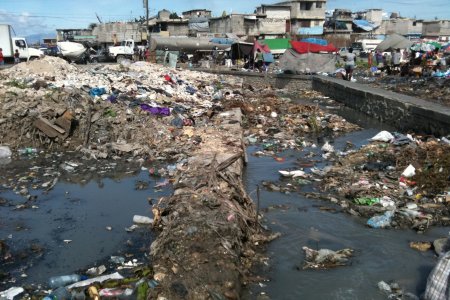 Aurelie Baumel
Opinion
Aurelie Baumel
Opinion
The origin of cholera in Haiti: the culprit has been found!
01/25/2012Two scientific studies published last year confirmed the origin of the cholera epidemic that struck Haiti in October 2010. It was indeed caused by massive amounts of the bacterium Vibrio cholerae in the Artibonite river delta, originating from the sewage in the Minustah soldiers' camp.
 Yann Libessart
Analysis
Yann Libessart
Analysis
The response to the Ebola epidemic: negligence, improvisation and authoritarianism
02/08/2016If MSF has held a preponderant position in the response to the Ebola crisis, it owes it just as much to its intervention capacities as to its capacity for criticism. The following article by Jean-Hervé Bradol embodies perfectly the latter in pointing to the issues that appeared on the occasion of this epidemic.
 Clément Mahoudeau/MSF
Analysis
Clément Mahoudeau/MSF
Analysis
Communicating and convincing: a humanitarian perspective on the French response to the coronavirus epidemic
12/02/2020In this paper, the two authors examine certain aspects of the French response to the epidemic in the light of the experience of Médecins Sans Frontières (MSF) in that field, primarily with respect to the relationship between the actors of the response and the beneficiaries.