
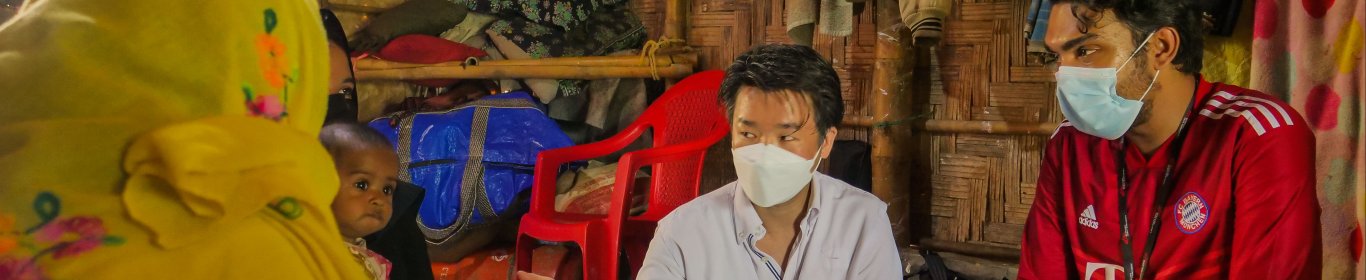
Culture: an invitation to be curious, or the refuge of certainty?
Marc Le Pape
Marc Le Pape has been a researcher at the CNRS and then at the EHESS. He is currently a member of the scientific committee of the CRASH. Formerly with the CNRS, Marc Le Pape is currently a researcher at the l'Ehess (Centre d'études africaines). He has carried out research in Algeria, Côte d'Ivoire and Central Africa. His recent studies have focused on the Great Lakes region in Africa. He has co-directed several publications: Côte d'Ivoire, l'année terrible 1999-2000 (2003), Crises extrêmes (2006) et dans le cadre de MSF : Une guerre contre les civils. Réflexions sur les pratiques humanitaires au Congo-Brazzaville, 1998-2000 (2001) and Génocide et crimes de masse. L'expérience rwandaise de MSF 1982-1997 (2016).
In this article, Marc Le Pape examines a variety of situations where applying the concept of culture can prove problematic. To explore how this concept is applied in a humanitarian aid context, the author asks numerous questions: During a crisis, is it appropriate for humanitarian workers to call on anthropologists in an emergency to eventually gain a better understanding of the communities involved? Who are the informants and interpreters employed by humanitarian workers for their networks and knowledge of local social dynamics? How much of a challenge is translation in the caregiver-patient relationship? Why take rumours about the medical field seriously?
Introduction
“Our culture”, “my culture”, “their culture”: these expressions are widely used by humanitarian workers in a variety of contexts. “Our culture”, for example, is sometimes used to refer to a set of ideas and values that are supposed to be shared by the members of an NGO; “this is my culture” is sometimes used to justify personal convictions; and a villager might say “it’s their culture, but it’s not ours” about the way people in the neighbouring village live.
There are many scientific definitions of the term “culture”. Here are a few examples: “a set of shared values”, “a set of control mechanisms for governing behaviour”, “a brief history”, “the standardised values of a community... that are not easy to question”, “an instrument of cohesion, of social unity”. Humanitarian workers embrace some of these definitions, especially those which seem to facilitate an understanding of the local context, customs and ways of life, community constraints and power relations. There is no doubt that this concept of “culture” is used in many different ways, some of which are not without their problems.
Culturalism
Culturalism frequently takes the form of a belief. It can also be presented as a method whereby cultural determinants are used to explain attitudes, behaviour patterns, social hierarchies, and traditions. Prevalent in the aid sector, culturalism is sometimes associated with an urgent call for assistance from anthropologists in emergency contexts. This was the case during the wave of panic which broke out during the deadly Ebola epidemic in West Africa (2014–2016), when anthropologists were called in to explain the population’s “cultural” hostility towards the coercive public health measures imposed on it and to convince the population to comply. Explaining this through “culture” often overlooks the social, economic and political constraints faced by the populations targeted by aid projects or public health policies.
Many humanitarian workers express curiosity or interest in the problems or behaviour patterns which are the subject of anthropological research, such as power relations, domestic violence, therapeutic traditions, “witchcraft” and rumours. This kind of anthropological research involves long-term immersion in communities – immersion that is necessary to gain an understanding of local cultures. These are investigations which involve much more than the observations, contacts and relationships required to undertake humanitarian operations.
In situations of acute crisis and violence in which humanitarian workers are deployed, the extreme urgency involved leaves precious little time for cultural understanding. Tension can sometimes arise between humanitarian workers carrying out urgent operations in epidemic or conflict situations and anthropological researchers who consider themselves essential for understanding these situations.
Sociological and anthropological knowledge can help clarify the challenges and constraints of humanitarian action, but it is far from certain that having anthropologists “embedded” in rescue teams actually contributes to the effectiveness of the operation itself. Humanitarian workers and anthropologists offer two ways of understanding the present, two “cultures” – one medical, the other anthropological – that are often at odds with each other but have everything to gain by sharing ideas, and everything to lose if they clash.
Informants and interpreters
Humanitarian workers interact daily with “mediators”, especially interpreters and assistants, who are asked to communicate with the authorities and patients, and to explain the meaning of their behaviour patterns.
In the United States, ethnography emerged as a method of inquiry in the second half of the nineteenth century. Lewis Henry Morgan (1818–1881) was a forerunner, publishing a monograph on the native American Iroquois people in 1851. Morgan's ethnographic survey – like many others – shows just how vital the role of the interpreter actually is. Morgan’s interpreter (“an educated man, a Seneca friend informant”Frederica De Laguna, Selected Papers from the American Anthropologist 1888-1920, Row, Peterson And Company, Evanston, 1960, p. 48-54. ) was Ely Parker, a young Seneca from the former Iroquois League. Parker put him in touch with Seneca elders and asked them (in Morgan’s presence) about their history and the League that had united the Iroquois. Morgan was also motivated by the desire to protect the survivors. He noted that, since 1838, a group of Iroquois living in New York State “ha[d] been beset and hunted” and violently driven from "their remaining lands"Frederica De Laguna, Selected Papers from the American Anthropologist 1888-1920, Row, Peterson And Company, Evanston, 1960, p. 48-54. by a powerful New York company, the Ogden Land Company, which provisionally granted them only a limited area of land in New York State. Here we can see both the field investigations and the alarming reports of the extreme violence committed against the people Morgan was investigating: the challenge of preserving the partially lost culture of the Seneca was an important incentive for him.
Just like Lewis Henry Morgan in the 19th century, in areas where humanitarian missions are being undertaken, it is usually necessary to hire and pay interpreters and informants whose role is also important for the anthropologists. The interpreters must speak both the local language and that of the expatriate staff. They are hired for their status in a local context, their (supposed or actual) networks of social relationships, their knowledge of important local people (religious leaders, traditional political dignitaries, official authorities) – in short, for their connections to all those involved in the fabric of the local community. The experience and knowledge of these informants is passed on to successive members of the mission – some of these “informant advisors”, who are true “cultural mediators”, are often given permanent positions for the entire duration of the mission.
The culture of caregivers, the culture of patients
During medical missions, relationships with patients sometimes raise communication issues, especially when caregivers and patients speak different languages or when they have to explain what the doctors are saying. This is when the interpreters step in.
Here is an example of a typical situation for a nurse in an operating theatre during surgery (at a hospital in southern Burundi in 2002). This expatriate nurse published an account of his first and only MSF mission: he describes the authority relationships and the attitudes of autonomy that prevailed there, as well as the, at times, unpredictable and surprising complexity of surgical situations. Most of the patients “only spoke Kirundi… so naturally we had to bring in an interpreter.... The surgeon would ask a question that was translated by the [Burundian] nurse. A discussion between the nurse and the patient would then ensue, which could last several minutes. And whenever we asked the nurse what the patient had said in response, he would reply tersely in a few words, which often had nothing to do with the original question.”Bruno Sauteron, Une Saison à Makamba. Récit d’une mission au Burundi avec Médecins Sans Frontières, 2022, p. 51.
During a study of hospital ethnography conducted in Malawi in 2023, an MSF physician-researcher studied the translation work carried out by interpreters in a palliative care project in oncology. Most of the female patients spoke only one of the two national languages, Chichewa, so they had to be addressed in that language during their treatment and have their diagnosis given in Chichewa. Translating the English medical terms into Chichewa and explaining the concept of “palliative care” required the caregivers to paraphrase and adapt the vocabulary in order to clarify the diagnosis and end-of-life prognosis.Xavier Plaisancié, Soins palliatifs en Afrique. D’un discours global aux pratiques concrètes. Étude de cas au Malawi, 2024, p. 137.“Generally speaking, the caregivers had to develop a set of strategies for transposing the concept of ‘palliative culture’ from their theoretical teaching… into ‘Malawian culture’, the culture of the patients who were at the end of their lives and that of their relatives.”
Medicine: the case of HIV
As we know, the emergence of AIDS in the early 1980s sparked widespread alarm and led to clashes between the medical profession and groups of patients who questioned that profession’s authority. The wide variety of attitudes towards the epidemic and their specific cultural aspects have been the subject of numerous studies and surveys.For the history of the AIDS years in France, see Michaël Pollak, Les homosexuels et le sida. Sociologie d’une épidémie, Éditions A. M. Métailié, 1988, and Nicolas Dodier, Leçons politiques de l’épidémie du sida, Éditions de l’EHESS, 2003.
In the African and Asian countries affected by AIDS, many humanitarian caregivers found that their expertise coexisted alongside local care traditions about which they knew very little, even though these traditions had an influence on their patients, family members, friends and school communities. Humanitarian workers are sometimes keen to learn about these other healthcare practices and traditions which are so different from their own biomedical culture.
In 2007, a female MSF anthropologist conducted research in a rural community in western Kenya, an area with a high prevalence of HIV generally attributed by doctors (humanitarian and Kenyan) to the region’s “cultural practices” (polygamy, sexual purification rituals, traditional medicine, etc.). Her research showed that contemporary social changes (economic precariousness, the influence of the urban way of life) probably played a greater role in spreading the disease than traditional social mores whose abandonment was, incidentally, lamented by older members of the community. It also showed that most patients with HIV turned to traditional medicine after having consulted official medical facilities to no avail: at the time, these facilities had failed to diagnose them and provide them with adequate treatment. Her research challenged the “culturalist” explanations that local culture and the irresponsibility of young men were to blame for the high prevalence of HIV. She invited the medical and humanitarian health system to consider its own shortcomings (iatrogenesis, misdiagnosis, etc.).
Consider another example in a different context. In 2017, an MSF physician-researcher again conducting research in a rural community in western Kenya highlighted the role of the rumour mill. He observed that men seeking a test wanted to protect themselves from rumour so as to avoid “exposing themselves to the judgements of members of their community” and being subjected to their prejudices. They therefore approached – where possible – biomedical healthcare facilities (dispensaries, hospitals) far from their homes and places of work. They headed for a remote medical institution where their positive HIV status was confirmed.
Furthermore, in both 2007 and 2017, the medical field was the subject of much hearsay, a phenomenon generally observed in societies facing new epidemics. Caregivers and humanitarian workers tend to dismiss such rumours, however, even though analysis of them shows that they frequently express implicit criticism of healthcare institutions, if not a form of resistance to them.
Humanitarian medical work in the field during missions of varying length is a constant and varied exchange between international practitioners, national caregivers, patients and their families: repeated opportunities to learn about the nature and influence of rumours with particular regard to the variety of skills within the medical field – boundaries between the medical field and other fields of expertise involving caregivers of all kinds are not strictly defined.
Biomedicine and culturalist curiosity
It is common for doctors to combine conviction and authority when they assert the superior value of what each of them calls “my culture”. This assertion reflects the certainties of biomedicine because of its inherent qualities, particularly its abilities to explain and give prognoses. Furthermore, the expression “this is my culture” implies that this particular culture is unique and universal, a conviction that provides reassurance of the existence of a more stable, more robust world. Yet biomedical practices are not always accepted, as attested by a number of actions in the field where MSF and other international NGOs have had to intervene and acknowledge cultural differences: for example, the Hmong people frequently refuse needles during vaccination campaigns; and some Somali people resist amputation.
Furthermore, it is common – if not always the case – for members of humanitarian teams in the field to have a variety of cultural sensitivities, or “differences in sensitivity”. These are expressed through attitudes, beliefs, disagreements about daily life, work organisation, project priorities and ways of interacting with authorities, patients, neighbours or the general population. This diversity of sensitivities reflects the social diversity of the humanitarian workers (professional, generational, national, regional, gender etc. diversity), their varied backgrounds and, more often, the ways in which they express themselves.
Many humanitarian workers display culturalist curiosity. There is no suggestion of dismissing this interest for (at least) two reasons. Firstly, because cultural curiosity reflects a desire not to limit oneself to a purely technical and functional relationship with the intervention setting. Secondly, because this cultural curiosity provides (or rather can provide) a safeguard against certain assumptions commonly associated with medical practice: assumptions that relate to the universal value of the biomedicine practised by humanitarian NGOs.
To cite this content :
Marc Le Pape, “Culture: an invitation to be curious, or the refuge of certainty?”, 18 novembre 2025, URL : https://msf-crash.org/en/humanitarian-actors-and-practices/culture-invitation-be-curious-or-refuge-certainty
If you would like to comment on this article, you can find us on social media or contact us here:
Contribute A to Z
Political use of famine
09/01/2025For governments, relief actors and international organizations, the classification of famine is a source of tension, due to the political, media-related, humanitarian, financial and emotional stakes involved. But what is famine, what criteria and data are used to define it, and by whom? Who declares it, and what are the public and political uses of such declarations? These are some of the questions examined in this article by Michaël Neuman.
 A to Z
What “solidarity” means for MSF: the uses and applications of a notion
08/01/2025A central concept in humanitarian discourse, international solidarity has established itself as a hallmark of emergency and development interventions. But what does this widely used term truly encompass? This article explores the various dimensions of solidarity, its political and symbolic stakes, and examines the concrete practices it generates within humanitarian organizations, particularly Médecins Sans Frontières (MSF).
 Pierre Fromentin/MSF
A to Z
Pierre Fromentin/MSF
A to Z
Armed escorts - neither for nor against
09/01/2025Caught between humanitarian commitment to vulnerable populations and security concerns, the issue of the use of armed escorts by humanitarian organisations raises some fraught questions. Médecins Sans Frontières has adopted this practice, controversial as it is, in a number of contexts throughout its history. Can we resort to this type of protection without compromising our neutrality? Are MSF's image and the very safety of its teams threatened by being so close to armed actors?