
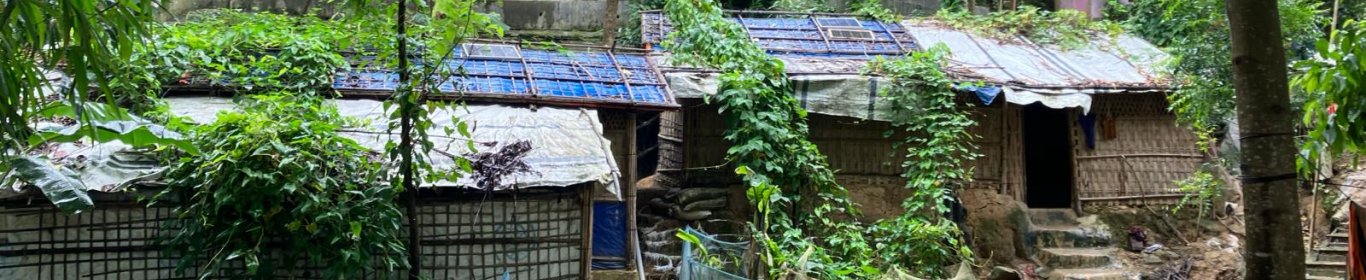
Rohingya refugees: what can MSF do?
Emilie Medeiros, Eloïs Voisin & Raphaël Torlach
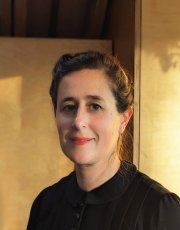
Emilie Medeiros est psychologue clinicienne et titulaire d'un doctorat en anthropologie psychologique. Elle est la fondatrice de Manas, qui vise à fournir des éléments de compréhension sur les dimensions psychologiques de la production des violences de masse. Elle est l’une des principales autrices d’un rapport de recherche sur les conséquences physiques et psychosociales à long terme des violences sexuelles et sexistes génocidaires commises par l’armée du Myanmar à l’encontre des Rohingyas lors de sa campagne de 2017.
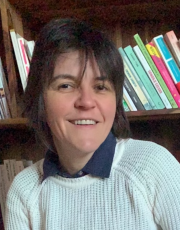
Dr Eloïs Voisin est sociologue, affilié au Centre de recherche des études sociologiques et politiques de Paris. Ses recherches portent sur les violences de genre à l’encontre des Rohingyas en Birmanie/Myanmar, en Malaisie et au Bangladesh, dans le contexte des migrations forcées et des situations humanitaires. Eloïs a été responsable de mission à Médecins du Monde (2020-2023) pour les projets de l’organisation au Bangladesh et est l’auteur de « As Husband I must be violent », un article portant sur le continuum de la violence dans les migrations forcées et les politiques militarisées.
Raphaël Torlach est un ancien chef de mission de MSF au Bangladesh, où il a supervisé les projets de l’organisation pour les Rohingyas pendant un an jusqu’en janvier 2024. Raphaël a rejoint MSF en 2015.
On Thursday, April 4, 2024, the CRASH team welcomed Emilie Medeiros, Eloïs Voisin and Raphaël Torlach for a conference/debate on the situation of the Rohingya refugees in Bangladesh. This conference was prepared and moderated by Michaël Neuman.
Since the late 1970s, the Rohingya Muslim minority has been subject to waves of repression and violence, forcing them to flee repeatedly to neighboring Bangladesh. In 2017, more than 700,000 Rohingya found refuge in Cox's Bazar district, following a military campaign of unprecedented intensity; they joined more than 200,000 refugees from previous exoduses. By 2023, there were more than a million refugees, spread across a myriad of camps in the south of the country, including the world's largest refugee camp. This population represents more than a third of the total Rohingya population, which is divided between Malaysia, India, Pakistan, Saudi Arabia and Myanmar.
Deprived of their nationality by the Burmese government, prevented from integrating into Bangladesh and facing xenophobia from the government, victims of politico-criminal groups in the camps and suffering a rapid decline in humanitarian funding, the future of the Rohingya is in doubt. Are the Rohingyas threatened with extinction? The characterization of their situation is a matter of debate: Gambia has submitted an originating application to the International Court of Justice in November 2019, alleging that the Myanmar army committed genocidal acts as part of the military operations launched in October 2016 and August 2017 in Rakhine State. For some, the genocide continues. For others, it is the dilution of their identity that is the central issue for the Rohingya people, whom the Burmese authorities are turning into non-natives to be sent home.
MSF has been working with the Rohingya population since the late 1970s, not only in Bangladesh but also in Myanmar and Malaysia. From 2017 through 2023 MSF dedicated € 233 million to Rohingya medical and humanitarian projects. Yet its capacity to take care of the health needs of this population is clearly insufficient, as is that of a humanitarian system unable to do better than the biological survival of this population.
Dr Emilie Medeiros is a clinical psychologist and holds a PhD in Psychological Anthropology. She is the founder of Manas, which aims to provide insights into the psychological dimensions of the production of collective violence. She is one of the lead authors of a research report on Long-Term Physical and Psychosocial Consequences of Genocidal Sexual and Gender-Based Violence the Myanmar Military Committed against the Rohingya in its 2017 ‘Clearance operation’ campaign.
Dr Elois Voisin is a sociologist, affiliated to the Centre de recherche des études sociologiques et politiques de Paris. Their current and past research focuses on gender-based violence against Rohingyas in Burma/Myanmar, Malaysia and Bangladesh, in the context of forced migration and in humanitarian situations. Eloïs was Responsible de Mission at Médecins du Monde (2020-2023) for the organisation’s projects in Bangladesh and is the author of “As Husband I must be violent”, an article focusing on the continuum of violence in forced migrations and militarized policies.
Raphaël Torlach is a former Head of mission of MSF in Bangladesh, where he supervised the organization's projects for Rohingya during a year until January 2024. Raphaël joined MSF in 2015.
To cite this content :
Emilie Medeiros, Eloïs Voisin, Raphaël Torlach, “Rohingya refugees: what can MSF do?”, 4 avril 2024, URL : https://msf-crash.org/en/conferences-debates/rohingya-refugees-what-can-msf-do
If you would like to comment on this article, you can find us on social media or contact us here:
Contribute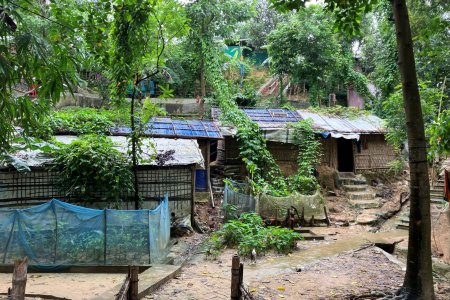 Michaël Neuman
Opinion
Michaël Neuman
Opinion
In Cox’s Bazar
10/31/2023This article was published in the London Review of books website on September 8, 2023. The former evokes the dire conditions in which roughly 1 000 000 Rohingyas live in Cox’s Bazar, the largest refugee camp in the world. In this coastal district in south-east Bangladesh, the humanitarian deployment is impressive, but commitment by donors is waning. Between March and June, monthly food allocations fell from $12 to $8 per person. The difficulties of accessing care, the social control to which they are subjected and the lack of prospects are many reasons explaining the perils faced by the Rohingya population.
 Book
Book
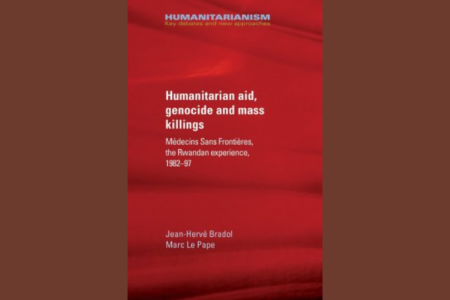
Humanitarian aid, genocide and mass killings. Médecins Sans Frontières, the Rwandan experience, 1982-97
11/04/2016Throughout the 1990s, Médecins Sans Frontières (MSF) was forced to face the challenges posed by the genocide of Rwandan Tutsis and a succession of major outbreaks of political violence in Rwanda and its neighbouring countries.
Past events
 Roger Job
Conference
Roger Job
Conference
France in Rwanda. Guilty neutrality
02/11/2019 - 06:00 PM 08:00 PMThe CRASH team invited you to the screening-debate “France in Rwanda. Guilty neutrality” on Monday 11th of February 2019 from 6 to 8pm, in the 1rst floor room of the 8 rue Saint-Sabin. A documentary film by Robert Genoud and Claudine Vidal (Director Emeritus for research at the CNRS, member of the CRASH scientific committee at MSF), and produced by EUP. Before and after the screening, Claudine Vidal and Jean-Hervé Bradol, both actors of MSF mobilization between 1994 and 1998 launched the discussion.
 Conference
Healing foreigners in France: The State and the civil society organisations from the 80s to the 90s
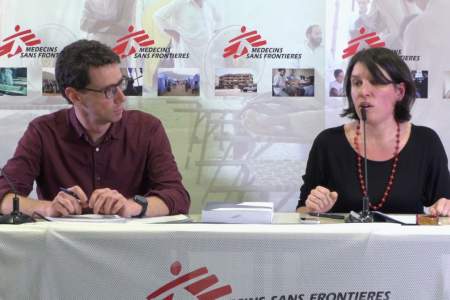
12/17/2018 - 06:00 PM 08:00 PMThe CRASH team invited you to the debate-conference “Healing foreigners in France: The State and the civil society organisations from the 80s to the 90s” on Monday 17th of December 2018. We hosted Caroline Izambert, who recently defended, at the EHESS, her PhD thesis focusing on the foreigners’ access to healthcare in France. Her title: “Heal foreigners?” The State and the civil society organisations for the health coverage of the poor and foreigners in France from the 1980s to the present day. This conference was prepared and moderated by Michaël Neuman.
 Conference
Borders and Hospitality
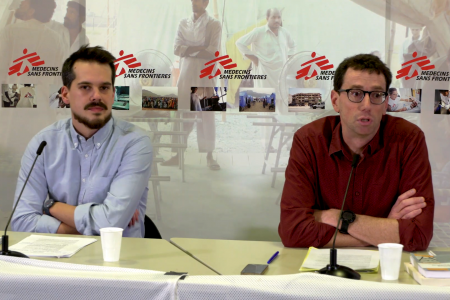
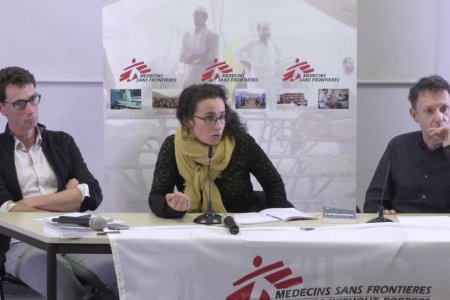
11/26/2018 - 06:00 PM 08:00 PMThe Crash team had the pleasure of welcoming Benjamin Boudou, politician and researcher at the Max Planck Institute, for a conference-debate on November 26, 2018. The meeting was prepared and moderated by Michaël Neuman.
 MSF-Crash
Conference
MSF-Crash
Conference
Immunization: new perspectives on vaccines - Conference with Lise Barnéoud
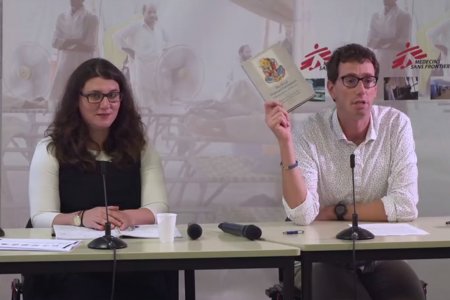
12/05/2017 - 06:00 PM 08:00 PMLise Barnéoud was a Crash guest speaker at a conference on vaccination held on December 5, 2017. A discussion with Epicentre, Crash and the MSF Medical Department allowed us to exchange views on vaccinal policy, which remains a cornerstone of MSF operations and a recurring subject of discussion and controversy. This meeting was prepared and moderated by Michaël Neuman and Emmanuel Baron.
 MSF
Conference
MSF
Conference
Humanitarian anthropology : conference with Sharon Abramowitz
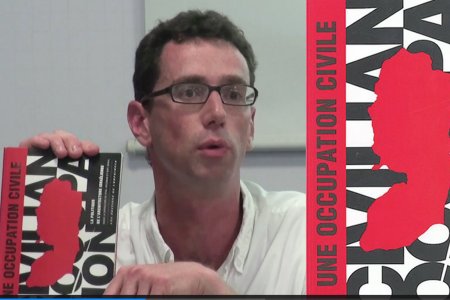
10/23/2017 - 06:00 PM 08:00 PMThe Crash team had the pleasure of welcoming Sharon Abramowitz, American medical anthropologist and author of "Medical Humanitarianism: Ethnographies of Practice", for a conference-debate on October 23, 2017. The meeting was prepared and moderated by Michaël Neuman.
 Conference
Eyal Weizman - Forensic Architecture at work
02/15/2016 - 07:00 PM 09:30 PMEyal Weizman, founder of Forensic Architecture at Goldsmiths College, University of London, presented his project and a number of his achievements at a Crash conference held on July 2, 2015. The event was organized and moderated by Michaël Neuman.